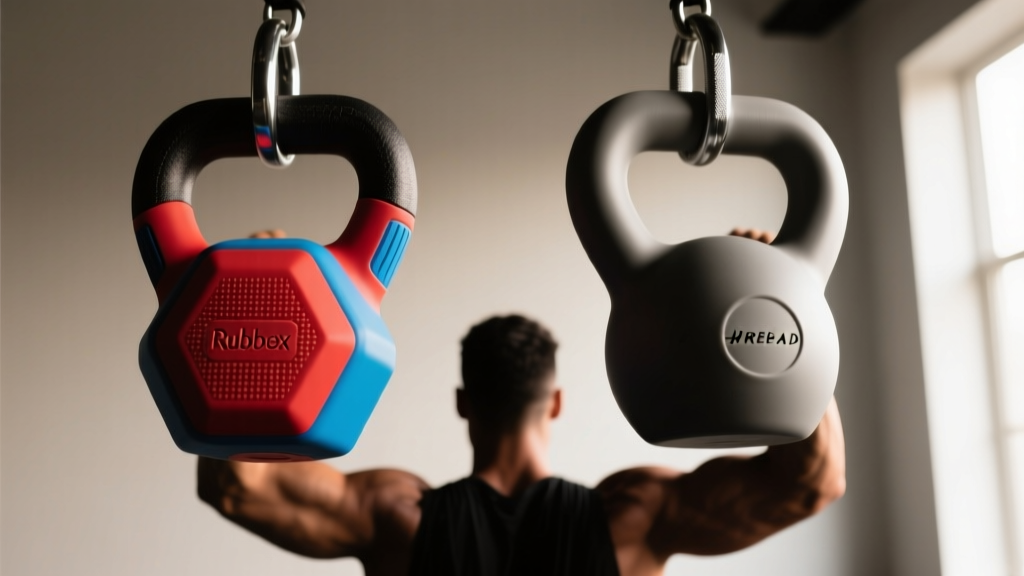
Rubber Hex vs Urethane: Choosing Your Overhead Tricep Dumbbell
We test rubber hex vs urethane dumbbells to find the ultimate overhead tricep dumbbell. Compare grip, durability, and biomechanics for 2026.

The Biomechanics of the Overhead Tricep Extension
The triceps brachii is a three-headed muscle group that constitutes roughly 60% of your upper arm mass. While the lateral and medial heads are heavily recruited during pressing movements, the long head originates at the infraglenoid tubercle of the scapula. This anatomical quirk means the long head is only fully stretched when the arm is raised overhead. According to the National Strength and Conditioning Association (NSCA), maximizing stretch-mediated hypertrophy requires taking the muscle through its full range of motion under load. This is why the overhead tricep dumbbell extension—whether performed single-arm or with a two-handed French press grip—is a non-negotiable staple in elite arm programs.
However, as we evaluate home and commercial gym equipment in 2026, lifters often overlook how the physical profile of the dumbbell impacts this specific movement. When your elbow is in deep flexion overhead, a bulky dumbbell head can collide with your forearm, your lateral deltoid, or even the side of your head, artificially cutting off your range of motion. Today, we are putting the two most popular free weight styles head-to-head: the budget-friendly rubber hex dumbbell versus the premium urethane dumbbell, specifically to determine which makes the superior overhead tricep dumbbell.
Rubber Hex Dumbbells: The Budget Workhorse
Rubber hex dumbbells have been the default choice for garage gyms for over a decade. Their hexagonal heads prevent rolling, and the rubber coating protects flooring from minor scuffs. For this review, we tested the widely popular Rep Fitness Rubber Hex line, which in 2026 hovers around $1.50 to $1.75 per pound.
Hands-On Review: Rep Fitness Rubber Hex (5-50 lbs)
The Rep Fitness rubber hex features a straight, chromed steel handle with a mild, medium-depth knurl. The handle diameter sits at a standard 34mm, which is comfortable for most grip styles. However, when transitioning to an overhead tricep extension, the limitations of the hex design become immediately apparent.
Expert Warning: The Clearance IssueA 50 lb Rep Fitness rubber hex dumbbell measures approximately 7.5 inches across the widest point of the head. When performing a single-arm overhead tricep extension, the bulky, angular rubber head frequently makes premature contact with the lifter's forearm or shoulder at the bottom of the eccentric phase. This physical obstruction robs you of the deepest, most hypertrophic portion of the stretch.
Furthermore, the rubber used in budget hex dumbbells is often a recycled or lower-grade virgin rubber compound. In non-climate-controlled garage gyms, these dumbbells are prone to off-gassing volatile organic compounds (VOCs) for weeks, and the rubber can dry out, crack, or flake after 3 to 4 years of exposure to ozone and UV light.
Urethane Dumbbells: The Premium Standard
Urethane is a high-density, synthetic polymer that has largely replaced cheap rubber in premium commercial gyms. It is odorless, highly resistant to UV degradation, and can be molded into much denser, more compact profiles. We tested the Rogue Fitness Urethane Dumbbells, which represent the gold standard for serious lifters, albeit at a premium price point of roughly $2.85 to $3.20 per pound.
Hands-On Review: Rogue Urethane Dumbbells
Rogue offers both straight-handle and multi-grip ergonomic options. For overhead tricep work, we prefer the straight-handle variant with their proprietary medium-aggressive knurl. The handle diameter is a precise 34mm, but the knurl bites slightly deeper than the Rep hex, providing superior grip security when your hands are sweaty and positioned awkwardly behind your head.
The true advantage of the Rogue urethane dumbbell lies in its head profile. Because urethane is denser than rubber, the heads can be manufactured with a smaller footprint. A 50 lb Rogue urethane dumbbell measures just over 6.2 inches across. That 1.3-inch difference in width is monumental for overhead clearance. You can achieve a deeper, unobstructed stretch at the bottom of the overhead tricep extension without the dumbbell head digging into your forearm or catching on your clothing.
Head-to-Head Comparison Matrix
Below is a direct comparison of how these two dumbbell styles perform when tasked with high-stretch isolation movements.
| Feature | Rubber Hex (Rep Fitness) | Urethane (Rogue Fitness) |
|---|---|---|
| Price per lb (2026) | $1.50 - $1.75 | $2.85 - $3.20 |
| 50 lb Head Width | ~7.5 inches (Bulky) | ~6.2 inches (Compact) |
| Overhead Clearance | Poor (High obstruction risk) | Excellent (Unobstructed stretch) |
| Knurl Quality | Mild, basic chrome | Aggressive, premium grip |
| Odor / Off-Gassing | High (Requires airing out) | None (Odorless) |
| Longevity | 3-5 years (Prone to cracking) | 10+ years (Highly durable) |
The 'Inner Plate' Problem for Two-Handed Extensions
Many lifters prefer the two-handed overhead tricep extension, gripping a single heavy dumbbell (often 40 to 70 lbs) vertically by the inner plate and handle. This is where the manufacturing nuances of the dumbbell collar become critical.
- Rubber Hex Inner Collars: Budget hex dumbbells often suffer from 'rubber flash'—excess rubber that seeps out of the mold during manufacturing, creating a thick, uneven lip where the handle meets the head. Additionally, the internal steel retaining collars can sometimes protrude slightly. When you wrap your thumbs and index fingers around the inner plate for a French press, this uneven rubber lip or sharp steel edge will dig aggressively into your thenar eminence (the fleshy part of your palm), causing joint pain and limiting your grip strength before your triceps actually fail.
- Urethane Inner Collars: Premium urethane dumbbells are CNC-machined and molded with extreme precision. The transition from the handle to the inner plate is either perfectly flush or features a smooth, calculated bevel. This allows you to securely interlock your hands around the inner head of the dumbbell without experiencing soft-tissue pinching, allowing you to push closer to true muscular failure.
Real-World Failure Modes and Maintenance
When investing in free weights, you must consider how the equipment degrades over time. Rubber hex dumbbells have a specific failure mode: the plasticizer in the rubber eventually leaches out, especially in environments with high temperature fluctuations. The rubber becomes brittle, and the hex corners begin to chip and flake onto your gym floor. Once a hex corner chips, the dumbbell loses its anti-roll properties, creating a safety hazard during floor exercises.
Urethane, conversely, is rated using the Shore A hardness scale, typically sitting around 85A to 90A for premium gym weights. It is virtually impervious to temperature changes and will not dry rot. However, urethane is highly rigid. If you drop a urethane dumbbell from shoulder height onto bare concrete, the kinetic energy has nowhere to dissipate, which can lead to chipping or even cracking the internal steel core. Urethane must be used on proper 3/4-inch horse stall mats or specialized rubber gym flooring to absorb impact.
"The long head of the triceps is highly susceptible to stretch-mediated hypertrophy, but only if the lifter can achieve end-range elbow flexion without external physical obstruction from the equipment itself." — Biomechanical principles of resistance training, supported by ACE Fitness guidelines on joint range of motion.
Final Verdict: Which Should You Buy?
If your primary goal is general fitness, and your budget is strictly capped, the rubber hex dumbbell remains a viable, cost-effective tool. However, you will need to actively manage the eccentric phase of your overhead tricep extensions, stopping just short of full flexion to avoid the dumbbell head colliding with your arm.
If you are a dedicated hypertrophy athlete, a home-gym owner building a forever setup, or someone who prioritizes the overhead tricep dumbbell extension as a primary arm builder, urethane dumbbells are the undisputed winner. The compact head profile guarantees an unobstructed, deep stretch on the long head of the tricep. The flush inner collars eliminate palm pain during two-handed variations, and the superior knurl ensures the dumbbell doesn't slip when your arms are fully extended overhead. While the upfront cost in 2026 is nearly double that of rubber hex, the biomechanical advantages and multi-decade lifespan make urethane the ultimate investment for serious arm development.
More gear to consider
All reviews
Olympic vs Standard Plates & the Pullover Exercise with Dumbbells

Olympic vs Standard Plates & Dumbbell Bench Press Weight for Beginners

Beginner Dumbbell Home Exercise Guide Using Neoprene Weights

Power Rack vs Squat Rack vs Stand: Decline Dumbbell Presses Guide

Dumbbell Bulgarian Split Squat Trends: Rubber Hex vs Urethane 2026
