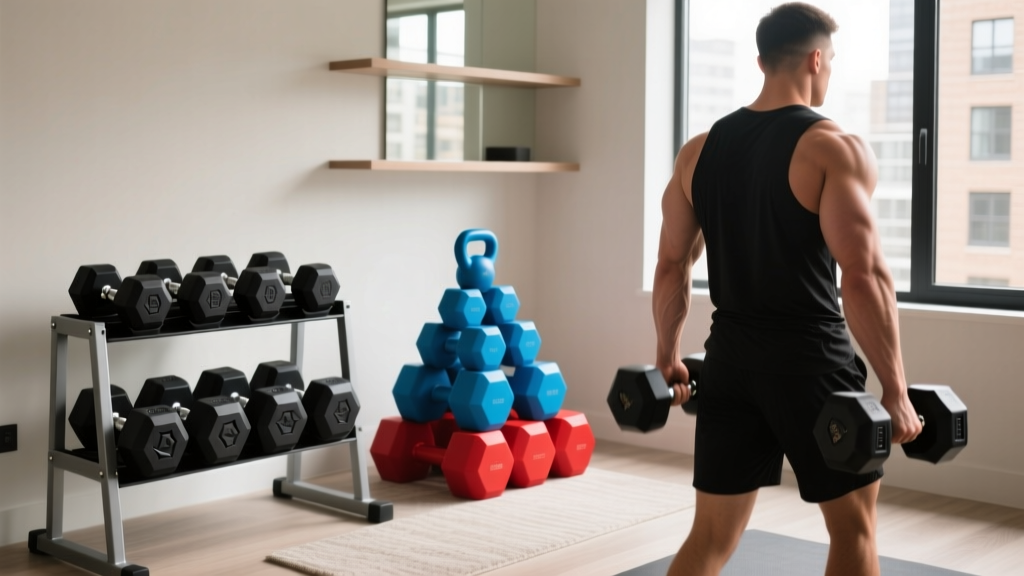
Rubber Hex vs Urethane: Space Layouts & Farmers Carry With Dumbbells
Compare rubber hex vs urethane dumbbells for space optimization, gym layouts, and heavy farmers carry with dumbbells. Find the best 2026 setup.

The Space Optimization Dilemma: Designing Around Functional Movement
As home and boutique commercial gym builds evolve in 2026, the emphasis has shifted from merely accumulating gear to meticulously designing functional layouts. When your training philosophy centers on movement through space—rather than just stationary lifting—equipment selection dictates your floor plan. The farmers carry with dumbbells is a cornerstone of functional strength, demanding a clear lane, precise grip ergonomics, and implements that can survive inevitable drops. But when choosing the iron to fuel these carries, gym owners face a critical crossroads: traditional rubber hex dumbbells versus premium urethane dumbbells.
This guide breaks down the material science, spatial footprint, and biomechanical realities of both options, helping you design a space-optimized layout that supports heavy carries without turning your garage into a cluttered obstacle course.
Layout Pro Tip: Never measure your gym space by the footprint of the equipment alone. Always measure by the kinetic envelope—the space required to move the equipment safely. A farmers carry requires a minimum 36-inch wide lane, free of protruding rack corners.The Footprint Factor: Hex vs. 12-Sided Urethane in Tight Layouts
Space optimization begins at the storage rack. The physical geometry of your dumbbells determines the type of rack you can use, which in turn dictates your room's traffic flow.
Rubber Hex: The A-Frame Space Hog
Rubber hex dumbbells (like the ubiquitous CAP Barbell Coated Hex series) feature blocky, six-sided heads. While they don't roll away when dropped, their flat edges require wide, deep shelving to sit flush. A standard 5-to-50 lb set of rubber hex dumbbells typically requires an A-frame rack. These racks often measure 48 inches wide by 28 inches deep. That 28-inch depth is a spatial killer in narrow garage gyms, frequently encroaching on the very walkways you need for carries.
Urethane: Tiered Efficiency
Modern urethane dumbbells, such as the Rogue 12-Sided Urethane Dumbbells, utilize a cylindrical or multi-faceted profile. Because the heads are uniform in diameter regardless of weight (up to a certain threshold), they can be stored on compact, 3-tier horizontal shelving. A 5-to-50 lb urethane set fits on a rack measuring roughly 49 inches wide by just 22 inches deep. By reclaiming those 6 inches of depth, you open up crucial lateral space for your carry lanes.
Biomechanics of the Carry: Thigh Friction and Wrist Clearance
When executing a heavy farmers carry with dumbbells, the implement is not just in your hands; it is in constant, grinding contact with your lateral thighs and hips. The geometry of the dumbbell head directly impacts your soft tissue and joint alignment.
- The Hex Edge Problem: The sharp, 90-degree transitions on rubber hex heads create focal pressure points. During a 100-foot carry with 70 lb dumbbells, the hard rubber edges repeatedly strike the greater trochanter (outer hip bone) and IT band. Over time, this causes severe bruising and skin tearing. Furthermore, if your grip fatigues and the dumbbell rotates, the bulky hex head can pinch the wrist joint against the forearm.
- The Urethane Advantage: High-end urethane dumbbells feature beveled, 12-sided edges or smooth, rounded profiles. This geometry distributes friction evenly across the thigh, allowing the dumbbell to "glide" during the eccentric phase of your stride. Additionally, premium urethane models often feature contoured handles (e.g., 34mm diameter with medium knurling) that lock into the palm, preventing the rotational slippage that plagues hex models.
"The biomechanics of loaded carries demand implements that complement human anatomy, not fight it. Rounded or heavily beveled edges reduce the coefficient of friction against the fascia and skin, allowing for longer time-under-tension without localized tissue trauma." — Adapted from principles outlined by the ExRx Biomechanics Testing Archives.
Material Degradation & The Drop Zone Reality
No matter how disciplined you are, a brutal set of farmers carries ends with the dumbbells hitting the floor. How your equipment handles the drop zone dictates its lifespan and your floor's integrity.
| Feature | Rubber Hex (Recycled/Vulcanized) | Cast Urethane (TPU) |
|---|---|---|
| Drop Survival (Repeated) | Low. Prone to splitting at the handle seam and edge crumbling. | High. Absorbs shock and bounces slightly without structural failure. |
| Floor Scuffing | High. Leaves black carbon streaks on light rubber mats. | Virtually zero. Non-marking finish. |
| Odor & Off-Gassing | High VOCs initially; can retain a "tire" smell for years in enclosed spaces. | Zero odor. Ideal for basement and spare-bedroom gyms. |
| UV / Ozone Resistance | Poor. Dries out and flakes if exposed to garage sunlight. | Excellent. Resists environmental degradation. |
The most common catastrophic failure of cheap rubber hex dumbbells is the separation of the cast-iron head from the chrome handle. This usually occurs at the weld point due to the sheer torque generated when a heavy hex head catches the floor at an angle during a dropped carry. Urethane dumbbells typically utilize a solid steel core fully encased in the polymer, eliminating this shear-point vulnerability.
2026 Cost Analysis: Space-to-Value Ratio
Budget is the ultimate constraint in gym design. As of early 2026, the pricing gap between the two materials remains significant, but the long-term cost-per-use tells a different story.
- Rubber Hex Pricing: Averages $1.50 to $2.00 per pound. A pair of 50 lb dumbbells costs roughly $150 - $200. It is the undisputed king of budget builds.
- Urethane Pricing: Averages $3.75 to $5.00 per pound. A pair of 50 lb Rogue Urethane dumbbells will set you back approximately $375 - $450.
While the upfront cost of urethane is more than double, consider the spatial economics. Because urethane allows for high-density, 3-tier vertical racking, you can fit a complete 5-50 lb set into a 6-square-foot footprint. If you are paying a premium for a finished garage or basement space, maximizing usable square footage for movement (like your farmers carry lane) yields a higher return on investment than filling the room with bulky A-frames to accommodate cheaper gear. Comprehensive equipment roundups by experts at Garage Gym Reviews consistently highlight urethane as the top-tier choice for longevity and space efficiency.
Blueprint: Designing the Ultimate Carry Lane & Storage Zone
To successfully integrate heavy carries into your space-optimized gym, follow this layout blueprint:
- Establish the Anchor Point: Place your 3-tier urethane dumbbell rack against the longest uninterrupted wall. Ensure the rack depth (22") does not cross the threshold of your designated walking lane.
- Define the Lane Width: Tape off a 40-inch wide lane running the length of the room. This allows for the natural lateral sway of the arms and the dumbbells during a heavy farmers carry with dumbbells, preventing accidental knuckle strikes against nearby power racks or walls.
- Flooring Transition: Use 3/4" thick vulcanized horse stall mats for the carry lane to absorb the acoustic shock of dropped weights. If the rest of your gym features EVA foam or thin rubber tiles, the stall mats will protect the subfloor from the concentrated point-load of a 100 lb dumbbell drop.
- Clear the Swing Zone: Ensure no kettlebells, plyo boxes, or benches are stored within 3 feet of the carry lane's termination point. When grip fails at the end of a set, implements swing outward before hitting the ground.
Final Verdict
If your training is strictly stationary and budget is your primary concern, rubber hex dumbbells remain a viable, if flawed, option. However, if your 2026 gym layout prioritizes functional movement, space optimization, and the rigorous demands of the farmers carry with dumbbells, urethane is the undisputed champion. Its compact storage profile, ergonomic bevels, and indestructible nature transform a cluttered garage into a high-performance athletic facility.
More gear to consider
All reviews
Best Adjustable Dumbbell Set Review & Comparison 2026

Best Loadable Pec Fly Dumbbells: 2026 Hands-On Review

Olympic vs Standard Plates for Lifts & Russian Twists with Dumbbells

Racks for Lightweight Dumbbell Exercises: 2026 Budget Breakdown
Dumbbell Squats Exercise: Neoprene Home Gym Setup
