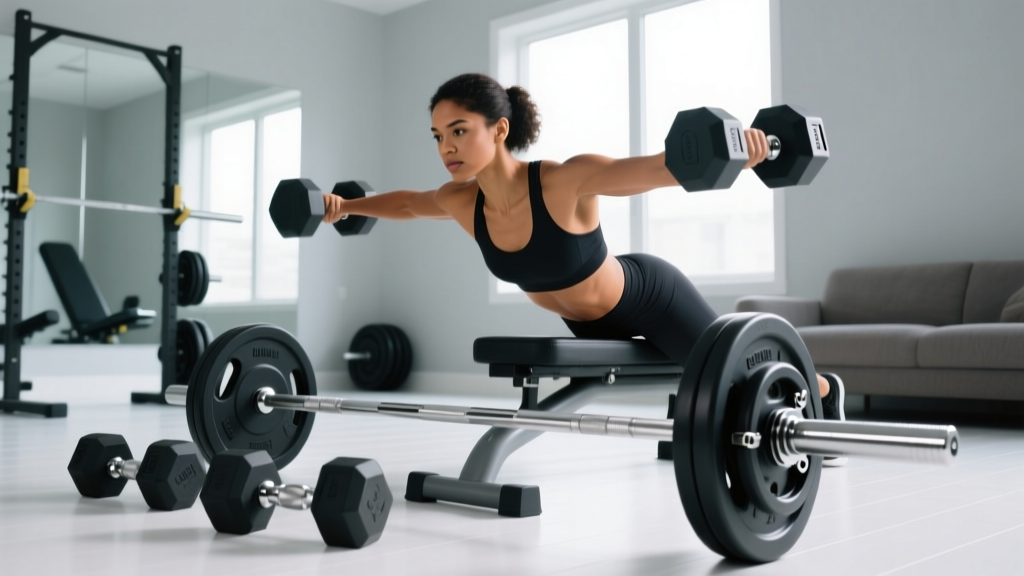
Double Arm Dumbbell Row: Complete Home Setup & Form Guide
Master the double arm dumbbell row at home. Our complete setup walkthrough covers neoprene dumbbell selection, space installation, and perfect form.

The Physical Installation: Prepping Your Home Gym Space
Executing a flawless double arm dumbbell row requires more than just picking up weights; it demands a properly configured environment. When utilizing neoprene coated dumbbells for home use, your space installation must account for the unique dimensions of hex-shaped neoprene gear and the spatial requirements of the bent-over hinge pattern.
Floor Protection and Matting
While neoprene (polychloroprene) is quieter and less abrasive than raw cast iron or urethane, the dense iron core inside premium 2026 models still carries enough kinetic energy to dent engineered hardwood or crack ceramic tile if dropped. For the rowing zone, install 3/4-inch thick vulcanized rubber mats (typically 4x6 feet). This thickness absorbs the shock of a dropped 15 lb neoprene dumbbell while providing a non-slip surface for your tripod stance during heavy eccentric loading.
Wall Rack Installation Specs
Neoprene dumbbells feature a bulky, oversized hex head compared to competition iron. Standard tiered wire racks often fail to accommodate them. Opt for a heavy-duty steel wall-mounted shelf or a specialized wide-lip neoprene rack. When installing into standard drywall:
- Locate wooden studs spaced 16 inches on-center (OC).
- Use 3/8-inch x 3-inch structural lag screws with a shear strength of at least 250 lbs per screw.
- Mount the bottom tier at least 18 inches from the floor to avoid kicking the dumbbells when walking to your bench.
Equipment Selection: Why Neoprene for High-Rep Rows?
As of 2026, high-density neoprene formulations have vastly improved in sweat-resistance and grip texture. Because neoprene dumbbells typically cap out at 15 to 20 pounds per hand, they are not meant for 1-rep max powerlifting. Instead, they are the ultimate tool for metabolic conditioning and high-rep hypertrophy of the latissimus dorsi and rhomboids.
| Material | Grip When Sweaty | Floor Safety | Ideal Row Rep Range |
|---|---|---|---|
| Neoprene | Excellent (Tacky) | High | 15-30 reps (Endurance/Burnout) |
| Rubber (Hex) | Moderate (Slippery) | Moderate | 8-12 reps |
| Urethane | Poor (Needs Chalk) | High | 5-8 reps (Heavy) |
According to ExRx.net's biomechanical breakdown, the bent-over dumbbell row heavily recruits the teres major, posterior deltoid, and middle trapezius as synergists. The tacky surface of neoprene prevents the handle from sliding toward your fingertips during the concentric phase of these high-rep sets, reducing forearm fatigue and keeping the tension squarely on the back muscles.
Biomechanical Setup: Installing the Perfect Hinge
The most common failure point in the double arm dumbbell row is a poorly installed hip hinge, which shifts the load from the lats to the lumbar erectors. Follow this step-by-step physical setup protocol:
- The Tripod Base: Stand with feet shoulder-width apart. Hinge at the hips and place your hands on your thighs. Slide your hands down until they are just above your knees. This locks your pelvis into a neutral position.
- Thoracic Extension: Puff your chest out slightly and retract your shoulder blades. Imagine pinching a pencil between your scapulae. This pre-tensions the rhomboids.
- The Grip: Grab your neoprene dumbbells with a neutral grip (palms facing your thighs). The hex shape will naturally rest against your outer thighs without rolling.
- Neck Alignment: Tuck your chin slightly. Your cervical spine should align with your thoracic spine. Look at the floor about 4 feet in front of you, not at a mirror directly ahead.
Safety Warning: The American Council on Exercise (ACE) emphasizes that rounding the lower back during bent-over rows significantly increases shear force on the lumbar discs. If you cannot maintain a flat back with 15 lb neoprene weights, switch to a chest-supported incline bench row immediately.
Overcoming the Weight Ceiling: The Tempo Protocol
Because neoprene dumbbells for home use rarely exceed 20 lbs, advanced lifters might find the double arm dumbbell row too light to stimulate muscle growth using standard 1-second repetitions. To solve this, we 'install' a strict tempo protocol to maximize Time Under Tension (TUT).
The 4-1-2-1 Hypertrophy Tempo
- 4 Seconds Eccentric (Lowering): Fight gravity. Slowly extend your arms toward the floor, feeling a deep stretch in the latissimus dorsi.
- 1 Second Pause: Dead-stop at the bottom. Eliminate the stretch reflex and momentum.
- 2 Seconds Concentric (Pulling): Drive your elbows up and back toward the ceiling, keeping them tucked close to your ribcage.
- 1 Second Isometric Squeeze: Hold the dumbbells at the top of the movement, forcefully contracting the mid-back.
Using this tempo, a set of 15 repetitions takes nearly 120 seconds of continuous tension. This metabolic stress triggers cellular swelling and lactate accumulation, driving hypertrophy even with lighter, home-friendly neoprene weights.
Troubleshooting Common Form Breakdowns
Issue: Bicep Takeover
Diagnosis: You are pulling with your hands instead of driving with your elbows.
Fix: Imagine your hands are mere hooks. Initiate the pull by driving the elbow toward the hip bone. Loosen your grip on the neoprene handle slightly to disengage the forearm flexors.
Issue: Lower Back Pump/Pain
Diagnosis: Your hamstrings are tight, forcing your lumbar spine to round to compensate for the hip hinge.
Fix: Bend your knees an additional 15-20 degrees. This reduces the hamstring stretch and allows your pelvis to tilt anteriorly, preserving the natural arch of your lower back.
Maintenance and Care for Neoprene Gear
To ensure your equipment lasts through years of high-rep rowing, proper maintenance is required. Neoprene is a closed-cell synthetic rubber, but it is porous enough to trap dead skin, oils, and bacteria. Furthermore, prolonged exposure to UV light from a nearby window will cause the polychloroprene to oxidize, turning it chalky and brittle.
- Cleaning: Wipe down the handles and hex heads after every session using a microfiber cloth dampened with a 50/50 mix of water and white vinegar. Avoid bleach-based cleaners, which degrade the chemical bonds of the neoprene.
- Storage: Keep your wall rack out of direct sunlight. If your home gym is in a garage or sunroom, install UV-blocking window film to protect the integrity of the coating.
- Inspection: Every 6 months, check the seam where the neoprene meets the steel handle. If you notice peeling, apply a thin layer of flexible rubber adhesive (like Shoe Goo) to prevent further delamination.
By meticulously setting up your physical space, understanding the biomechanical requirements of the hinge, and leveraging advanced tempo techniques, you can transform a simple pair of neoprene dumbbells into a highly effective back-building arsenal. For more insights on safe strength training practices at home, refer to guidelines from the Mayo Clinic's fitness experts, who stress the importance of controlled movements and proper joint alignment over sheer load.
More gear to consider
All reviews
What Size Dumbbells Should I Get? Loadable Handles & Care Guide

Iron vs Bumper Plates: Budget Guide & Dumbbell Renegade Row GIF Tips
Best Adjustable Dumbbells for Incline Dumbbell Chest Fly (2026)

Cast Iron vs Competition Kettlebells for a Men's Dumbbell Workout

Master the Seated Dumbbell Clean with Space-Saving Loadable Plates