Rubber Hex vs Urethane: Dumbbell Select Weight Maintenance Guide
Compare rubber hex dumbbell vs urethane dumbbell care. Learn dumbbell select weight maintenance tips, cleaning routines, and longevity hacks for 2026.

The Material Divide: Understanding Your Dumbbell Coatings
When outfitting a home or commercial gym in 2026, the debate between the rubber hex dumbbell vs urethane dumbbell remains one of the most critical purchasing decisions. While both serve the fundamental purpose of progressive overload, their chemical compositions dictate vastly different maintenance protocols, lifespans, and failure modes. If your dumbbell select weight inventory relies on fixed pairs, understanding the polymer science behind your equipment is the first step in protecting your investment.
Material Science Breakdown
Rubber Hex (SBR/Natural Blend): Typically molded from Styrene-Butadiene Rubber (SBR) or recycled vulcanized rubber. It is cost-effective and heavy, but highly vulnerable to UV degradation, ozone cracking, and sulfur off-gassing.
Urethane (CPU/TPU): Premium dumbbells utilize Cast Polyurethane (CPU) or high-grade Thermoplastic Polyurethane (TPU). This elastomer is exceptionally resistant to abrasion, UV radiation, and chemical solvents, offering a virtually odorless and permanent finish.
The 2026 Cost vs. Longevity Matrix
Price is often the primary driver when fitness enthusiasts select weight sets, but calculating the cost-per-year of ownership reveals a different reality. Below is the current market matrix for standard 50 lb pairs based on 2026 industry pricing.
| Feature | Rubber Hex Dumbbell | Urethane Dumbbell |
|---|---|---|
| Average Cost (per lb) | $1.20 - $1.80 | $3.50 - $5.50 |
| Expected Lifespan (Home Gym) | 3 - 7 Years | 15 - 25+ Years |
| Durometer Hardness (Shore A) | 85A - 90A (Stiffer) | 80A - 88A (Denser, higher tear strength) |
| UV / Ozone Resistance | Low (Prone to dry rot) | Exceptional (Aliphatic polymers) |
| Off-Gassing / Odor | High (VOCs, sulfur dioxide) | None |
| Drop Tolerance (on 3/8" mats) | Moderate (Hex edges chip/tear) | High (Absorbs and disperses impact) |
Cleaning Protocols: What Destroys Your Select Weight Dumbbells
When maintaining your dumbbell select weight inventory, the most common point of catastrophic failure isn't dropping the weights—it's cleaning them with the wrong chemicals. Gym owners frequently use aggressive disinfectants that destroy polymer chains.
Expert Warning: According to the CDC's Guidelines for Disinfection and Sterilization, quaternary ammonium compounds and high-concentration bleach solutions are highly reactive. When applied to vulcanized SBR rubber, these chemicals break down sulfur cross-links, accelerating dry rot and causing the coating to chalk, fade, and eventually crumble into a black dust.
The Rubber Hex Dumbbell Cleaning Routine
- Dust Removal: Use a dry microfiber cloth or a soft-bristle nylon brush to remove chalk and dead skin cells from the hex edges and knurling.
- Washing: Mix 1 teaspoon of mild, pH-neutral dish soap into 16 oz of warm water. Dampen a cloth—never spray directly onto the dumbbell, as liquid can seep into the handle joint.
- Drying: Wipe immediately with a dry towel. Never let moisture pool where the rubber head meets the steel handle, as this promotes hidden galvanic corrosion.
The Urethane Dumbbell Cleaning Routine
Urethane is far more chemically resilient. You can use a 70% isopropyl alcohol solution for rapid disinfection without degrading the polymer matrix. However, the EPA's Safer Choice guidelines recommend minimizing harsh solvents to preserve the aesthetic finish and prevent long-term micro-scratching on premium gym equipment. A simple water and white vinegar solution (4:1 ratio) is often sufficient for weekly urethane maintenance and leaves no chemical residue.
Environmental Enemies: UV, Ozone, and Humidity
If your home gym is located in a garage, sunroom, or unclimate-controlled shed, your rubber hex dumbbells are on a ticking clock. Ultraviolet light and ozone—often generated by air purifiers, TIG welding equipment, or even laser printers in garage gyms—cause ozone cracking in styrene-butadiene rubber. This manifests as microscopic fissures on the surface tension points that eventually split the hex heads entirely.
- Rubber Hex Storage: Must be stored away from direct sunlight. If kept in a garage, use a UV-blocking tarp or a closed steel cabinet. Keep them at least 15 feet away from ozone generators or heavy machinery.
- Urethane Storage: Highly UV stable due to aliphatic polyurethane formulations. Can withstand indirect sunlight and extreme temperature fluctuations (-10°F to 120°F) without structural degradation or hardening.
Inspecting the Head-to-Handle Bond
Regardless of whether you choose rubber or urethane, the mechanical bond between the weighted head and the steel handle is a critical failure point. In cheaper imported rubber hex dumbbells, the heads are often press-fit or glued, leading to 'rattling' or complete detachment after repeated drops. Premium urethane dumbbells (like those from Rogue or Eleiko) typically feature a friction-welded or bolted steel core that extends entirely through the urethane casing.
Quarterly Inspection: Grip the handle and attempt to twist the weighted heads in opposite directions. If you detect any micro-movement, clicking, or separation at the collar, the bond is failing. For press-fit rubber dumbbells, you can inject a flexible cyanoacrylate adhesive into the seam to temporarily halt the separation, but the dumbbell should be retired from heavy drop exercises immediately.
Handle and Knurling: The Hidden Lifespan Killer
The steel handle is identical across most premium lines (typically solid cold-rolled steel with chrome or zinc plating). Rust in the knurling is the ultimate lifespan killer, rendering the dumbbell slippery and unhygienic.
Monthly Knurling Restoration Protocol
Step 1: Scrub the knurling with a stiff nylon brush (never brass or steel wire, which will strip the chrome plating) to dislodge embedded dead skin, oils, and magnesium carbonate.
Step 2: Apply 3-4 drops of 3-IN-ONE oil or food-grade mineral oil directly to the knurling grooves.
Step 3: Work the oil in with a microfiber cloth, then aggressively wipe off all excess. Leaving excess oil will attract dust and create an abrasive paste that accelerates wear.
Crucial Note: Never use standard WD-40. It is a solvent and water displacer, not a long-term lubricant. Furthermore, if WD-40 drips onto the rubber or urethane heads, it will chemically soften and degrade the elastomer.
Storage Solutions to Prevent Edge Chipping
Hex dumbbells are engineered not to roll, but their sharp geometric corners are their Achilles heel. When dropped onto hard surfaces, or slammed against bare metal rack uprights, rubber hex edges will tear and chunk away. Urethane will dent under extreme force but possesses a 'memory' that prevents permanent tearing.
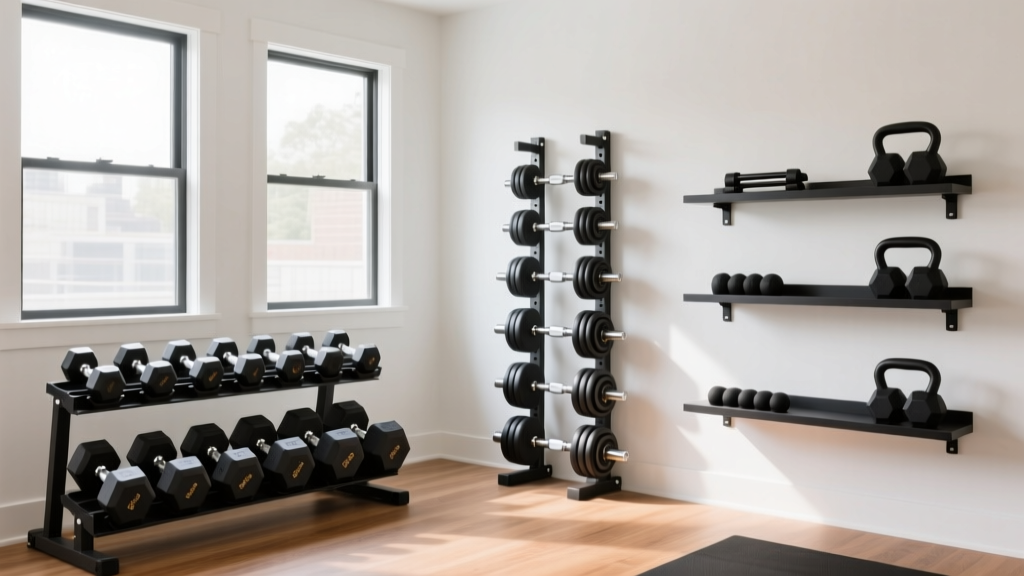
The 3-Tier Rack Rule: Always store your select weight dumbbells on a rack with rubber-padded shelves or UHMW (Ultra-High Molecular Weight) polyethylene liners. In 2026, standard A-frame racks without padding should be retrofitted with adhesive horse-stall matting (at least 3/4-inch thick) to absorb the micro-impacts of racking heavy sets. Never stack hex dumbbells on top of one another on the floor; the concentrated point-load will crush the bottom layer's edges.
Frequently Asked Questions
Can I use Lysol or Clorox wipes on my rubber hex dumbbells?
No. The alcohols and quaternary ammonium compounds in standard household disinfectant wipes will rapidly dry out vulcanized rubber, leading to premature crumbling, fading, and a permanent chalky residue on your hands. Stick to mild soap and water.
Why is my urethane dumbbell turning yellow?
Low-grade TPU (Thermoplastic Polyurethane) can yellow when exposed to UV light due to the oxidation of aromatic rings in the polymer chain. High-end CPU (Cast Polyurethane) used by premium commercial brands is aliphatic and UV-resistant, meaning it will not yellow. If your urethane is yellowing, it is a manufacturing material quality issue, not a maintenance failure on your part.
How do I fix a torn rubber hex edge?
You cannot seamlessly repair torn vulcanized rubber. You can use a flexible marine-grade polyurethane adhesive (like 3M 5200) mixed with a small amount of black rubber mulch to fill the gap and prevent further tearing, but the aesthetic and structural integrity will remain permanently compromised.
More gear to consider
All reviews
Bowflex Dumbbell Reviews & Bumper vs Iron Plate Budget Guide
Incline Bench Dumbbell Trends 2026: Urethane vs Rubber Hex

EZ Curl Bar vs Straight Bar: Budget Guide & Dumbbell Rows on Bench
Olympic vs Standard Plates for Heavy Delts Dumbbell Workouts

Power Rack vs Squat Rack vs Stand: Alternate Dumbbell Curl