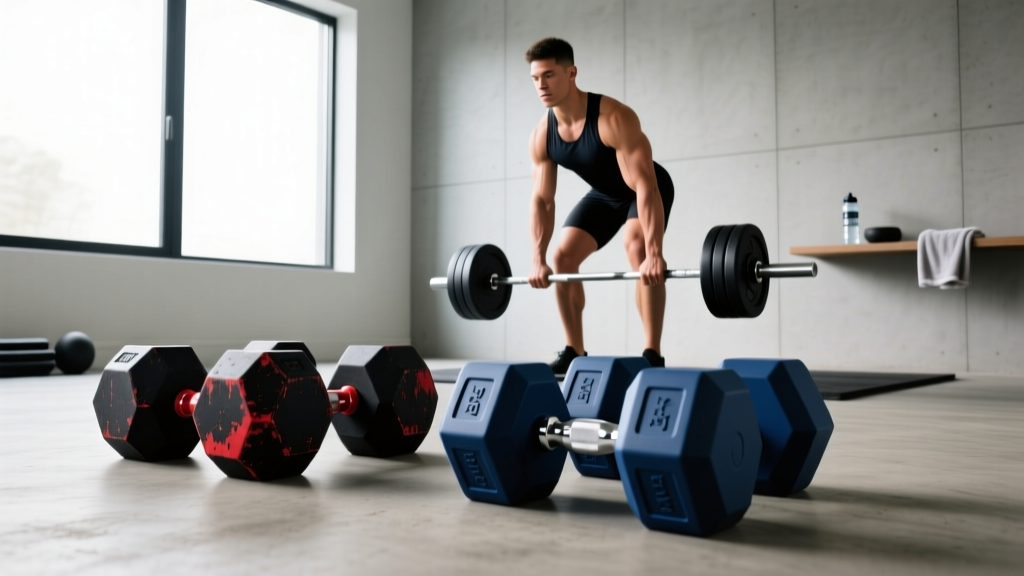
Rubber Hex vs Urethane Dumbbells for the Dumbbell Dead Lift: Value
Compare rubber hex vs urethane dumbbells for the dumbbell dead lift. We break down cost-per-pound, material degradation, and long-term ROI for your gym.

When programming the dumbbell dead lift into your training split, the focus is usually on hamstring stretch, glute contraction, and grip endurance. Rarely do lifters consider the material science of the iron they are pulling from the floor. However, if you are outfitting a home gym or commercial facility in 2026, choosing between rubber hex dumbbells and premium urethane dumbbells is one of the most significant budget decisions you will make. The dumbbell dead lift is uniquely punishing on equipment, and the wrong material choice can lead to premature degradation, safety hazards, and wasted capital.
💡 The Core Dilemma: Budget vs. Longevity
Rubber hex dumbbells offer an accessible entry point (typically $1.60 to $2.10 per pound), while urethane dumbbells demand a premium investment ($3.20 to $4.50 per pound). But when subjected to the repetitive, high-impact nature of heavy floor pulls, which material actually offers the better return on investment over a 5-year lifecycle?
The Biomechanics of the Dumbbell Dead Lift: What Your Weights Endure
To understand the value proposition, we must first analyze the mechanical stress placed on the dumbbell heads during this specific movement. According to exercise biomechanics data outlined by ExRx.net, the dumbbell dead lift requires the lifter to pull the weights from a dead stop on the floor, maintaining a neutral spine while driving through the heels.
Unlike barbell deadlifts that utilize calibrated bumper plates designed to absorb axial shock, dumbbells take concentrated, asymmetrical impact on their outermost corners and edges when returned to the floor. If you are performing heavy sets of 8 to 12 reps, a 100-pound dumbbell will strike the floor up to 100 times per session. The hex shape is mandatory to prevent the weight from rolling away, but those sharp 90-degree hex corners become primary failure points upon impact.
Rubber Hex Dumbbells: The Budget Baseline
Most budget-friendly rubber hex dumbbells on the market are manufactured using a mixture of recycled vulcanized rubber and chemical binders, molded around a solid steel or cast iron core. Industry specifications from Rogue Fitness indicate that standard rubber hex heads typically register around 80 to 85 on the Shore A hardness scale.
Pros and Cons for Heavy Floor Pulls
- Pros: Highly affordable; excellent floor protection for light-to-moderate drops; the hex shape effectively prevents rolling during the setup phase of the dead lift.
- Cons: Susceptible to UV and ozone degradation; emits volatile organic compounds (VOCs) resulting in a strong odor; edges chip and tear under heavy impact.
The Failure Mode: When you drop a heavy rubber hex dumbbell at the top of a dead lift rep, the relatively soft rubber compresses and rebounds. Over time, the sharp hex corners begin to chunk and tear. This creates sharp, hardened rubber burrs that can tear calluses during the gripping phase of the lift, and eventually exposes the inner steel core to moisture and rust.
Urethane Dumbbells: The Premium Investment
Urethane (polyurethane elastomer) is a synthetic polymer that is significantly denser and more durable than traditional rubber. Premium urethane dumbbells, such as the Rogue Urethane Dumbbells, are cast using virgin polyurethane, achieving a Shore A hardness of 90 to 95. This makes them exceptionally resistant to tearing, abrasion, and environmental degradation.
Pros and Cons for Heavy Floor Pulls
- Pros: Virtually odorless; highly resistant to UV, sweat, and ozone; maintains structural geometry and sharp hex edges even after thousands of floor impacts; cleans up easily with standard gym wipes.
- Cons: High initial capital expenditure; the harder surface transmits more vibration to the floor (requiring thick horse stall mats); less 'grip' on the outer surface if you use a dumbbell-to-dumbbell squeeze technique.
The Performance Edge: Because urethane does not compress as easily as recycled rubber, the dead stop at the bottom of the dumbbell dead lift feels more solid and stable. There is no 'squish' or uneven settling on uneven garage floors, allowing for a more consistent starting position for your posterior chain.
5-Year Value Analysis: Cost-Per-Use and Degradation Matrix
To determine true value, we must look past the initial purchase price and calculate the lifecycle cost. Below is a comparative matrix based on a 50-pound pair used for heavy dead lifts three times a week over a 5-year period (approx. 750 workouts).
| Metric | Rubber Hex (50lb Pair) | Premium Urethane (50lb Pair) |
|---|---|---|
| Average Cost Per Pound (2026) | $1.85 / lb | $3.80 / lb |
| Initial Pair Cost | $185.00 | $380.00 |
| Edge Chipping After 2 Years | Moderate to Severe | None (Cosmetic Scuffing Only) |
| Odor / Off-gassing | High (Requires Ventilation) | Zero |
| Replacement Cost (Year 4) | $185.00 (Likely Needed) | $0.00 |
| Total 5-Year Cost | $370.00 | $380.00 |
The ROI Insight: While rubber hex dumbbells are half the price on day one, their degradation rate during high-impact floor exercises like the dumbbell dead lift often necessitates a replacement by year three or four. Urethane is effectively a 'buy once, cry once' asset that retains its structural integrity and resale value for decades.
Edge Cases and Failure Modes on the Garage Gym Floor
Material science only tells half the story; the environment dictates the rest. Here are specific edge cases to consider when choosing your dumbbells for dead lifts:
1. The 'Chalk and Sweat' Corrosion Factor
Heavy dumbbell dead lifts require aggressive grip management, usually involving magnesium carbonate (gym chalk). Recycled rubber is porous; it absorbs chalk dust, sweat, and humidity, which accelerates the breakdown of the chemical binders holding the rubber to the steel core. Urethane is entirely non-porous. Chalk wipes off with a damp cloth, preventing the slow degradation of the dumbbell head's connection point.
2. Temperature Fluctuations
If your home gym is in an uninsulated garage or shed, temperature swings will wreak havoc on standard rubber. In freezing temperatures, recycled rubber becomes brittle, and the hex corners will shatter upon impact with concrete. Urethane maintains its elastomeric properties across a much wider temperature range, ensuring consistent shock absorption whether it is 30°F or 100°F in your gym.
Expert Framework: Making the Final Purchasing Decision
Do not default to urethane simply because it is more expensive, and do not buy rubber hex simply because it is cheap. Use this decision framework to allocate your 2026 equipment budget effectively:
Choose Rubber Hex If:
- Your total dumbbell budget is under $600.
- You strictly perform controlled dead lifts (no dropping from lockout).
- You have thick, 3/4-inch horse stall mats to dampen the impact.
- Your gym space is highly ventilated to handle VOC off-gassing.
Choose Urethane If:
- You are building a commercial facility or serious long-term home gym.
- You frequently drop the weights at the end of heavy, high-rep AMRAP sets.
- Your gym is in an enclosed, climate-controlled room (e.g., a spare bedroom or basement).
- You value hygiene, easy cleaning, and zero odor.
Frequently Asked Questions
Can I use round dumbbells for the dumbbell dead lift?
It is highly discouraged. Round dumbbells will roll away from your shins during the setup phase, forcing you into a compromised, rounded-spine position to chase the weight. The hex shape is practically mandatory for floor-pulling movements to ensure the weight stays parallel to your mid-foot.
Does the handle knurling differ between rubber and urethane sets?
Not inherently, as the handle is manufactured separately from the head. However, premium urethane sets are almost always paired with high-quality, hard-chrome or black oxide steel handles featuring medium-to-deep knurling. Budget rubber sets often feature shallow, painted handles that become slick when exposed to sweat during heavy dead lift sets.
Will urethane dumbbells damage my concrete floor?
Urethane is harder than rubber (Shore 90A+), meaning it absorbs less shock and transfers more kinetic energy into the floor. If you are dropping heavy dumbbells on bare concrete, you risk spalling the concrete surface. Always use a dedicated lifting platform or heavy-duty rubber stall mats when performing heavy dumbbell dead lifts, regardless of the dumbbell material.
Ultimately, the dumbbell dead lift is a foundational movement that demands reliable, durable equipment. By understanding the true lifecycle cost and material limitations of rubber hex versus urethane, you can invest in a setup that supports your strength goals without compromising your budget or your garage floor.
More gear to consider
All reviews
Troubleshooting Miniature Dumbbells: Neoprene Home Use Mistakes
Cast Iron vs Competition Kettlebells & Dumbbell Squat Snatch
Beyond Your Bowflex Dumbbells Workout: Barbell Collar Types Compared

Rack vs Stand Troubleshooting: Squats and the Dumbbell French Curl

EZ Curl vs Straight Bar & Dumbbell Chest Press: Women's Budget Guide
