
Power vs Squat Rack vs Stand & One Arm Dumbbell Row Muscles Worked
Compare power rack vs squat rack vs squat stand for 2026. Includes a beginner setup guide and one arm dumbbell row muscles worked for unilateral back days.

The 2026 Home Gym Rack Dilemma: Space, Budget, and Heavy Unilateral Lifts
Building a home gym in 2026 requires balancing spatial constraints, budget, and the specific biomechanical demands of your programming. For beginners, the terminology alone is a barrier. What exactly is the difference between a power rack, a squat rack, and a squat stand? More importantly, how does your choice of steel affect your ability to perform foundational unilateral movements safely and effectively?
In this comprehensive guide, we will break down the structural differences between the three main rack categories. Then, we will apply this knowledge to a practical case study: optimizing your rack setup for heavy unilateral back training, specifically analyzing the one arm dumbbell row muscles worked and how to execute the movement flawlessly within your new equipment footprint.
The Core Comparison Matrix: Power Rack vs Squat Rack vs Squat Stand
Before diving into exercise execution, you must understand the hardware. The table below outlines the critical specifications you need to know when shopping for racks in 2026, focusing on entry-level to mid-tier models that dominate the home gym market.
| Feature | Power Rack (Full Cage) | Squat Rack (Open Front) | Squat Stand (2-Post) |
|---|---|---|---|
| Uprights | 4 (Enclosed) | 4 (Open Front) or 2 with Base | 2 (Independent or Bolted Base) |
| Steel Profile | 2x2 or 3x3 (11 to 14 Gauge) | 2x3 or 3x3 (11 to 12 Gauge) | 3x3 (11 Gauge Standard) |
| Avg. Price (2026) | $300 - $650 | $350 - $700 | $250 - $495 |
| Safety for Solo Lifting | Excellent (Full Spotter Arms) | Good (Extended Spotter Arms) | Poor/Moderate (Short Arms, Tip Risk) |
| Attachment Ecosystem | Massive (Pulleys, Dip Bars, Bells) | Moderate (J-Cups, Band Pegs) | Minimal (J-Cups, Spotter Arms only) |
Case Study: Optimizing Your Rack for Unilateral Back Training
Why are we discussing a heavy dumbbell back exercise in a rack-buying guide? Because your rack footprint dictates your bench placement, dumbbell storage, and spatial awareness during heavy unilateral movements. If you buy a squat stand with a massive rear base footprint, you may find yourself kicking the steel uprights every time you set up for a heavy row.
Understanding the specific biomechanics of the movement helps you realize why you need a stable, spacious rack environment to perform it correctly without torqueing your spine or hitting a crossmember.
One Arm Dumbbell Row Muscles Worked
The one arm dumbbell row is a staple for building a thick, resilient back. According to the ExRx.net Kinesiology Database, this movement is a horizontal pull that targets multiple muscle groups across the posterior chain. Here is the exact anatomical breakdown:
- Primary Movers (Synergists): Latissimus Dorsi (the 'lats'), Teres Major, and Posterior Deltoid.
- Secondary Stabilizers: Rhomboids, Middle and Lower Trapezius, and the Brachialis/Biceps Brachii.
- Core & Anti-Rotation Stabilizers: Erector Spinae, External/Internal Obliques, and Transverse Abdominis.
Because the one arm dumbbell row muscles worked heavily involve the anti-rotation core stabilizers, the exercise forces your obliques to fight against the asymmetrical load. If your bench is wedged awkwardly inside a cramped 48-inch deep power rack, you cannot achieve the proper hip-hinge stance required to stabilize this rotational force.
Step-by-Step Beginner Guide: The Rack-Supported Dumbbell Row
Unilateral training is vital for correcting left-to-right strength imbalances, a concept heavily supported by the American College of Sports Medicine (ACSM). Here is how to execute the movement perfectly using your rack and a flat utility bench.
- The Tripod Base Setup: Place a flat bench parallel to your power rack or squat rack uprights. If using a power rack, position the bench just outside the cage to allow your working-side leg to step back freely. Your three points of contact should be: (1) Non-working knee on the bench, (2) Non-working hand gripping the bench or rack upright, and (3) Working-side foot planted firmly on the floor at a 45-degree angle.
- The Hip Hinge: Push your hips back until your torso is roughly parallel to the floor. Maintain a neutral spine. As noted in Mayo Clinic's strength training guidelines, maintaining core bracing and spinal neutrality is paramount to preventing lower back shear forces during hinged rowing movements.
- The Pull Path: Do not pull the dumbbell straight up to your armpit. Instead, drive your elbow back toward your hip pocket. This specific path maximizes latissimus dorsi engagement and minimizes bicep and rear deltoid takeover.
- The Squeeze and Eccentric: Pause for one second at the top of the movement, actively depressing your scapula (pulling your shoulder blade down and back). Lower the weight under strict control for a 2-second eccentric phase, feeling a deep stretch in the lat at the bottom.
"The beauty of the rack-supported row is tactile feedback. By gripping the vertical steel upright of a power rack or squat stand with your non-working hand, you create a closed kinetic chain that instantly stabilizes your thoracic spine and allows you to overload the lats safely."
Real-World 2026 Buying Recommendations
Based on the spatial requirements for exercises like the dumbbell row, alongside standard barbell lifts, here are three highly specific recommendations for beginners entering the 2026 market:
1. The Space-Saver: Titan Fitness T-2 Short Power Rack
Price: ~$499 | Steel: 2x2 14-Gauge | Height: 72 inches
The T-2 is fully enclosed, meaning you can safely fail a bench press without a spotter. For dumbbell rows, the 24-inch interior depth is tight, so you will perform the row facing outward, using the front upright as your support hand anchor. It features 5/8-inch hole spacing, which is standard for budget racks.
2. The Best Value: Rep Fitness PR-1100 Home Gym Rack
Price: ~$349 | Steel: 2x2 14-Gauge | Height: 84 inches
The PR-1100 remains the undisputed king of entry-level home gyms. It includes a multi-grip pull-up bar and offers a 44-inch interior depth, giving you plenty of room to set up a bench and perform heavy unilateral rows inside the cage, protecting your floors from dropped dumbbells.
3. The Premium Open-Air: Rogue Fitness SML-2C Monster Lite Squat Stand
Price: ~$495 | Steel: 3x3 11-Gauge | Hole Spacing: 5/8-inch (Westside)
If you prefer open-air lifting and have the budget for premium steel, the SML-2C is exceptional. The 3x3 uprights provide unmatched stability for heavy barbell work, and the open footprint means zero restrictions on your bench placement for dumbbell rows. Note: You must purchase the optional bolt-down gussets or heavy rear spotter arms to prevent tipping.
Frequently Asked Questions
Can I store my dumbbells on a squat stand?
Generally, no. Squat stands lack the horizontal crossmembers required to weld or bolt dumbbell storage trays. If you are buying a squat stand, you will need to purchase a separate freestanding dumbbell rack, which eats into your gym's square footage. Power racks and squat racks often feature attachable rear storage shelves.
Why does my lower back hurt during one arm dumbbell rows?
Lower back pain during this movement usually stems from a lack of anti-rotational core strength or an improper hip hinge. If you are twisting your torso to hoist the weight (using momentum rather than the latissimus dorsi), you place severe shear force on the lumbar spine. Drop the weight by 20%, focus on the tripod base setup outlined above, and brace your core as if preparing for a punch.
Do I need a 3x3 rack over a 2x2 rack?
For 90% of beginners, a 2x2 14-gauge steel rack rated for 800+ lbs is more than sufficient. However, 3x3 11-gauge steel offers greater rigidity, less wobble during kipping pull-ups, and compatibility with premium attachments like lat-row towers and monolifts. If you plan to keep your rack for a decade and slowly upgrade your attachment ecosystem, the 3x3 profile is the superior long-term investment.
More gear to consider
All reviews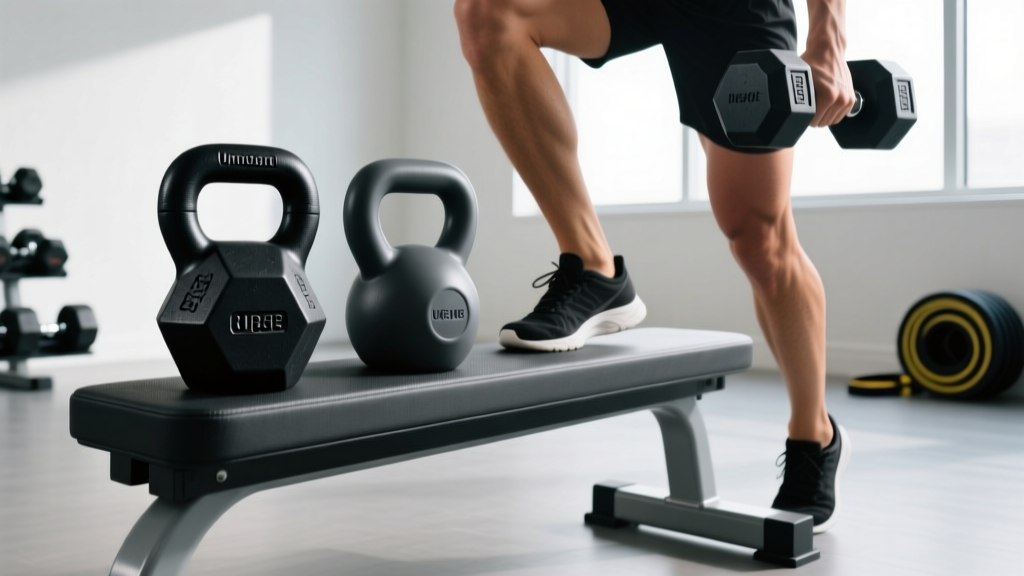
Rubber Hex vs Urethane: Best Gear for Dumbbell Step Ups on Bench

EZ Bar vs Straight Bar: Curls and the Dumbbell Low Fly
Decline Dumbbell Curl Setups: 2026 Rack & Storage Trends

Maintaining Loadable Dumbbells for the Perfect Lat Dumbbell Pull
Optimizing Gym Space: Rubber Hex vs Urethane & 1lb Dumbbell Storage
