Rubber Hex vs Urethane: Budget Breakdown for Curling a Dumbbell
Compare rubber hex vs urethane dumbbells for arm training. Discover the true lifetime cost, sweat degradation, and value when curling a dumbbell daily.

The Hidden Variables in Arm Training: Beyond the Price Tag
When outfitting a home gym in 2026, the temptation to minimize upfront costs is strong. For many lifters, this means defaulting to budget-friendly rubber hex dumbbells. However, when you isolate specific movement patterns—specifically the biomechanics of curling a dumbbell—the material composition of the weight head and the handle's knurling drastically alter the long-term value proposition. The repetitive motion of curling a dumbbell exposes the equipment to intense localized friction, acidic palm sweat, and frequent contact with the forearms and thighs.
While a rubber-coated cast iron hex dumbbell might save you $2.00 per pound at the point of purchase, the 'hidden taxes' of material degradation, poor grip ergonomics, and eventual disposal often make urethane the superior financial choice over a 10-year horizon. In this comprehensive budget breakdown, we analyze the true lifetime cost of rubber hex versus urethane dumbbells, focusing specifically on the demands of high-volume bicep and brachioradialis training.
The Biomechanics of the Curl: Why Coating and Handle Matter
To understand the value disparity, we must look at how the equipment interacts with your body during a curl. According to the ExRx.net Biomechanics Database, exercises like the hammer curl require the dumbbell to rest flush against the lateral thigh at the bottom of the movement and hover near the anterior deltoid at the top.
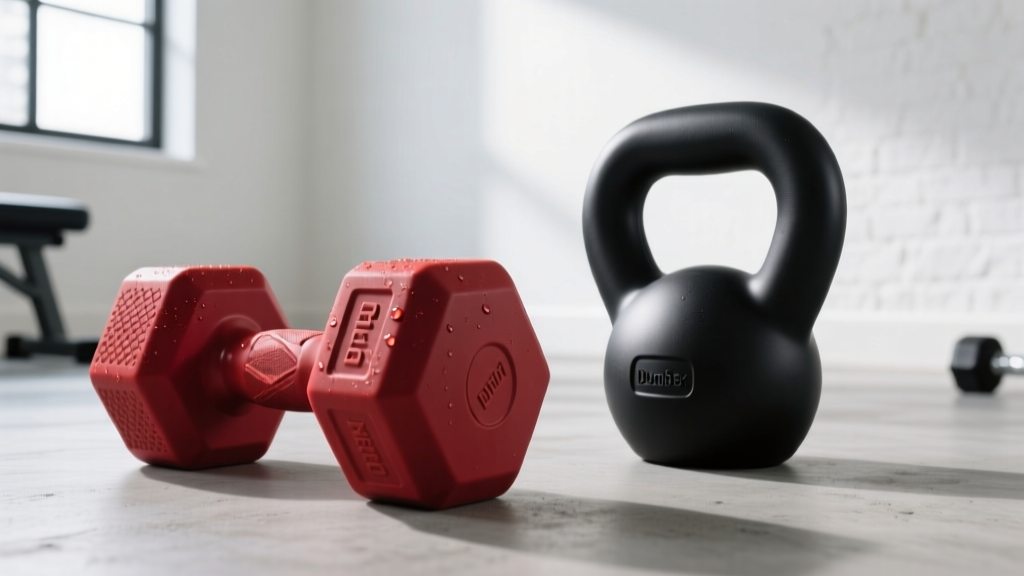
- Edge Geometry: Budget rubber hex dumbbells feature sharp, 90-degree inner edges. When curling a dumbbell in a hammer grip, these hard rubber edges frequently dig into the brachioradialis or the medial forearm, causing soft-tissue bruising during heavy eccentric phases. Premium urethane hex dumbbells (like those from Rogue or REP Fitness) utilize radiused, beveled inner edges that eliminate this friction point.
- Knurling Integrity: The handle is your only point of contact. Budget rubber hex sets typically feature shallow, passive knurling on standard chrome shafts. When your hands sweat during a high-rep set, grip fatigue accelerates, forcing you to squeeze harder and inadvertently limiting bicep isolation. Urethane dumbbells are generally paired with medium-depth volcano knurling on hardened steel shafts, providing passive grip security without tearing calluses.
Upfront Cost vs. Lifetime Value Matrix
Let us break down the financial reality of purchasing a pair of 50 lb dumbbells in 2026. We are comparing standard commercial-grade rubber hex dumbbells (e.g., REP Fitness Rubber Hex or CAP Barbell) against premium urethane options (e.g., Rogue Urethane Dumbbells).
| Metric | Rubber Hex Dumbbells | Urethane Dumbbells | Value Winner |
|---|---|---|---|
| Upfront Cost (per lb) | $1.50 - $2.00 | $4.00 - $5.50 | Rubber Hex |
| Upfront Cost (Pair of 50s) | $150 - $200 | $400 - $550 | Rubber Hex |
| Expected Lifespan (Heavy Use) | 3 - 5 Years | 15 - 20+ Years | Urethane |
| Cost Per Year of Use | $30 - $66 / year | $20 - $36 / year | Urethane |
| Secondary Market Resale Value | 20% - 30% of MSRP | 60% - 75% of MSRP | Urethane |
As the matrix illustrates, the annualized cost of ownership actually flips in favor of urethane when you extend the timeline beyond five years. Furthermore, the resale value of urethane remains remarkably stable because the material does not visually age, chalk, or off-gas over time.
Failure Modes: What Happens After 10,000 Curls?
Every piece of gym equipment has a failure mode. When evaluating the budget breakdown, you must account for how the material fails under the specific stress of arm training.
⚠️ Warning: The 'Thumb Friction' TearDuring supinated bicep curls, the base of the thumb and the thenar eminence repeatedly rub against the inner collar where the handle meets the weight head. On rubber hex dumbbells, this friction, combined with the acidity of sweat, causes the rubber to delaminate and tear away from the steel core within 12 to 18 months of daily use. Once the inner seal is broken, moisture reaches the cast iron core, leading to internal rust jacking that expands and cracks the outer rubber shell. Urethane is vulcanized to the steel core under immense pressure and boasts an abrasion resistance up to 10 times higher than virgin rubber, making it virtually immune to thumb-friction tearing.
Common Rubber Hex Edge Cases
- The 'Drop Set' Chip: When finishing a brutal curl drop set and tossing the dumbbells onto a rubber mat, the brittle corners of aged rubber hex heads frequently chip or flatten. Urethane absorbs and disperses impact energy, maintaining its structural geometry even after thousands of drops.
- The UV Dry-Rot: If your home gym features large windows with direct sunlight, UV exposure will dry out the chemical plasticizers in cheap rubber, leading to a chalky residue that transfers to your hands and clothing during curls.
The 'Sweat Tax' and Material Degradation
Human sweat is not just water; it is a complex saline solution with a pH level typically ranging from 4.5 to 7.0. This mild acidity is highly corrosive to certain polymers. When you are curling a dumbbell for 45 minutes, your palms are continuously depositing this acidic moisture onto the handle and the inner collar of the weight head.
"The long-term maintenance of free weights is directly tied to the chemical resistance of the coating. Polyurethane (urethane) exhibits near-total resistance to saline and acidic degradation, whereas standard rubber compounds require frequent chemical neutralization to prevent dry rot and odor emission." — Commercial Gym Equipment Maintenance Guidelines
When rubber begins to degrade, it releases volatile organic compounds (VOCs), resulting in the infamous 'cheap gym smell.' This odor is not just a nuisance; it is a sign of chemical breakdown. Once a rubber dumbbell reaches this stage, it is virtually unsellable and must be discarded, representing a 100% loss of your initial capital investment. Urethane, being a completely inert and odorless polymer once cured, never suffers from this 'sweat tax,' preserving both the air quality of your gym and the financial value of your equipment.
2026 Decision Framework: Which Should You Buy?
Choosing between rubber hex and urethane ultimately depends on your training age, budget liquidity, and specific exercise selection. Use this framework to make your purchasing decision.
Buy Rubber Hex If:
- You are on a strict, immediate budget: If you need a full set of dumbbells (5-50 lbs) today and only have $600 to spend, rubber hex is the only mathematical option.
- You prioritize floor safety over ergonomics: If your primary use is for floor-based movements like renegade rows or goblet squats where the hex shape prevents rolling, and you rarely perform strict isolation curls.
- You are outfitting a low-traffic guest room gym: If the dumbbells will be used less than twice a week, the sweat and friction degradation will take decades to manifest.
Buy Urethane If:
- Arm specialization is a priority: If your programming involves high-frequency arm days, hammer curls, and strict supinated curls, the beveled edges and superior knurling of urethane dumbbells will directly improve your mind-muscle connection and training comfort.
- You view equipment as an asset: If you want equipment that will retain 70% of its value on the secondary market should you ever upgrade or move.
- You hate equipment maintenance: If you want a 'buy it for life' product that requires nothing more than an occasional wipe-down with a damp microfiber cloth, completely eliminating the need for rubber conditioners or odor neutralizers.
Frequently Asked Questions
Can I just wear lifting gloves to protect the rubber when curling?
While lifting gloves or grips (like Versa Gripps) will protect the inner collar from direct thumb friction, they do not solve the issue of ambient sweat dripping onto the weight head, nor do they fix the sharp inner edges that dig into your forearms during hammer curls. Gloves also alter the biomechanical feedback of the knurling, which many advanced lifters prefer to feel directly.
Are urethane dumbbells completely indestructible?
No. While urethane is incredibly resilient, it can be cut or gouged by sharp objects. Additionally, if you repeatedly drop heavy urethane dumbbells (80+ lbs) directly onto bare concrete without mats, the steel handle can eventually bend or snap at the collar weld, though the urethane head itself will likely survive the impact intact.
Is there a middle-ground option between rubber and urethane?
Yes. In recent years, 'premium rubber' or 'crumb rubber' options have emerged from brands like REP Fitness and Titan Fitness. These use higher-grade, low-odor virgin rubber with beveled edges and better knurling. They sit at roughly $2.50 to $3.00 per pound, offering a solid middle ground for lifters who want better ergonomics for curling but cannot justify the premium price of full urethane.
More gear to consider
All reviews
Are Dumbbells Enough? Top Neoprene Sets for Home Use (2026)
Budget Loadable Dumbbells: Complete Leg Workout With Dumbbells
Wood Chopper with Dumbbell Setup: Olympic vs Standard Weight Plates

Cast Iron vs Competition Kettlebells & Pulldown With Dumbbells Guide

EZ Curl Bar vs Straight Bar: Budget & Dumbbells High Pull Value
