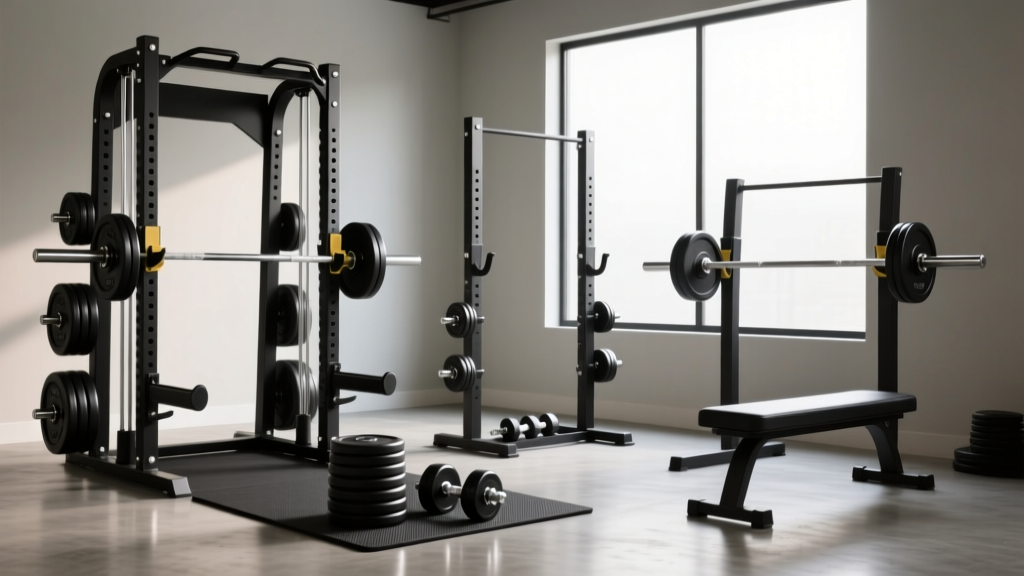
Power Rack vs Squat Rack vs Squat Stand: What's a Dumbbell Row Setup?
Troubleshoot your home gym build. We compare power racks, squat racks, and stands, answering what's a dumbbell row setup and avoiding costly mistakes.

The Home Gym Centerpiece: Troubleshooting Your Rack Selection
Building a home gym in 2026 requires navigating a minefield of equipment specifications, footprint constraints, and budget limitations. The most critical decision you will make is selecting your primary lifting station. While beginners often focus on the barbell and plates, the rack dictates your safety, exercise variety, and workflow efficiency.
A frequent point of confusion arises when lifters map out their upper-body days. Many ask foundational questions like, "what's a dumbbell row?" and "how does my rack choice affect my bench and dumbbell setup?" The dumbbell row is a cornerstone latissimus dorsi and rhomboid builder, but executing it safely alongside heavy barbell work requires a strategic approach to your rack's footprint and bench integration. In this troubleshooting guide, we break down the common mistakes lifters make when choosing between a power rack, a squat rack, and squat stands, and how to optimize your space for both heavy squats and high-volume dumbbell work.
Decoding the Iron Trinity: Specifications and Failure Points
Before troubleshooting specific exercise setups, we must establish the mechanical differences between the three primary rack categories. According to Garage Gym Reviews' extensive rack testing methodology, the stability and attachment ecosystem of your rack will define your gym's long-term viability.
| Feature | Power Rack (e.g., Titan T-3) | Squat Rack (e.g., Rogue S-2) | Squat Stand (e.g., Rep SR-4000) |
|---|---|---|---|
| Footprint | 48" x 48" (Enclosed) | 48" x 24" (Open Front) | 32" x 24" (Independent) |
| Upright Profile | 3" x 3" 11-Gauge Steel | 2" x 3" 11-Gauge Steel | 3" x 3" 11-Gauge Steel |
| Hole Spacing | 1" Westside (Bench Zone) | 2" Standard | 1" Westside (Bench Zone) |
| Safety Mechanism | Pin-and-Pipe or Straps | Pin-and-Pipe | Flip-Down or Strap Safeties |
| 2026 Avg Price | $699 - $899 | $495 - $550 | $349 - $399 |
Troubleshooting the "What's a Dumbbell Row?" Dilemma
When users search for what's a dumbbell row, they are usually looking for a unilateral back exercise that requires a flat bench for torso support. As noted in BarBend's comprehensive guide to the dumbbell row, proper execution demands a stable base to prevent rotational torque on the lumbar spine. Here is where your rack choice directly impacts your workout flow.
The Squat Stand Friction Point
If you purchase independent squat stands to save space and money, you will face a massive workflow bottleneck on upper-body days. To perform a dumbbell row or a heavy dumbbell bench press, you must drag a 60-to-90-pound adjustable bench into the lifting zone.
⚠️ Real-World Failure Mode: Lifters using freestanding squat stands frequently bump the uprights while maneuvering heavy adjustable benches in and out of the station. If the stands are not bolted to a platform or loaded with heavy spotter arms, a simple hip-check while carrying a 100lb dumbbell can tip the upright, causing the J-cups and barbell to crash to the floor.The Power Rack Advantage for Dumbbell Work
A full power rack (48" x 48") solves this by allowing the bench to "live" inside the cage. You can seamlessly transition from barbell squats to heavy single-arm dumbbell rows without moving the bench. The enclosed uprights also provide a psychological safety net and a physical backstop if a heavy dumbbell slips from your grip during a row or press.
Common Purchasing Mistakes and Edge Cases
Beyond bench integration, lifters routinely make three critical errors when buying racks in 2026. Troubleshoot your cart before checking out.
Mistake 1: Ignoring Hole Spacing for Bench Pressing
Standard 2-inch hole spacing (common on budget squat racks) is a major troubleshooting headache for bench pressers. If the lowest J-cup setting is slightly too high, you will unrack the bar with your elbows partially locked, wasting energy. If the next hole down is 2 inches lower, you might unrack with the barbell compressing your chest. The Fix: Always verify that the rack features "Westside" 1-inch hole spacing in the bench press zone (usually the lower 10-15 holes).
Mistake 2: Misunderstanding Safety Strap Sag
Many lifters upgrade to nylon safety straps (like the Rogue Monster Straps) to protect their barbell's knurling from the steel-on-steel damage caused by traditional pin-and-pipe safeties. However, a common edge case occurs when lifters leave heavy loads (400+ lbs) resting on the straps overnight. Over time, the nylon stretches and deforms, creating a sloping safety angle that can cause a failed rep to roll toward the lifter's face. The Fix: Use straps for dynamic failures, but use pin-and-pipe or flip-down steel safeties for static heavy holds and rack pulls.
Mistake 3: Overlooking Pull-Up Bar Interference
If you plan to do overhead presses or tall-user pull-ups, the standard straight pull-up bar on a power rack will smash into your head or the barbell. Look for racks with a multi-grip pull-up bar that is offset backward, or be prepared to unbolt the front crossmember to install a specialized infinity pull-up bar attachment.
Pro-Tip for Low Ceilings: If your garage ceiling is under 84 inches, do not buy a standard 90-inch power rack and attempt to cut the uprights yourself. This voids the warranty and compromises the structural integrity of the steel. Instead, purchase a dedicated "Short" rack (usually 72" or 80" uprights) and pair it with a specialized short safety bar.
Exercise-Specific Troubleshooting Matrix
Use this quick-reference guide to diagnose your current setup or plan your next upgrade based on your primary training modalities.
- Heavy Squats & Rack Pulls: Requires a Power Rack. The enclosed 3x3 uprights handle the lateral torque of heavy rack pulls and allow for the use of heavy-duty strap safeties without the risk of the bar rolling off the pins.
- Olympic Weightlifting (Cleans/Snatches): Requires Squat Stands or an open-front Squat Rack. You need an unobstructed path to bail the bar forward or backward. A full power rack's front crossmember is a tripping hazard and will dent your floor if you drop a missed clean.
- High-Volume Hypertrophy (Dumbbell Rows, Presses, Curls): Requires a Power Rack or a wide-base Squat Rack. You need the interior width (at least 43 inches between uprights) to comfortably lay back on an adjustable bench without your elbows striking the steel uprights during dumbbell flyes or rows.
- Kipping Pull-Ups & Gymnastics: Requires a bolted-down Power Rack. Independent squat stands and freestanding squat racks will violently tip over if subjected to the dynamic horizontal forces of kipping muscle-ups or butterfly pull-ups. According to Rogue Fitness' official safety guidelines, any independent stand used for dynamic movements must be bolted to a structural floor or heavily sandbagged.
Final Verdict: Designing Your 2026 Lifting Station
Troubleshooting your home gym layout comes down to measuring your space, defining your exercise selection, and respecting the physics of heavy iron. If your programming heavily features unilateral dumbbell work like the dumbbell row, heavy bench pressing, and accessory attachments (lat pulldowns, cable crossovers), the 48x48 Power Rack is the undisputed king of efficiency and safety. If you are strictly an Olympic lifter or operate in a tight apartment gym where the equipment must be pushed against a wall, heavy-duty 3x3 Squat Stands with flip-down safeties offer the best footprint-to-function ratio. Avoid the middle-ground 2x3 squat racks unless you are on a strict sub-$500 budget, as the lack of 1-inch hole spacing and 3x3 attachment compatibility will eventually force you to upgrade.
More gear to consider
All reviews
Bumper vs Iron Plate Maintenance & The Kong Squeezz Dumbbell Test

Barbell Collar Comparison & What Does Incline Dumbbell Press Work?

Bumper Plate vs Iron Plate Value: The Dumbbell Windmill Exercise Test

Bumper vs Iron Plates: Gym Layouts for a World Record Dumbbell Curl
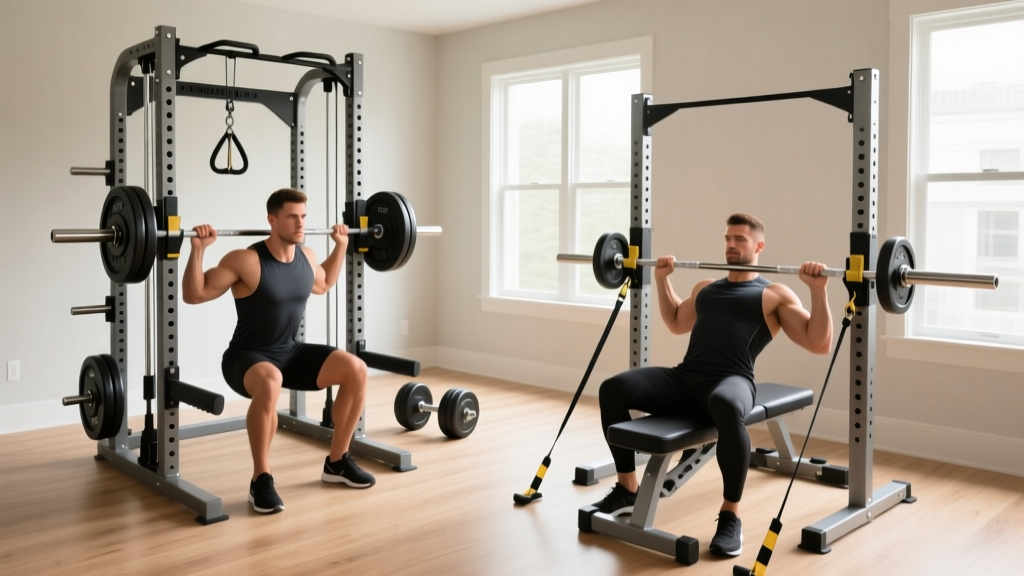
Power Rack vs Squat Stand: Seated Row Dumbbell Alternative Setups
