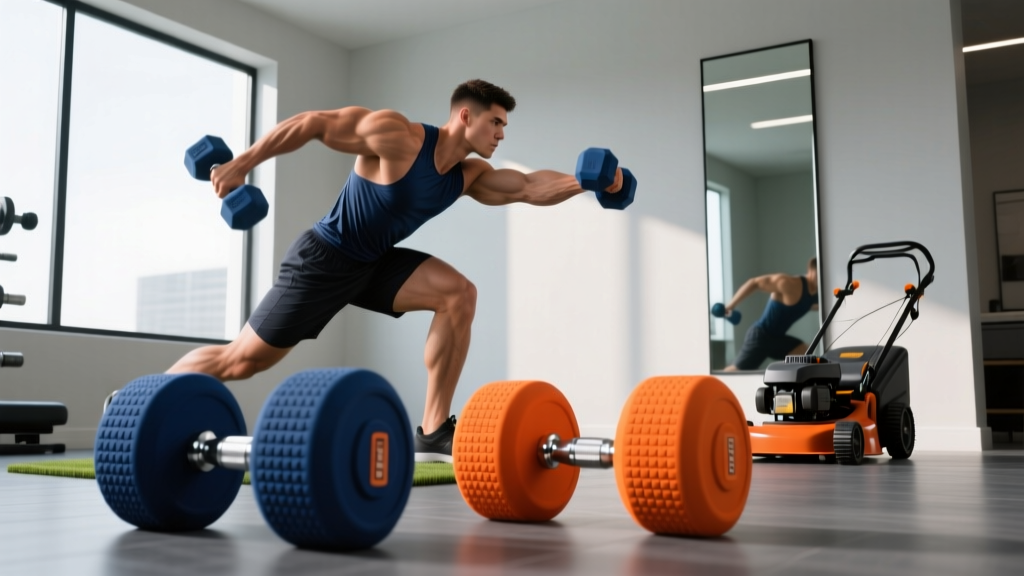
How to Work Rear Delts with Dumbbells: Loadable Gear Maintenance
Learn how to work rear delts with dumbbells while maximizing gear lifespan. Expert maintenance tips for loadable dumbbells and interchangeable plates.

The Hidden Toll of Rear Delt Training on Loadable Dumbbells
When researching how to work rear delts with dumbbells, most lifters focus entirely on scapular retraction, chest-supported angles, and the mind-muscle connection. However, the equipment you use—specifically loadable dumbbells with interchangeable plates—takes a unique, often overlooked beating during posterior chain isolation. Rear deltoids are a small, fatigue-prone muscle group. Training them effectively requires high repetitions (15-25 reps), strict tempo control, and frequent micro-loading.
This training style creates a specific wear-and-tear profile. You are constantly breaking down heavy loadable handles, swapping out large plates for 2.5 lb and 1.25 lb fractional plates. This high-frequency plate swapping, combined with the sweat from high-rep isolation and the rotational torque of a reverse fly, degrades collars, sleeves, and knurling faster than heavy, low-rep pressing. In 2026, with premium loadable dumbbell handles like the Rogue 15-inch Olympic handles costing upwards of $115 each, protecting your investment is critical. Here is your comprehensive maintenance guide tailored to the demands of rear delt training.
The Biomechanics of Reverse Flyes and Sleeve Torque
According to exercise biomechanics databases like EXRX, the rear deltoid functions primarily in horizontal abduction and external rotation. When you perform a bent-over reverse fly or a chest-supported rear delt row with loadable dumbbells, the weight plates shift dynamically along the sleeve.
Unlike a barbell bench press where the load moves in a relatively linear path, the wide arc of a reverse fly generates lateral G-force. This causes the interchangeable plates to slide back and forth against the inner collar and the end cap. Over time, this 'plate rattle' micro-abrades the steel sleeve and degrades the inner lip of your bumper or urethane plates.
Expert Insight: The Nylon Washer Trick
To prevent steel-on-steel abrasion during high-rep rear delt flyes, place a thin nylon or UHMW polyethylene washer between the inner collar and your first plate. This $2 hardware store fix absorbs the lateral friction of the reverse fly arc, preserving the zinc or chrome finish on your loadable handle's sleeve.
Micro-Loading and Collar Wear: Preventing Thread Stripping
Because rear delts require precise micro-loading, you will be unscrewing and re-tightening spin-lock collars far more often than a powerlifter doing heavy floor presses. Standard 1-inch spin-lock dumbbell handles and even 2-inch Olympic loadable handles rely on threaded sleeves. Constant friction from swapping fractional plates strips these threads, leading to cross-threading and dangerous collar slippage mid-set.
The Lubrication Protocol for Spin-Lock Collars
Never use WD-40 on dumbbell threads; it attracts chalk and dust, creating a grinding paste that destroys the threading. Instead, follow this protocol:
- Clean: Use a stiff nylon brush (never brass or steel on chrome threads) to remove chalk and dead skin from the male and female threads.
- Degrease: Wipe with a microfiber cloth dampened with isopropyl alcohol.
- Lubricate: Apply a single drop of 3-IN-ONE Multi-Purpose Oil or a light white lithium grease to the base of the thread. Spin the collar on and off three times to distribute it evenly.
Knurling Preservation During High-Rep Isolation
Rear delt training is notoriously high-rep and sweat-inducing. Sweat is highly corrosive, and when mixed with the magnesium carbonate (chalk) used to maintain grip during heavy back work, it forms a caustic sludge that settles deep inside the knurling of your loadable handles. As BarBend's equipment maintenance guidelines emphasize, neglecting knurling care leads to oxidization (rust), which permanently dulls the 'bite' of the grip.
Step-by-Step Knurling Rescue
- Post-Workout Wipe: Immediately after your rear delt finishers, wipe the handles with a dry microfiber towel to remove surface sweat.
- Weekly Deep Clean: Spray the knurling with a 50/50 mix of white vinegar and water. Let it sit for 60 seconds to break down chalk and sebum.
- Scrub: Use a stiff nylon bristle brush to scrub in a circular motion, lifting the debris out of the knurl valleys.
- Neutralize & Protect: Wipe dry, then apply a light coat of 3-IN-ONE oil. Let it sit for 10 minutes, then wipe off the excess. This leaves a microscopic protective barrier against humidity.
Loadable Dumbbell Types & Rear Delt Maintenance Matrix
Not all loadable dumbbells are built the same. The maintenance required depends heavily on the sleeve and collar mechanism you use for your interchangeable plates.
| Handle Type | Collar Mechanism | Rear Delt Wear Risk | Targeted Maintenance Solution |
|---|---|---|---|
| Standard 1' Spin-Lock | Star-Lock Nut | High (Thread stripping from frequent micro-loading) | Weekly thread brushing & light oiling; replace nylon inserts annually. |
| Olympic 2' Loadable | Spring Clip / Clamp | Medium (Spring tension loss from constant removal) | Inspect spring coils for micro-fractures; lubricate hinge pin with dry PTFE spray. |
| Olympic 2' Loadable | Threaded Spin-Lock | Low-Medium (Cross-threading if rushed between sets) | Always thread by hand first; use white lithium grease on deep-cut threads. |
| Contoured Grip Handles | Lever / Cam Lock | High (Cam mechanism clogging with chalk dust) | Monthly compressed air blowout of the cam hinge; avoid liquid lubes. |
Interchangeable Plate Care: Urethane vs. Hi-Temp Rubber
The plates you load onto your dumbbells also require maintenance, especially when subjected to the clanking and shifting inherent in rear delt flyes. According to manufacturer care guidelines from top-tier brands like Rogue Fitness, the material of your interchangeable plates dictates their longevity.
Urethane Plates
Urethane is the gold standard for loadable dumbbells in 2026 due to its low odor and high durability. However, urethane is susceptible to UV degradation and ozone cracking. If your home gym has direct sunlight hitting your dumbbell rack, the edges of your urethane plates will become brittle and chip when they collide during a reverse fly. Action: Keep urethane plates out of direct sunlight and apply a UV-protectant spray (like 303 Aerospace Protectant) every six months to maintain the polymer's elasticity.
Hi-Temp Rubber Plates
Rubber plates are cheaper and absorb impact well, but they suffer from 'dry rot' and can become slick over time. When doing high-rep rear delt work, a slick plate edge can be a hazard if you need to adjust your grip on the plate itself (such as during plate halos or weighted stretches). Action: Wipe rubber plates down with a mild dish soap and water solution monthly to remove the oily residue that naturally leaches from the vulcanized rubber.
Bushing vs. Bearing Sleeves for Isolation Work
Many premium loadable dumbbell handles feature bronze bushings inside the sleeve to allow the handle to rotate independently of the plates. While this is crucial for Olympic lifts, it is largely unnecessary for rear delt isolation. In fact, the high-rep, low-velocity nature of rear delt flyes means the bushings rarely achieve a full hydrodynamic lubrication state.
If you hear a squeaking or grinding noise from the sleeve during a chest-supported rear delt row, your bushings are running dry. To fix this, remove the collar and plates, and apply a few drops of synthetic bearing oil (like Super Lube) directly into the seam where the sleeve meets the handle shaft. Rotate the sleeve manually for 30 seconds to work the oil into the bronze pores. Avoid thick greases here, as they will trap chalk dust and create an abrasive paste that will eventually seize the sleeve entirely.
Your Monthly Loadable Dumbbell Maintenance Checklist
To ensure your gear survives years of high-volume posterior chain training, implement this 15-minute monthly routine:
- Week 1: Deep clean all handle knurling with a nylon brush and 50/50 vinegar solution. Neutralize with a light oil wipe.
- Week 2: Inspect all collar threads. Degrease with isopropyl alcohol and re-lubricate with white lithium grease or 3-IN-ONE oil.
- Week 3: Check interchangeable plates for edge chipping or rubber leaching. Clean with mild soap and apply UV protectant to urethane.
- Week 4: Sleeve and bushing audit. Listen for rotational squeaks during a slow-tempo reverse fly and apply synthetic bearing oil to the sleeve seams as needed.
Final Thoughts on Gear Longevity
Mastering how to work rear delts with dumbbells is only half the battle; maintaining the precision tools required for the job is what separates casual lifters from dedicated athletes. Loadable dumbbells offer unparalleled micro-loading capabilities for stubborn muscle groups like the posterior deltoids, but they demand respect and routine care. By understanding the unique lateral torque of the reverse fly, the corrosive nature of high-rep sweat, and the mechanical stress of constant plate swapping, you can extend the lifespan of your loadable handles and plates by years, ensuring your gear is always ready for the next heavy back and rear delt session.
More gear to consider
All reviews
Cast Iron vs Competition Kettlebells & Dumbbell Shrug Muscles Worked

EZ Curl Bar vs Straight Bar & Neoprene Dumbbell Set 10 15 20 Care

Neoprene Dumbbell Mistakes Ruining Your Dumbbell Workout for Men
Adjustable Dumbbell Review: The Best Wrist Extension Dumbbell

EZ vs Straight Bar Maintenance & Dumbbell Bench Press Care