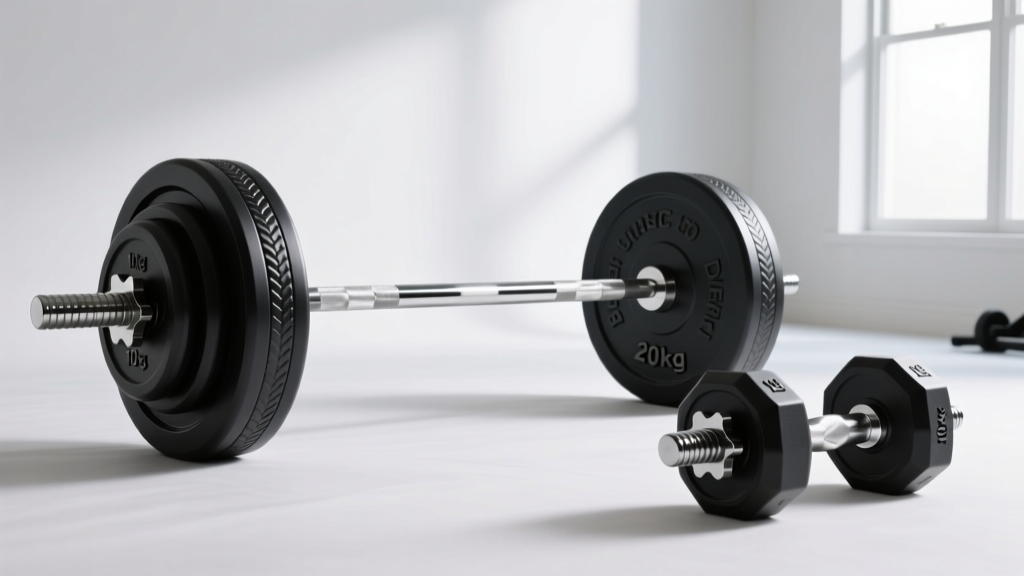
Rack vs Stand Troubleshooting: Squats and the Dumbbell French Curl
Troubleshoot your home gym setup. We compare power racks, squat racks, and stands, solving clearance issues for squats and the dumbbell french curl.

The Core Dilemma: Choosing the Right Steel for Your Footprint
Building a home gym in 2026 requires more than just buying the heaviest barbell you can find. The foundation of your training space is your rack system, yet countless lifters make critical errors when choosing between a power rack, a squat rack, and a squat stand. Most buyers focus exclusively on the barbell squat, completely ignoring how their chosen equipment will handle accessory work, spatial constraints, and isolation movements.
According to foundational safety guidelines outlined by ExRx for weightlifting testing and safety, the structural integrity and spatial geometry of your rack directly dictate your failure protocols. If you choose the wrong system, you will inevitably run into troubleshooting nightmares—from barbell sleeve clearance issues to smashing your elbows into steel uprights during isolation exercises.
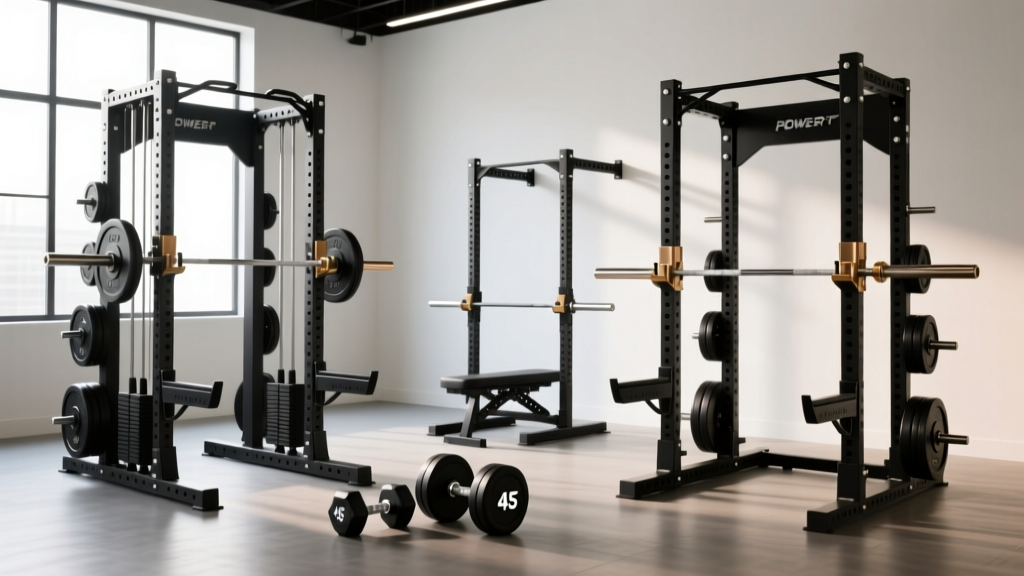
Equipment Comparison Matrix
| Feature | Power Rack (4-Post Enclosed) | Squat Rack (2-Post/4-Post Open) | Squat Stand (2 Independent Uprights) |
|---|---|---|---|
| Avg Price (2026) | $450 - $800+ | $300 - $550 | $250 - $450 |
| Footprint | Large (approx. 48' x 48') | Medium (approx. 48' x 32') | Small (approx. 48' x 24') |
| Internal Width | 43' to 54' | 49' to 54' | Variable (Usually 43' to 48') |
| Safety Mechanism | Pin-and-pipe or strap safeties | Spotter arms (extended) | Flip-down or extended spotter arms |
| Best For | Heavy solo lifting, kipping, full routines | Rack pulls, benching, open-space gyms | Tight spaces, light-to-moderate lifting |
Common Mistake #1: The Accessory Blindspot and the Dumbbell French Curl Diagnostic
The most frequent troubleshooting issue we see in home gyms is the 'accessory blindspot.' Lifters buy a narrow squat stand to save space, only to realize their rack is hostile to upper-body isolation work. The ultimate test for rack geometry is the dumbbell french curl (also known as the lying triceps extension or skull crusher).
⚠️ The Elbow-Strike Failure Mode:When performing a dumbbell french curl on a flat bench positioned inside a squat stand, your elbows must point toward the ceiling while the dumbbells lower past your forehead. If your rack's internal width is 43 inches or less, and your bench is 12 inches wide, you have minimal margin for error. During the eccentric stretch of the dumbbell french curl, lateral drift or slight bench misalignment will cause your elbows or the dumbbells to violently strike the 3x3-inch steel uprights. This not only ruins the mind-muscle connection but can cause severe joint trauma or damage the knurling on your dumbbells.
Troubleshooting the Spatial Conflict
To fix this, you must evaluate the internal width of your rack. Standard Olympic barbells are 86 inches long, with 16.5 inches of sleeve space on each side. To load plates and keep the barbell centered, your rack needs an internal width of at least 49 inches.
- The Power Rack Solution: Models like the Rogue RML-390F or Titan T-2 offer a 49-inch internal width. This provides just enough clearance to perform a dumbbell french curl without elbow-strike, provided the bench is perfectly centered.
- The Squat Rack Solution: Open-face squat racks naturally eliminate the rear uprights, allowing you to slide the bench backward and giving your elbows infinite clearance behind your head during triceps extensions.
- The Squat Stand Workaround: If you already own a narrow squat stand, you must troubleshoot by offsetting the bench at a 45-degree angle or moving the bench entirely outside the uprights, relying on heavy-duty extended spotter arms for safety during heavy benching.
Common Mistake #2: Misjudging Spotter Arm Geometry
As highlighted in comprehensive setup guides by Stronger By Science, safety spotter placement is non-negotiable. However, the type of spotter arms you use dictates your troubleshooting workflow for different exercises.
Flip-Down Arms vs. Pin-and-Pipe Safeties
Squat stands typically utilize flip-down spotter arms. These are excellent for barbell squats because they catch the barbell sleeves. However, they are a massive liability for bench pressing and isolation movements. If you fail a heavy set of dumbbell presses or drop a weight during a seated triceps extension, flip-down arms are often positioned too wide to catch the dumbbells or your torso.
The Fix: If your routine heavily features benching and dumbbell work, you must upgrade to a power rack with internal pin-and-pipe safeties or high-density UHMW plastic catch straps. Straps are particularly advantageous in 2026 models (like those from Rep Fitness and Bells of Steel) because they protect your barbell's knurling and absorb the kinetic energy of a dropped bar, reducing noise and equipment wear.
Common Mistake #3: Ceiling Height and Overhead Clearance
Many home gym owners measure their floor space but forget to measure their ceiling height. Standard residential ceilings are 8 feet (96 inches).
💡 The Pull-Up Bar Trap:If you purchase a 90-inch squat stand to ensure you have enough height for tall lifters to squat, the top of the pull-up bar will sit at roughly 93 inches. When you hang from the bar, your head will hit the ceiling. Furthermore, if you attempt a strict overhead press with a 7-foot barbell inside a rack that is too close to the ceiling, the barbell sleeves will scrape the drywall.
Troubleshooting Steps:
- Measure your exact ceiling height, accounting for floor mats (which add 0.5 to 1.5 inches) and ceiling fans.
- If your ceiling is exactly 96 inches, do not buy a rack taller than 82 inches (like the Titan T-2 82' Power Rack).
- For overhead pressing, ensure the J-cups can be set at a height where your fully extended arms leave at least 4 inches of clearance below the ceiling or crossmembers.
Advanced Troubleshooting: Hole Spacing and J-Cup Alignment
A subtle but frustrating mistake involves J-cup alignment and hole spacing. Budget squat stands often feature 2-inch hole spacing throughout the entire upright. This makes it nearly impossible to set the J-cups at the exact micro-height required for a safe bench press unrack or a precise pin-squat.
The Expert Standard: Look for racks featuring 'Westside Hole Spacing.' This standard provides 1-inch spacing in the bench press and squat zone (typically the lower 20 holes of the upright), and 2-inch spacing higher up for pull-up variations and overhead work. If your current squat stand lacks 1-inch spacing, the troubleshooting workaround is to use fractional plates (e.g., 0.5 lb or 1 lb plates) placed under the bench feet to micro-adjust your bench height relative to the fixed J-cups.
Frequently Asked Questions (FAQ)
Can I safely do heavy isolation movements inside a squat stand?
Yes, but with strict spatial awareness. Movements like the dumbbell french curl require you to monitor lateral elbow drift. Ensure your bench is perfectly centered, and consider using adjustable dumbbells with a compact profile (like Nuobell or PowerBlock) to reduce the horizontal footprint of the weight and minimize the risk of striking the uprights.
Is a power rack worth the extra cost over a squat rack?
If you train alone and frequently bench press, squat heavy, or use resistance bands for accommodating resistance, the enclosed safety of a power rack is mandatory. The integrated pin-and-pipe safeties protect you from catastrophic failure in ways that extended spotter arms on a squat rack simply cannot match.
How do I protect my floor from rack shifting during re-racking?
Squat stands are notorious for 'walking' forward when you aggressively re-rack a heavy barbell. To troubleshoot this, bolt the stands to a wooden platform or use heavy-duty rubber stall mats (3/4-inch thick) paired with U-bolts or sandbags placed on the base gussets to anchor the center of gravity.
Final Verdict: Aligning Equipment with Your Routine
Troubleshooting your home gym setup requires looking past the marquee lifts. While a squat stand might look perfect on paper for heavy back squats, its limitations become glaringly obvious when you try to integrate the dumbbell french curl, bench pressing, or overhead work into your routine. By auditing your ceiling height, demanding a minimum 49-inch internal width, and prioritizing Westside hole spacing, you can eliminate the most common equipment failure modes and build a seamless, safe training environment for years to come.
More gear to consider
All reviews
Bumper vs Iron Plate Maintenance & Dumbbell Lateral Press Care
Power Rack vs Squat Rack vs Stand: How to Lift Dumbbells Correctly

1-Arm Dumbbell Row Setup: Barbell Collar and Clamp Types Compared

Maintaining Dumbbell Racks for Safe Tricep Dips with Dumbbells

Rubber Hex vs Urethane: Best Dumbbells for the Dumbbell Curtsy Lunge