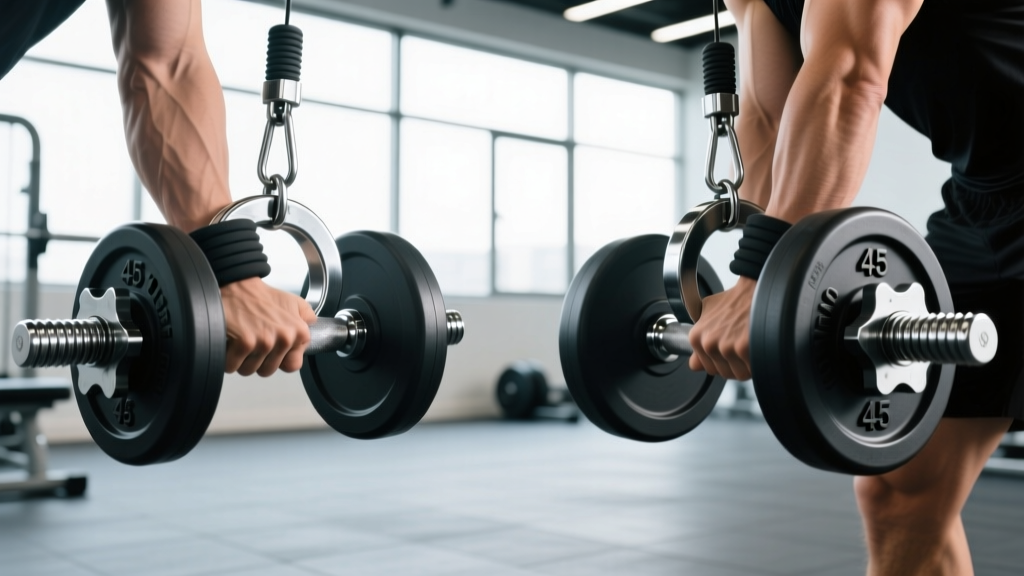
Power Rack, Squat Rack or Stand? Setup for Dumbbell Curl + Press
Compare power racks, squat racks, and stands. Learn how to measure clearance and install the perfect setup for heavy dumbbell curl and press combos.

Power Rack, Squat Rack or Stand? Setup for Dumbbell Curl + Press
When outfitting a home gym in 2026, the debate between a power rack, a squat rack, and a squat stand usually centers on barbell movements. But if your programming includes versatile, space-demanding unilateral and combo movements—specifically the dumbbell curl + press—your equipment choice becomes a matter of spatial geometry and knuckle preservation. The dumbbell curl + press (whether performed as a standing overhead thruster variation or a seated bench compound flow) requires significant lateral clearance and precise bench alignment. Buy the wrong rack, and your eccentric phase will end with a violent collision against steel uprights.
This complete setup and installation walkthrough will help you choose the right rig based on exact dimensional clearances, and guide you through a professional-grade anchoring and assembly process.
The Spatial Benchmark: Why the Dumbbell Curl + Press Dictates Your Rack
The dumbbell curl + press is a brutal test of home gym ergonomics. When transitioning from the curl phase into the press phase, your elbows naturally flare outward to accommodate the biomechanics of the shoulder joint. According to exercise biomechanics data compiled by BarBend, the average male lifter requires between 48 and 54 inches of horizontal clearance when pressing heavy dumbbells to account for shoulder width, arm extension, and the physical length of the dumbbell heads.
The Clearance Math (The Knuckle Test):Let us look at the exact numbers. A standard 40lb hex rubber dumbbell is approximately 12.5 inches long. A standard flat utility bench is 12 inches wide. If you are using a squat stand with a 38-inch interior width, centering the bench leaves exactly 13 inches of space on each side. Subtract the 12.5-inch dumbbell, and you are left with just 0.5 inches of clearance for your hands, wrist wraps, and natural elbow flare. You will scrape the uprights.
To perform the dumbbell curl + press safely, especially when fatigued during the final reps of a hypertrophy block, you need an interior width of at least 41 inches, with 43 inches being the gold standard for unrestricted movement.
Equipment Breakdown: Rack vs. Stand Dimensions
Before you unbox a single bolt, you must select the rig that fits your spatial needs. Below is a comparison of three popular 2026 home gym configurations, evaluated specifically for dumbbell clearance and overall footprint.
| Equipment Type | Model Example | Interior Width | Approx. Cost | DB Curl + Press Verdict |
|---|---|---|---|---|
| Power Rack (Foldable) | Rogue RML-390F | 43 inches | $895 - $995 | Excellent. Ample room for heavy DB flares and bench placement. |
| Squat Rack (4-Post) | Titan T-2 Short | 41 inches | $449 - $499 | Good. Fits standard hex DBs, but wide-grip presses may feel tight. |
| Squat Stand (2-Post) | Fitness Reality 810XLT | 38 inches | $150 - $180 | Poor. High risk of upright collision during the press transition. |
For a comprehensive look at how these rigs handle heavy loading, Garage Gym Reviews provides extensive stress-test data confirming that 4-post power racks not only offer superior width but also eliminate the lateral sway that can throw off your balance during a standing dumbbell curl + press.
Step-by-Step Installation Walkthrough
Once you have selected a rack with a minimum 41-inch interior width, proper installation is non-negotiable. A dynamic movement like the dumbbell curl + press generates lateral force vectors, especially if you use a slight leg drive to initiate the press. If your rack is not anchored, it will shift.
Step 1: Subfloor Assessment and Preparation
Do not anchor a power rack directly into standard 3/4-inch OSB subflooring or cheap interlocking foam mats. You need a solid concrete foundation. If your gym is in a garage or basement, locate the concrete slab. If you are on a wooden floor system, you must install a dedicated 4x8 foot platform using two layers of 3/4-inch plywood topped with 3/4-inch horse stall mats, bolted through the wood into the floor joists using structural lag screws.
Step 2: Marking and Drilling for Wedge Anchors
For concrete slabs, 3/8-inch x 3-inch Red Head wedge anchors are the industry standard.
- Position the Rack: Assemble the base crossmembers and stand the uprights plumb. Use a 4-foot level to ensure absolute verticality.
- Mark the Holes: Use a center punch through the base plate holes to mark the concrete.
- Drill: Use a hammer drill with a 1/2-inch masonry bit (matching the 3/8-inch anchor specification). Drill exactly 3.5 inches deep. Pro Tip: Wrap a piece of painter's tape around your drill bit at the 3.5-inch mark to prevent over-drilling.
- Vacuum: Use a shop-vac to remove all concrete dust from the holes. Dust left in the hole will reduce the holding power of the wedge anchor by up to 40%.
Step 3: Torquing and Shimming
Insert the wedge anchors and hand-tighten the nuts. Before applying a torque wrench, check for gaps between the base plate and the concrete. Concrete is rarely perfectly level. Use stainless steel shims to fill any gaps. Once shimmed, use a calibrated torque wrench to tighten the nuts to 45 ft-lbs. Overtightening can snap the bolt; undertightening will allow the rack to rock during heavy dumbbell cleans or explosive presses.
Bench Alignment for the Dumbbell Curl + Press
The setup is not complete until the bench is integrated. When performing the seated dumbbell curl + press, the bench must be perfectly centered.
- The Laser Method: Drop a plumb line or use a cheap laser level from the exact center of the top crossmember down to the floor. Align the center seam of your bench pad with this line.
- Spotter Arm Interference: If you are using a power rack, ensure the spotter arms are set below the lowest point of your dumbbell press trajectory. For the curl + press, the lowest point is when the dumbbells are resting near your shoulders during the curl phase. Set the safety straps or pin-pipe spotters at least 4 inches below your shoulder height to prevent the steel arms from catching your elbows during the transition from curl to press.
Expert Warning: Never use J-cups as spotters for dumbbell work. The narrow profile of a J-cup will not catch a falling dumbbell. Always use 24-inch or 36-inch spotter straps or pin-pipe safeties that span the interior width of the rack.
Edge Cases and Failure Modes to Avoid
Even with a 43-inch power rack, lifters encounter specific failure modes when executing the dumbbell curl + press:
1. The Hex Dumbbell Snag: If you use cheap, oversized rubber hex dumbbells, the wide heads can catch on the plastic lining of spotter straps during a failed rep. Upgrade to urethane-coated round-head dumbbells (like Rogue Urethane or Rep Fitness Round Dumbbells) which slide smoothly off the straps if you need to dump them.
2. Upright Interference on the Eccentric: During the eccentric (lowering) phase of the press, lifters naturally track the dumbbells slightly outward. If your bench is too high relative to the J-cups, you may be forced to bring the dumbbells dangerously close to the uprights to rack them. Ensure your bench pad height allows your forearms to be parallel to the floor at the bottom of the press, keeping the weights well inside the 41-inch safe zone.
Frequently Asked Questions
Can I do the dumbbell curl + press on a squat stand?
Technically yes, but it requires extreme spatial awareness. If you are using a 2-post squat stand, you must perform the movement standing, entirely outside the footprint of the stand, using the stand only as a storage rack for your adjustable bench. Never attempt heavy seated DB presses inside a 38-inch wide squat stand.
Do I need to bolt down a squat rack if I am only doing dumbbell work?
Yes. While dumbbells do not subject the rack to the same vertical barbell racking forces, dropping a heavy dumbbell onto a spotter arm creates a massive lateral tipping moment. A 4-post rack bolted to concrete will absorb this shock; a free-standing rack will tip.
What is the best bench for dumbbell combo movements?
Look for a bench with a narrow pad (11 to 12 inches wide) and a short overall length. Benches like the Rep Fitness AB-3100 2.0 or the Rogue AB-3 feature pads that stop just past the lumbar spine, preventing the bench from interfering with your elbows during the deep stretch of the dumbbell curl phase.
The Final Verdict
If the dumbbell curl + press is a staple in your hypertrophy or athletic conditioning blocks, the power rack is the undisputed winner. The 43-inch interior width of models like the Rogue RML-390F provides the exact biomechanical clearance required to press heavy dumbbells safely without altering your natural movement path. While squat stands save money and floor space, the 3-to-5 inches of lost interior width introduces an unacceptable margin of error for complex dumbbell flows. Measure twice, drill carefully, and anchor securely—your knuckles will thank you.
More gear to consider
All reviews
Power Rack vs Squat Rack vs Stand: Space for Standing Dumbbell Flys

McGregor Dumbbell Review: Worth the Investment for Home Gyms?
Space-Saving Storage to Elevate Your Home Dumbbell Workout

Compact Layouts: Sitting Dumbbell Shoulder Press, Hex vs Urethane

2026 Dumbbell Racks for One Arm Dumbbell Preacher Curl Setups