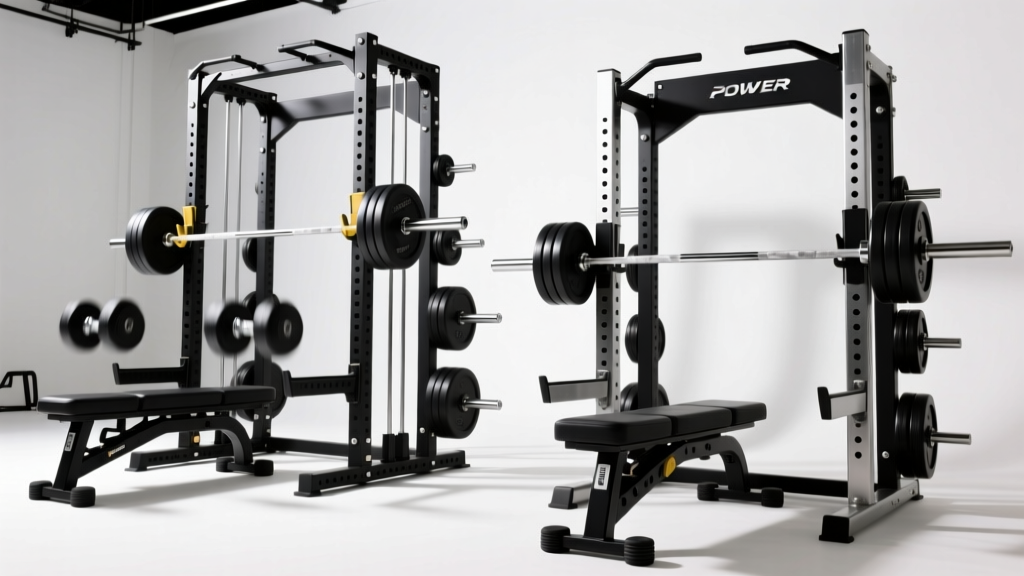
Power Rack vs Squat Stand for Benching with Dumbbells
Compare power racks, squat racks, and squat stands for heavy dumbbell benching. Discover the safest 2026 setups, dimensions, and spotter arm configurations.

The Hidden Dangers of Heavy Dumbbell Benching
When lifters transition from barbell to dumbbell bench pressing, the focus usually shifts to the increased range of motion and superior hypertrophic stimulus. However, the logistics of benching with dumbbells—especially when pushing past the 80-pound mark per hand—introduce severe safety and spatial challenges. Unlike a barbell, which rests on a single, unified plane, dumbbells require independent stabilization, a complex 'kick-up' setup phase, and specialized safety mechanisms to prevent catastrophic shoulder injuries during a failed rep.
Choosing the right racking ecosystem is not just about storing your weights; it is about survivability and biomechanical clearance. In this 2026 buying guide, we break down the structural differences between full power racks, half squat racks, and minimalist squat stands, analyzing exactly how each impacts your dumbbell bench press.
⚠️ Critical Safety Warning: According to Mayo Clinic's guidelines on resistance training safety, lifting without a proper spotter or mechanical safety catch drastically increases the risk of rotator cuff tears and pectoral strains. When benching with independent weights, standard barbell pin-and-pipe safeties are often insufficient due to the gap between the pipe and the upright.2026 Equipment Comparison Matrix
Before diving into specific models, here is how the three primary rack categories stack up for athletes who prioritize heavy dumbbell work alongside traditional barbell movements.
| Feature | Full Power Rack | Half Rack / Open Squat Rack | Squat Stand (Dual Pillar) |
|---|---|---|---|
| Avg. Price Range (2026) | $750 – $1,400+ | $600 – $1,100 | $350 – $550 |
| Interior Width | 43" to 49" | 49" to 53" (Open front) | Infinite (No side enclosure) |
| Dumbbell Kick-Up Clearance | Restricted (Risk of elbow strike) | Excellent | Perfect |
| Safety Catch Compatibility | High (Supports sandwich & strap safeties) | High (Supports all types) | Moderate (Requires specific bolt-on arms) |
| Footprint | 48" x 48" (Typical) | 70" x 48" (Includes pull-up bar overhang) | 35" x 25" |
Full Power Racks: Maximum Safety, Minimum Margin for Error
A full power rack (four uprights) is the gold standard for heavy barbell lifting, offering 360-degree protection. However, for benching with dumbbells, the enclosed nature of a standard 43-inch interior width rack can be a hindrance. If you are over 6 feet tall with a broad wingspan, bringing 100-pound hex or urethane dumbbells down to your chest in a deep stretch may cause your elbows to clip the rear uprights or the safety spotter arms.
Top Tier Pick: REP Fitness PR-4000
The REP PR-4000 solves the width issue by offering a 47-inch interior workspace. More importantly, it features 1-inch Westside hole spacing in the bench press zone. This micro-adjustability is non-negotiable for dumbbell benching. Because dumbbells allow for a deeper stretch than a barbell, you need to set your safety catches exactly 1 to 2 inches below your maximum stretch point. Standard 2-inch hole spacing leaves too much room for error, risking either a shoulder tear (if set too low) or premature resting (if set too high).
- Price: ~$799 (Base model)
- Steel: 3x3" 11-gauge
- Recommended Add-on: UHMW Plastic Sandwich Spotter Arms ($120). Unlike pin-and-pipe safeties, sandwich arms have no gaps, meaning a dropped dumbbell handle cannot slip through and crush your sternum.
Premium Pick: Rogue RM-3 Fortified
For commercial-grade durability, the Rogue RM-3 offers a massive 49-inch interior width, practically eliminating elbow-strike issues for even the largest powerlifters. Priced around $1,150+, it includes integrated storage for dumbbell saddles, keeping your heavy pairs organized and off the floor.
Squat Stands: The Dumbbell Bencher’s Haven
If your garage gym is tight on space and your primary focus is dumbbell hypertrophy, a heavy-duty squat stand might be your best option. Squat stands consist of two independent uprights. Because there is no side enclosure, you have infinite lateral space to execute the dumbbell kick-up, flare your elbows, and achieve a maximum pec stretch without spatial anxiety.
The Rogue S-2 Squat Stand 2.0
The Rogue S-2 ($495) is a staple in the industry. However, using a squat stand for benching requires strict adherence to safety protocols. You must purchase the S-2 Spotter Arms ($95) separately.
"When utilizing independent safety catches on open squat stands, athletes must ensure the base is securely anchored. Dumping 100-pound dumbbells onto the spotter arms creates a severe forward-tipping leverage point that can compromise the lifter." — National Strength and Conditioning Association (NSCA) Safety Directives
The Tipping Hazard: If you fail a rep and drop heavy dumbbells onto the extended spotter arms of an unanchored squat stand, the center of gravity shifts violently forward. You must bolt the Rogue S-2 to a concrete platform or use heavily loaded rear weight storage pegs to counterbalance the stand before attempting heavy dumbbell benching.
Step-by-Step: Configuring Safeties for Independent Weights
Setting up for barbell benching is straightforward; the bar rests evenly. Dumbbells require a different approach. Follow this protocol to configure your rack for failure scenarios:
- Measure Your Deep Stretch: With empty hands or very light weights, lower your arms to your maximum comfortable stretch. Have a partner measure the distance from the floor to your elbows.
- Set the Catch Height: Adjust your spotter arms so they sit exactly 1.5 to 2 inches below that measured depth. This allows you to fail the rep, let the dumbbells rest on the arms, and slide your body out from underneath without tearing the pec-delt tie-in.
- Check the Handle Gap: Ensure the distance between your bench pad and the spotter arm is wider than the handle length of your dumbbells. If the gap is too narrow, the dumbbell head will hit the bench while the handle crushes against the safety arm.
- The 'Dump' Technique: If you fail, do not try to rack the dumbbells. Let them drop dead onto the spotter arms (or the floor, if using a dropping platform and urethane-coated bells), and immediately roll backward off the bench.
Final Verdict: Which Setup Fits Your 2026 Garage Gym?
If you are strictly a bodybuilder or hypertrophy-focused lifter who primarily trains with dumbbells and lacks a dedicated spotter, an open Half Rack or a heavily anchored Squat Stand (like the Rogue S-2) provides the necessary lateral freedom for deep stretches and aggressive kick-ups.
However, if you are a hybrid athlete who also squats heavy, performs rack pulls, and values absolute fail-safe protection, invest in a wide-body Full Power Rack like the REP PR-4000. Ensure you upgrade to UHMW sandwich safeties and utilize the Westside hole spacing to dial in your clearances. For more extensive testing on rack tolerances and steel gauges, refer to BarBend's comprehensive power rack testing database.
Ultimately, benching with dumbbells should build your chest, not your orthopedic surgeon's retirement fund. Choose the rack that respects your biomechanics, anchor it properly, and lift with confidence.
More gear to consider
All reviews
Bumper vs Iron Plates: Budgeting for Dumbbell Chest Press Variations
Home Gym Setup: Using Neoprene Dumbbells for Legs Effectively

Best Neoprene Dumbbells for Standing Dumbbell Rotations

PewDiePie Dumbbells Trend: 2026 Loadable Plate Market Analysis

Cast Iron vs Competition Kettlebells & Black Dumbbell Layouts
