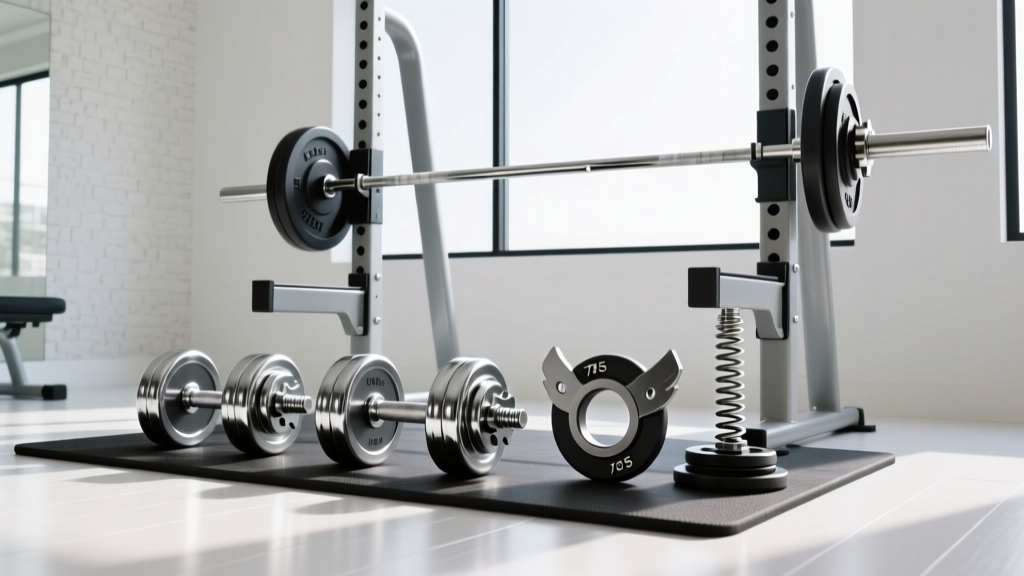
Bicep Curls Smith Machine vs Home Neoprene Dumbbells
Compare bicep curls on a Smith machine vs. neoprene dumbbells for home use. Discover biomechanics, costs, and the best 2026 gear for arm growth.

When optimizing a home gym or refining your arm training protocol, the debate over equipment selection often boils down to fixed-path machines versus free weights. Specifically, lifters frequently analyze the bicep curls smith machine method compared to traditional free weights. In this comprehensive head-to-head comparison, we pit the Smith machine against the best neoprene coated dumbbell for home use to determine which tool reigns supreme for hypertrophy, joint health, and overall value in 2026.
The Biomechanical Clash: Fixed Path vs. Natural Arc
The primary function of the biceps brachii is elbow flexion and forearm supination. To maximize muscle fiber recruitment, the resistance must align with the natural arc of the elbow joint. According to biomechanical analyses documented by ExRx, free weights allow the lifter to subtly adjust their wrist angle and elbow tracking mid-rep, accommodating individual anthropometry.
Conversely, the Smith machine forces the barbell along a fixed linear or slightly angled track (typically 7 to 12 degrees, depending on the manufacturer). When performing bicep curls on a Smith machine, your wrists and elbows must conform to the machine's rigid path. While this eliminates the need for stabilizer muscles—allowing for strict isolation—it can place undue shear stress on the wrist joints and the distal biceps tendon if the machine's track does not perfectly match your natural range of motion.
Head-to-Head Feature Matrix
Before diving into the specific gear, here is how the two modalities compare across critical home gym metrics.
| Feature | Neoprene Hex Dumbbells | Smith Machine |
|---|---|---|
| Equipment Cost (2026) | $1.20 - $1.80 per lb | $1,500 - $3,500+ (Total unit) |
| Space Footprint | Minimal (Requires a small rack) | Large (Requires dedicated floor space) |
| Stabilizer Recruitment | High (Core, brachioradialis, rotator cuff) | Low (Strict isolation) |
| Wrist/Elbow Joint Stress | Low (Natural tracking allowed) | Moderate to High (Fixed path) |
| Setup Time | Instant (Grab and go) | Moderate (Loading plates, setting hooks) |
Deep Dive: Neoprene Coated Dumbbells for Home Use
For the home gym owner, the neoprene coated dumbbell is the undisputed champion of light-to-moderate isolation work. Unlike raw cast iron (which rusts and damages floors) or cheap vinyl (which cracks and peels), neoprene is a synthetic rubber that provides a soft, sweat-resistant grip and protects hardwood or laminate flooring from scuffs.
Top 2026 Neoprene Dumbbell Specifications
When shopping for neoprene dumbbells for bicep work, you should look for specific design features that enhance the curling motion:
- Hexagonal Heads: Brands like Yes4All and CAP Barbell utilize hex-shaped heads to prevent the dumbbells from rolling away when placed on the floor—a crucial safety feature in shared home spaces.
- Handle Ergonomics: Premium neoprene dumbbells feature a contoured handle with a 35mm diameter. This slightly thicker grip compared to a standard 28mm Olympic barbell increases forearm activation and grip strength during heavy curls.
- Coating Thickness: High-quality models feature a 3mm to 4mm neoprene layer. Thinner coatings (1-2mm) tend to split at the seams after 12 to 18 months of heavy use.
The Smith Machine Approach: Isolation and Overload
If your goal is absolute muscular failure without the risk of dropping a weight, the Smith machine offers distinct advantages. Studies on muscle activation, such as those reviewed by the American Council on Exercise (ACE), indicate that removing the stabilization requirement allows lifters to push closer to true muscular failure on the target muscle group.
The Hidden Variable: Starting Bar Weight
A common mistake when performing the bicep curls smith machine exercise is ignoring the starting weight of the bar. A standard commercial Smith machine bar can weigh up to 45 lbs, making it impossible for beginners or those doing high-rep hypertrophy sets to isolate the biceps properly.
For a home gym, you must invest in a counterbalanced Smith machine. Models like the Force USA G3 or the Inspire Fitness FTX utilize a pulley counterbalance system that reduces the starting bar weight to just 15 lbs or 20 lbs. This allows for precise micro-loading, which is essential for progressive overload in bicep training.
Setup and Form Optimization
To perform bicep curls safely on a Smith machine:
- Set the barbell catches at mid-thigh height.
- Stand approximately 6 to 10 inches away from the bar to account for the fixed angle of the rails.
- Use a shoulder-width, supinated (underhand) grip.
- Keep your elbows pinned to your sides; do not allow the fixed track to pull your elbows forward during the concentric phase.
Failure Modes and Maintenance Realities
Understanding how your equipment degrades over time is a key component of E-E-A-T in fitness gear selection. Here is what to expect from both options after 3 to 5 years of consistent home use.
Neoprene Dumbbell Degradation
Neoprene is highly resistant to sweat and moisture, but it is vulnerable to UV degradation and harsh chemical cleaners. If your home gym is in a sunroom or garage with direct sunlight, the neoprene coating will dry out, chalk, and eventually flake off. Solution: Wipe down with a damp cloth and mild soap only; avoid bleach-based gym wipes.
Smith Machine Mechanical Stutter
The linear bearings or bushings that allow the Smith machine bar to glide smoothly require regular maintenance. If neglected, the bar will 'stutter' or catch during the eccentric (lowering) phase of the curl, ruining the mind-muscle connection and potentially causing biceps tendon strain. Solution: Lubricate the guide rods with a silicone-based spray or PTFE (Teflon) lubricant every 6 months. Never use WD-40, as it attracts dust and creates a grinding paste.
Programming for Hypertrophy: The Hybrid Approach
You do not necessarily have to choose just one. The most effective 2026 arm-building protocols utilize both tools to target different muscle fibers and fatigue curves. Research published in the National Center for Biotechnology Information (NCBI) highlights that combining free weights with machine-based isolation yields superior overall muscle fiber recruitment compared to using either modality exclusively.
'Start your workout with standing neoprene dumbbell curls to engage the stabilizers and achieve a full range of motion with natural supination. Follow this with Smith machine curls to safely push the biceps to absolute mechanical failure without the limiting factor of grip strength or core stability.'
Final Verdict: Which Wins for the Home Gym?
If budget and space are the primary constraints, the neoprene coated dumbbell for home use is the clear winner. A pair of 25 lb and 35 lb hex dumbbells will cost under $150 total, take up less than two square feet of space, and allow for natural, joint-friendly biomechanics.
However, if you are building a premium, comprehensive home gym and already plan to purchase a power rack for squats and bench presses, adding a counterbalanced Smith machine attachment is a highly effective way to safely isolate the biceps and push past plateaus. Ultimately, the 'best' equipment is the one that aligns with your specific anthropometry, budget, and training intensity.
More gear to consider
All reviews
Dumbbell Rack Storage Maintenance: Surviving the Dumbbell Skier Swing

Olympic vs Standard Plates: Setup Guide for Your 50 Pound Dumbbell Rack

Dumbbell Bench Press Machine Setup & Barbell Collar Guide
Space-Saving Loadable Alternatives to Fixed 100 Pound Dumbbells

Rubber Hex vs Urethane Dumbbells: Care & Dumbbell Bumper Plates