
Power Rack vs Squat Stand: Optimizing Your One Arm Dumbbell Workout
Compare power racks, squat racks, and squat stands to find the best footprint and attachments for heavy lifts and your one arm dumbbell workout.

The Modern Home Gym: Heavy Compounds Meet Unilateral Precision
Building a home gym in 2026 is no longer just about cramming a barbell and a bench into a garage. Today’s lifters demand versatility. You need a rig capable of safely spotting a 400-pound back squat, but you also need the spatial freedom and attachment ecosystem to execute a rigorous one arm dumbbell workout. Unilateral training is critical for correcting muscle imbalances, improving core stability, and reducing the bilateral deficit—a phenomenon where the combined force of both limbs working simultaneously is less than the limbs working individually, as documented in biomechanical research published on the NCBI.
But how does your choice of rack impact your dumbbell training? The footprint, upright depth, and attachment compatibility of your rig will either facilitate or frustrate your unilateral movements. In this in-depth buying guide, we break down the structural differences between power racks, half racks, and squat stands to help you engineer the ultimate hybrid training space.
Power Rack vs. Half Rack vs. Squat Stand: The Comparison Matrix
Before diving into spatial dynamics, let’s establish the baseline specifications of the three primary rig categories. The data below reflects current 2026 market standards for premium, 11-gauge steel home gym equipment.
| Feature | Full Power Rack (e.g., Rogue R-3) | Half Rack (e.g., Rep Fitness PR-4000) | Squat Stand (e.g., Titan T-2) |
|---|---|---|---|
| Average Footprint | 49" x 49" (or 43" depth) | 48" x 48" (with 24" or 41" depth) | 48" x 48" (minimal base) |
| Upright Profile | 3" x 3" (11-gauge) | 3" x 3" (11-gauge) | 2" x 3" (11-gauge) |
| Hole Spacing | 5/8" holes (Westside in bench zone) | 1" holes (Zeus/Ares compatible) | 5/8" holes (Standard spacing) |
| Weight Capacity | 1,000+ lbs | 1,000+ lbs | 800 - 1,000 lbs |
| Price Range (2026) | $1,150 - $1,400 | $1,299 - $1,600 | $349 - $450 |
| Unilateral Space | Enclosed (requires stepping out) | Open front (excellent clearance) | 360-degree open access |
Spatial Dynamics: Accommodating a One Arm Dumbbell Workout
When designing a space for a dedicated one arm dumbbell workout, the physical dimensions of your rack dictate your movement quality. Consider exercises like single-arm dumbbell snatches, renegade rows, or heavy suitcase carries. These movements require lateral clearance and overhead clearance that a standard 80-inch power cage can restrict if you attempt to perform them inside the footprint.
The Cage Conundrum
A full power rack, such as the Rogue Monster series cages, offers unparalleled safety for solo barbell lifters. However, its enclosed 49x49-inch interior is fundamentally designed for vertical, bilateral barbell paths. If you attempt a sprawling one arm dumbbell workout inside the cage, you risk striking the uprights or crossmembers. To utilize a power rack for unilateral dumbbell work, you must treat the interior as a storage zone and perform your dumbbell movements on the open floor adjacent to the rig.
The Squat Stand Advantage
Conversely, a squat stand like the Titan T-2 or Bells of Steel foldable stand offers zero spatial restrictions. Because there is no overhead crossmember or rear cage, you can seamlessly transition from heavy barbell squats to an expansive one arm dumbbell workout without ever leaving your lifting platform. The trade-off, however, is safety; squat stands lack the multi-point safety strap or pin-pipe systems of a full cage, making heavy, unspotted barbell work inherently riskier.
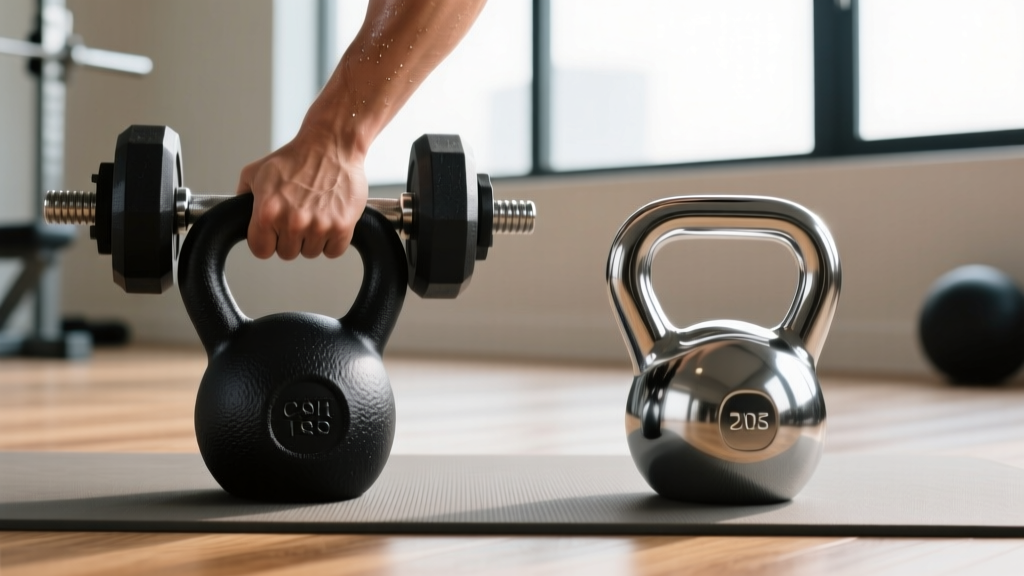
Expert Insight: The Half-Rack CompromiseHalf racks (like the Rep PR-4000 or Rogue SML-2C) offer the best of both worlds. By utilizing 24-inch depth uprights, they provide a safe spotter arm for barbell squats while leaving the front and sides completely open for dynamic unilateral dumbbell movements, kettlebell swings, and landmine rotations.
The Attachment Ecosystem: Expanding Your Unilateral Arsenal
A rack is only as good as its modularity. In 2026, the best racks serve as anchor points for unilateral cable and band work, directly complementing your free-weight dumbbell routines.
- Landmine Attachments: Essential for half-kneeling single-arm landmine presses and rotational anti-core work. Ensure your rack has a dedicated 3x3 or 2x3 landmine post, or budget $60-$90 for a bolt-on sleeve.
- Band Pegs: Crucial for accommodating resistance. You can anchor heavy resistance bands to the base of a power rack to perform unilateral banded dumbbell rows, adding peak-contraction tension that free weights alone cannot provide.
- Functional Trainer / Cable Pulleys: Systems like the Rep Fitness Ares or Rogue Monster Cable Crossover attach directly to the rack. This allows you to swap your one arm dumbbell workout for a one arm cable workout, providing constant tension for unilateral chest flies, tricep extensions, and rotational woodchoppers.
Steel Gauge, Hole Spacing, and Safety Mechanisms
Do not compromise on structural integrity to save floor space. The industry standard for serious home gyms is 11-gauge steel. While 14-gauge racks exist in the sub-$250 market, they exhibit noticeable sway during heavy re-racking and can warp under asymmetric loads.
Furthermore, pay attention to hole spacing. Westside spacing (1-inch spacing in the bench press zone, 2-inch spacing above) is critical for dialing in exact J-cup heights. If you are performing single-arm dumbbell floor presses or utilizing the rack for dumbbell pin presses, precise J-cup placement ensures you don’t waste energy un-racking awkwardly positioned weights.
Failure Modes to Avoid
- HDPE vs. UHMW Plastic: Cheaper racks use HDPE J-cups that crack under heavy impact. Always verify the rack uses UHMW (Ultra-High-Molecular-Weight) polyethylene to protect your barbell knurling and dampen noise.
- Base Stability: Squat stands must be bolted to a platform or loaded with heavy rear weight horns. A stand tipping forward during a failed rep is a catastrophic failure mode.
- Pulley Ratios: If adding a cable attachment for unilateral work, note the ratio. A 2:1 ratio (100lbs of plates = 50lbs of resistance) is better for high-rep isolation, while a 1:1 ratio is necessary for heavy unilateral rows.
Decision Framework: Which Rig Fits Your Garage?
Use this three-step framework to finalize your purchase based on your specific training split and spatial constraints.
Step 1: Assess Your Ceiling and Floor Space
If your ceiling is under 84 inches, you are restricted to 80-inch or 72-inch racks. If your total dedicated lifting space is less than 8x8 feet, a full power rack will consume your entire floor plan, leaving no room for the lateral movements required in a comprehensive one arm dumbbell workout. In tight spaces, opt for a squat stand or a 24-inch deep half rack.
Step 2: Evaluate Your Safety Needs
Do you train alone to failure on barbell bench presses and squats? If yes, a full power rack with safety straps or a half-rack with extended spotter arms is non-negotiable. If your barbell work is strictly sub-maximal and your focus leans heavily toward functional fitness, kettlebells, and dumbbells, a heavy-duty squat stand will suffice.
Step 3: Budget for the Ecosystem
A $1,200 power rack is only the beginning. Factor in the cost of a landmine ($75), a set of sandwich J-cups ($60), and a pull-up bar. If your budget is capped at $600, a premium squat stand (like the Titan T-2 at $399) leaves you with $200 to invest in high-quality adjustable dumbbells or a specialized unilateral attachment, ultimately yielding a better overall workout experience than a cheap, flimsy full cage.
"The best home gym equipment doesn't just dictate what you can do; it removes the friction from what you want to do. If your rack forces you to move weights out of the way just to start your dumbbell routine, it's the wrong rack for your workflow." — FitGearPulse Editorial Team
Final Verdict
Integrating a targeted one arm dumbbell workout into your regimen requires a training environment that respects spatial freedom. While the full power rack remains the undisputed king of heavy, unspotted barbell safety, the half rack has emerged as the 2026 gold standard for hybrid lifters. It provides the necessary safety arms for heavy compounds while leaving the front perimeter wide open for dynamic, unilateral dumbbell and kettlebell work. Choose your steel wisely, prioritize 11-gauge construction, and ensure your rig's footprint serves your movement—not the other way around.
More gear to consider
All reviews
EZ Bar vs Straight Bar Budget: Dumbbell Row for Upper Back Value

EZ vs Straight Bar: Single Arm Dumbbell Pullover Market Trends 2026

Dumbbell Rack Storage: 2026 Trends & The Dumbbell Hip Thrust Bench
Cast Iron vs Competition Kettlebells: Hamstring Curl Dumbbell Shift

Bumper vs Iron Plates: Space & Chest and Back Workout with Dumbbells
