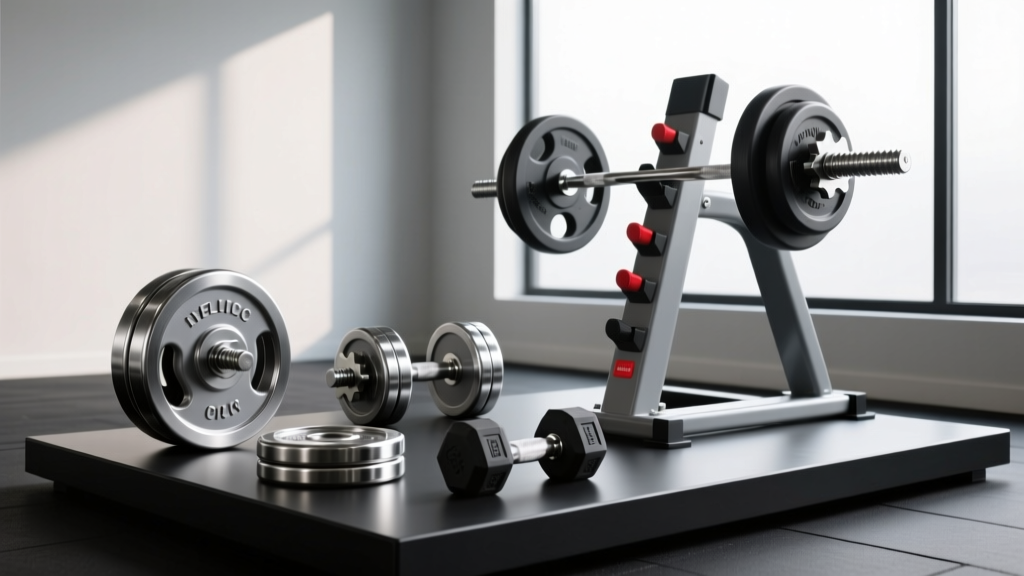
Power Rack vs Squat Rack vs Stand for the Seated Dumbbell Biceps Curl
Compare power racks, squat racks, and squat stands to find the best setup for heavy squats and the seated dumbbell biceps curl in your 2026 home gym.

The Home Gym Dilemma: Heavy Compounds vs. Strict Isolation
When outfitting a home gym in 2026, most lifters fixate on the "big three" lifts. They obsess over barbell knurling, J-cup liner thickness, and safety strap heights. But a truly versatile rig must accommodate strict isolation work just as effectively as it handles a 400-pound back squat. One of the most common, yet overlooked, spatial challenges in home gym design is finding the optimal setup for the seated dumbbell biceps curl.
While it seems like a simple movement, the biomechanics of the seated dumbbell biceps curl demand significant lateral clearance. If you are using heavy hex-head or urethane dumbbells (80 lbs to 120+ lbs), the wide heads of the weights and the natural outward arc of your elbows can easily collide with steel uprights. This forces you to tuck your elbows unnaturally, shifting the tension away from the biceps brachii and placing undue stress on the anterior deltoids and elbow tendons.
In this head-to-head comparison, we evaluate the power rack, the squat rack (half rack), and the squat stand to determine which provides the safest, most effective environment for both heavy compound lifting and strict isolation movements like the seated dumbbell biceps curl.
The Core Showdown: Enclosure vs. Open Concepts
Power Racks: The Isolation Sanctuary
A full power rack (four uprights) is the undisputed king of spatial versatility. Models like the Titan T-3 Series Power Rack or the Rep Fitness PR-4000 offer interior widths ranging from 43 inches to 47 inches. When you drag a standard 16-inch-wide adjustable FID (Flat/Incline/Decline) bench into the center of a 47-inch interior, you are left with roughly 15.5 inches of lateral clearance on either side of your torso.
This is the exact sweet spot required for the seated dumbbell biceps curl. You can sit squarely in the middle of the rack, set the bench to a 75-degree incline to target the long head of the biceps, and perform strict reps without your elbows or the dumbbell heads grazing the 3x3-inch 11-gauge steel uprights. Furthermore, the enclosed nature of the power rack means you can safely fail a rep on heavy dumbbell floor presses or seated overhead presses without needing a spotter.
Squat Racks (Half Racks): The Compromise
Half racks, such as the Rogue SML-2C Monster Lite Half Rack, feature an open-front design with two main uprights and a rear stabilizer. While they excel at Olympic lifts and front squats due to the unobstructed front exit, they present a unique geometric problem for bench-based isolation work.
The primary failure mode here is the rear crossmember. Many heavy-duty adjustable benches have a wide, T-shaped rear stabilizer base. When you try to position the bench deep enough into the half rack to utilize the spotter arms for seated dumbbell work, the rear bench legs often collide with the rack's rear stabilizer bar. This forces you to pull the bench forward, leaving you outside the protective envelope of the spotter arms. While you can still perform the seated dumbbell biceps curl, you lose the safety benefits that justify buying a rack in the first place.
Squat Stands: The Minimalist Trap
Squat stands, like the Rogue S-Series Squat Stand 2.0, are essentially two independent steel pillars. They are budget-friendly (often under $500) and have a tiny footprint. However, for the seated dumbbell biceps curl, they are a logistical nightmare.
If you sit between the stands, your elbows are at a high risk of striking the uprights during the eccentric (lowering) phase of the curl, especially if you use a supinated grip that flares the wrists outward. If you sit behind the stands (facing away from the barbell path), you are completely unprotected by the spotter arms, which are designed to catch a barbell, not a dropped 100 lb dumbbell. Squat stands are strictly for barbell movements and standing exercises; they fail the isolation test.
Dimensional Analysis: Will Your Bench Fit?
To visualize the spatial constraints of the seated dumbbell biceps curl across different rack types, review the 2026 market data below. Note that "Clearance" refers to the lateral space available on each side of a standard 16-inch bench placed in the optimal lifting position.
| Equipment Type | Model Example (2026) | Interior Width | Bench Clearance (Per Side) | Avg. Price |
|---|---|---|---|---|
| Power Rack | Rep Fitness PR-4000 | 47 inches | ~15.5 inches (Excellent) | $1,499 |
| Squat Rack (Half) | Rogue SML-2C | 43 inches | ~13.5 inches (Restricted by depth) | $1,150 |
| Squat Stand | Titan X-2 | 48 inches | Variable / High Strike Risk | $399 |
If you utilize rubber-coated hex dumbbells for your seated dumbbell biceps curls, be aware that the flat edges add an extra 1.5 to 2 inches of lateral width compared to round urethane bells. In a 43-inch half rack, this extra width drastically increases the probability of chipping the rubber or scratching your rack's uprights during the negative portion of the curl.
Biomechanics and Clearance: Why Space Matters
According to exercise biomechanics databases like ExRx.net, the seated dumbbell biceps curl is classified as an isolation movement requiring strict stabilization of the humerus (upper arm). To maximize hypertrophy in the biceps brachii, the elbow must remain relatively stationary, acting as a fixed hinge.
When a lifter is confined in a narrow squat stand or a cramped half rack, the subconscious fear of striking the steel uprights causes "elbow tucking"—a compensatory movement where the lifter pulls their elbows tight against their ribcage. This not only reduces the stretch on the long head of the biceps at the bottom of the movement but also shifts the mechanical load onto the brachioradialis and anterior deltoid.
Furthermore, as noted by the Mayo Clinic's guidelines on strength training safety, maintaining proper joint alignment and controlled movement paths is critical for preventing tendonitis and ligament strain. A power rack’s generous interior width allows for a natural, unencumbered arc, ensuring the tension remains squarely on the target muscle group while protecting the elbow joint from awkward, mid-rep adjustments.
Real-World Pricing and 2026 Market Context
The fitness equipment market in 2026 has seen a stabilization in shipping costs, though raw steel tariffs continue to keep heavy-duty 11-gauge racks at a premium. Here is how the investment breaks down for a complete isolation-friendly setup:
- The Power Rack Route ($1,800 - $2,500 total): Includes the rack ($1,300 - $1,800), a pair of safety straps ($60), and a high-quality 16-inch FID bench ($350 - $500). This is the only setup that guarantees 100% clearance for heavy seated dumbbell biceps curls and safe failure points.
- The Half Rack Route ($1,400 - $1,900 total): Includes the rack ($1,000 - $1,300), a rear stabilizer upgrade if not included ($150), and a bench with a narrow, inline rear base to avoid crossmember interference ($250 - $400).
- The Squat Stand Route ($600 - $800 total): Includes the stands ($350 - $450), spotter arms ($100), and a basic flat bench ($150). Not recommended for heavy seated isolation work.
Frequently Asked Questions (FAQ)
Can I just stand up to do biceps curls instead of sitting?
Yes, standing barbell or dumbbell curls are excellent. However, the seated dumbbell biceps curl removes the ability to use "hip drive" or lower-body momentum to cheat the weight up. If your goal is strict hypertrophy and you are lifting heavy (e.g., 80+ lb dumbbells), the seated variation is superior, making rack clearance a mandatory consideration.
Will a lat pulldown attachment interfere with seated curls?
If you buy a power rack with a rear-mounted lat pulldown station, the weight stack and guide rods will occupy the rear interior space. This prevents you from sliding the bench all the way back, effectively pushing you toward the front uprights and reducing your lateral clearance for the seated dumbbell biceps curl. Opt for a side-mounted or standalone lat tower if isolation space is a priority.
What bench width is best for rack isolation work?
Look for an adjustable bench with a 12-inch to 14-inch back pad width. Competition-style flat benches are usually 12 inches wide, which maximizes your lateral clearance inside a 43-inch squat rack. Many commercial-style FID benches feature 16-inch pads, which are great for shoulder support but will eat up your elbow clearance in narrower racks.
Final Verdict: Which Rack Wins?
If your programming relies heavily on strict, heavy isolation movements like the seated dumbbell biceps curl, the Power Rack is the only logical choice. The 43-to-47-inch interior width of modern cages like the Titan T-3 or Rep PR-4000 provides the necessary "Elbow Strike Radius" to perform biomechanically sound curls without altering your form or damaging your equipment. While half racks and squat stands have their place in specialized Olympic lifting or minimalist garage gyms, they fundamentally fail to support the spatial requirements of heavy, seated dumbbell isolation work.
More gear to consider
All reviews
Olympic Barbell Guide: Knurling vs. 15 Minute Dumbbell Arm Workout

Bumper vs Iron Plates: Cost Analysis & Deltoid Workout with Dumbbells
Reverse Grip Dumbbell Curl: Rubber Hex vs Urethane Review

EZ vs Straight Bar Care & Dumbbell Workouts for Men Over 50

Bumper vs Iron Plate Care After Exercising with Dumbbells (Beginners)