Power Rack vs Squat Rack vs Stand for Dumbbell Step-Ups & Lifts
Compare power racks, squat racks, and squat stands for your home gym. Discover which setup best supports heavy lifts and dumbbell step-ups in 2026.

The Home Gym Triad: Beyond the Barbell Back Squat
When outfitting a home gym in 2026, the debate between a power rack, a squat rack (half rack), and a squat stand usually centers on barbell squats, bench presses, and pull-ups. However, modern strength and conditioning places a massive emphasis on unilateral leg training for injury prevention and athletic carryover. If your programming includes heavy dumbbell step-ups, Bulgarian split squats, or banded lateral movements, your choice of rack dictates not just your spatial footprint, but your physical safety.
Holding 60-pound dumbbells while stepping onto a 24-inch plyo box introduces unique lateral balance challenges and high-impact failure modes. A missed step with heavy iron in your hands requires a specialized safety net that a standard barbell setup might not provide. Below, we break down the structural differences, real-world pricing, and safety profiles of the three main rack categories to help you decide which is best for a versatile, unilateral-friendly home gym.
Quick Specs Matrix: Power Rack vs. Half Rack vs. Squat Stand
| Feature | Power Rack (Full Cage) | Squat Rack (Half Rack) | Squat Stand (2-Post) |
|---|---|---|---|
| Footprint | 48' x 48' to 53' x 53' | 48' x 36' (Open Front) | 24' x 24' (Base Dependent) |
| Steel Gauge (Standard) | 11-Gauge (3x3 or 2x3) | 11-Gauge (3x3) | 11-Gauge to 14-Gauge |
| 2026 Avg. Price Range | $1,299 - $4,500+ | $799 - $1,800 | $395 - $650 |
| Unilateral Safety Rating | Excellent (4-sided catch) | Good (Front/Side catch) | Poor (No lateral safeties) |
| Accessory Integration | High (Cable pulleys, box mounts) | Medium (Spotter arms, dip bars) | Low (J-cups and pull-up bar only) |
Power Racks: The Ultimate Versatility and Safety Hub
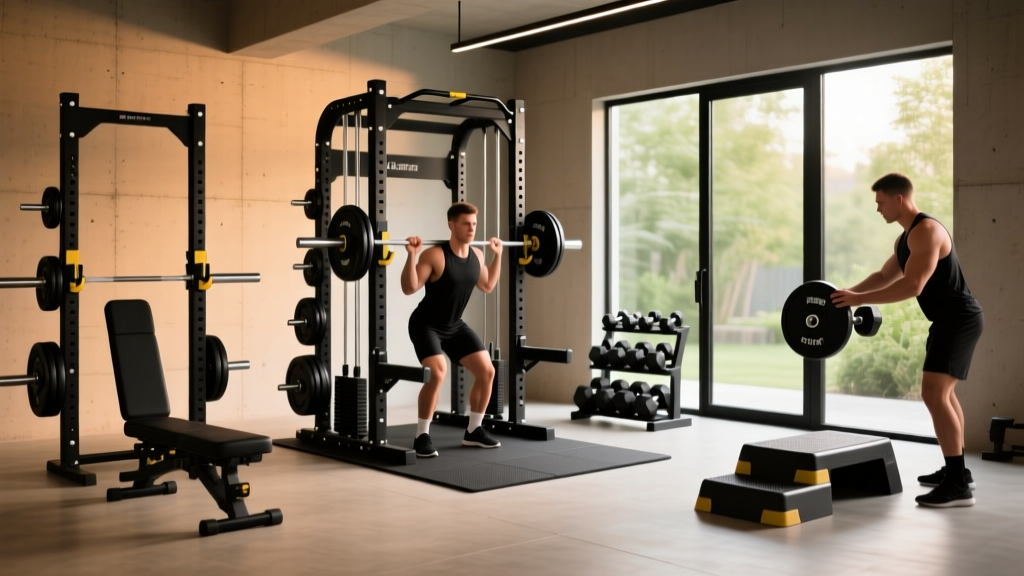
A full power rack (often called a cage) features four to six vertical posts, enclosing the lifter. Premium models like the Rep Fitness PR-4000 (starting around $1,699) or the Rogue Monster RM-330M (exceeding $3,800) utilize 11-gauge, 3x3-inch steel that can withstand over 1,000 pounds of static load.
Why It Wins for Dumbbell Step-Ups
When performing heavy dumbbell step-ups, fatigue often leads to lateral drift or a missed box placement. According to the ExRx.net biomechanical directory, the step-up requires intense stabilization from the gluteus medius and adductors. If you slip off a 24-inch box while holding heavy dumbbells, you will fall sideways or forward.
- Safety Straps over Pin Pipes: Power racks allow you to install heavy-duty nylon safety straps instead of steel pin pipes. Straps are crucial for dumbbell work; if you drop a dumbbell or fall, the straps catch the weight without bouncing or damaging the dumbbell's knurling or your floor.
- Internal Box Placement: A standard 4-post rack with 48-inch interior depth easily fits a 20x24 inch plyo box while leaving enough room for you to stand behind it and step up safely, with safety straps set at mid-shin height to catch your torso if you collapse.
- Band Peg Integration: Advanced lifters use resisted dumbbell step-ups by anchoring bands to the base of the power rack. The 4-post design provides multiple low-anchor points that squat stands simply cannot offer.
Squat Racks (Half Racks): The Spatial Compromise
Half racks, such as the Titan T-3 Series Half Rack (~$899), feature two main front posts and two shorter rear stabilizing posts. They are designed to save space while still offering front-facing safety spotter arms.
The Unilateral Drawbacks
Half racks are exceptional for barbell movements where the lifter faces forward and can bail the bar onto front spotter arms. However, for dumbbell step-ups, the open-sided design introduces risk. If you are stepping up with 70-pound dumbbells and lose your balance to the left or right, there are no lateral safety arms to catch you or the weights.
Furthermore, the ACE Fitness Exercise Library notes that proper step-up form requires a slight forward torso lean to engage the glutes. In a half rack, the rear stabilizing feet can become a tripping hazard if you are forced to step backward quickly to avoid a failed rep. While half racks are excellent for garages with low ceilings or limited depth, they force you to perform unilateral dumbbell work outside the safety perimeter of the rack.
Squat Stands: Minimalist but Limiting
Squat stands like the Rogue SML-2C Monster Lite (~$495) consist of two independent uprights with heavy base feet. They are budget-friendly, easy to move, and perfect for minimalist lifters who primarily Olympic lift or do basic barbell squats.
Warning: The Lateral Failure Mode
Squat stands are highly discouraged for heavy, high-box dumbbell step-ups. Because the two posts are not connected by crossmembers (unless you purchase a specific stabilizer bar), they rely entirely on gravity and base weight. If you accidentally strike a squat stand with a heavy dumbbell during a clumsy step-up descent, the stand can tip over, leading to catastrophic equipment failure and severe injury. Reserve squat stands for barbell work and keep your dumbbell step-ups in an open floor space away from the uprights.
Rigging Your Rack for Heavy Step-Ups: A Step-by-Step Guide
If you are investing in a Power Rack to accommodate both heavy barbell lifts and intense dumbbell accessories, proper rigging is essential. Follow this setup protocol to maximize safety during heavy dumbbell step-ups:
- Select the Right Box Height: Choose a plyo box that places your knee at or slightly below 90 degrees when your foot is planted. For most lifters, this is a 20-inch or 24-inch box.
- Positioning: Place the box inside the rack, centered between the left and right uprights. Leave at least 12 inches of clearance behind the box for your trailing foot.
- Set Safety Straps: Run heavy-duty safety straps through the uprights at a height roughly equal to your mid-shin when standing on the floor. This ensures that if your knee buckles or you slip off the box, your torso and the dumbbells will be caught by the straps before your knee strikes the floor.
- J-Cup Clearance: Remove the barbell and J-cups from the working area, or push them to the very top of the uprights to prevent shoulder or head strikes if you stand up too aggressively at the top of the step-up.
2026 Buyer's Decision Framework
Choosing the right equipment comes down to your specific training style, budget, and available square footage. Use this framework to make your final decision:
Buy a Power Rack If:
- You train alone and frequently push unilateral dumbbell movements (step-ups, split squats) to absolute failure.
- You want to integrate cable pulley systems, lat pulldowns, and band-resisted step-ups into your routine.
- You have a dedicated room or garage with at least 90 inches of ceiling height and a 6x6 foot clear floor space.
Buy a Half Rack If:
- You prioritize barbell squatting and benching but have limited depth in your gym space (e.g., a shallow garage bay).
- You prefer to do dumbbell step-ups in the open center of the room rather than inside a cage.
- You want the aesthetic and functionality of a commercial gym rack without the full enclosure.
Buy Squat Stands If:
- You are on a strict budget (under $600) and need to maximize floor space when not training.
- Your programming consists mainly of Olympic weightlifting, basic squats, and bodyweight accessories.
- You are willing to move your dumbbell accessory work to an entirely different area of your gym to avoid tipping hazards.
Final Verdict
While squat stands and half racks have their place in minimalist and space-constrained environments, the power rack remains the undisputed king of the versatile home gym. When programming demanding, balance-intensive movements like heavy dumbbell step-ups, the four-post enclosure and adjustable safety straps of a power rack provide an indispensable safety net. Investing in a high-quality 11-gauge power rack ensures that whether you are grinding out a 1-rep max back squat or battling through a grueling set of weighted step-ups, your equipment will support your longevity and performance for decades to come.
More gear to consider
All reviews
Troubleshooting Your Arm Day Dumbbell Workout With Neoprene Weights

Top Neoprene Gear for Dumbbell Exercises for Belly Fat for Female
Olympic vs Standard Plates for Lower Pec Exercises Dumbbells

Beyond the Dumbbell Kickbacks GIF: Adjustable Dumbbell Reviews & Setup
Bumper vs Iron Plates: Setup for Squats & Sitting Dumbbell Curls