Power Rack vs Squat Rack vs Stand: Alternate Dumbbell Snatch Guide
Learn how to choose between a power rack, squat rack, and squat stand to safely maximize floor space for the alternate dumbbell snatch in your home gym.

The Biomechanical Conflict: Enclosed Cages vs. Explosive Lifts
Building a home gym in 2026 requires balancing safety, storage, and functional movement space. For beginners looking to master dynamic, full-body exercises, the alternate dumbbell snatch presents a unique spatial challenge. Unlike a controlled barbell back squat, the alternate dumbbell snatch is a unilateral, explosive hip-hinge movement that demands significant lateral sway and overhead clearance.
According to BarBend's comprehensive guide to the dumbbell snatch, the movement path is rarely perfectly vertical. The unilateral load creates rotational torque, causing the lifter's body and the dumbbell to naturally sway outward during the triple-extension and catch phases. If you attempt this movement inside a standard 49-inch wide power rack, you risk smashing a $150 urethane dumbbell into a steel upright—or worse, injuring your wrist.
⚠️ Beginner Warning: Never perform explosive Olympic-style dumbbell variations inside a fully enclosed 4-post power rack unless it has an open-front configuration or exceeds 60 inches in interior width.Step 1: Decoding the Big Three Rack Types
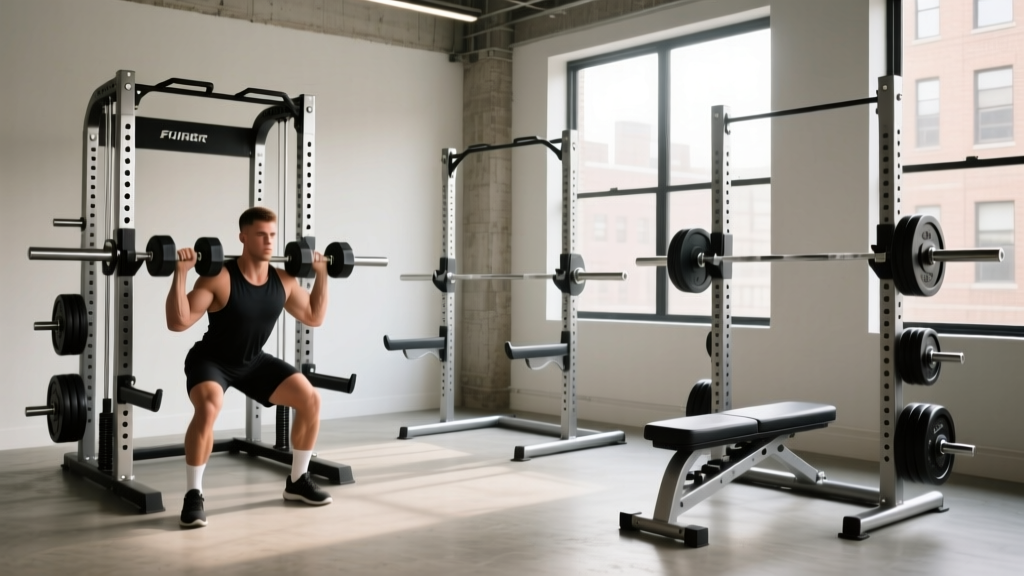
To safely integrate the alternate dumbbell snatch into your training, you must understand how different rack footprints impact your lifting zone. Based on Garage Gym Labs' structural analysis of squat stands versus power racks, here is how the three main categories compare for dynamic lifters.
| Rack Type | 2026 Avg. Price | Footprint & Space | Snatch Compatibility | Best For |
|---|---|---|---|---|
| Power Rack (4-Post) | $600 - $4,000 | Large (48" x 48" min) | Poor (unless lifting outside) | Heavy barbell squats, benching alone |
| Squat Rack (Half-Rack) | $900 - $1,800 | Medium (Uprights in front) | Excellent (Open front) | Mix of heavy barbell & dumbbell work |
| Squat Stand (2-Post) | $350 - $600 | Minimal (Just uprights) | Superior (Max floor space) | Small garages, Olympic lifts, snatches |
Step 2: Measuring Your 'Snatch Envelope'
Before purchasing any equipment, you must measure your 'Snatch Envelope'—the three-dimensional space your body and the dumbbell will occupy during the alternate dumbbell snatch. The National Strength and Conditioning Association (NSCA) recommends specific clearance zones for explosive lifting to prevent equipment damage and joint trauma.
The 3-Point Measurement Checklist:
- Ceiling Height (The Catch Zone): Stand tall and extend one arm fully overhead while holding a dumbbell. Measure from the floor to the top of the dumbbell. Add 6 inches for safety. If your ceiling is under 8'6", you will need to modify your catch depth or use lighter dumbbells.
- Lateral Sway (The Width): Hold a dumbbell at your hip. Simulate the snatch pull and allow your body to naturally rotate and sway. Measure the distance from your center line to the furthest point the dumbbell travels. Multiply by two. You need a minimum of 6 feet of unobstructed lateral width.
- The Drop Zone (The Failure Path): When you miss a snatch, you must drop the dumbbell safely to your side. Ensure your rack placement leaves a 3-foot clear radius on your left and right sides, free of bench legs, plate storage, or walls.
Step 3: 2026 Equipment Recommendations for Dynamic Lifters
If the alternate dumbbell snatch is a staple in your programming, here are the specific rack configurations that provide the best balance of safety, storage, and open space.
1. The Space Maximizer: Rogue Fitness SML-2C Monster Lite Squat Stand
Price: ~$545 | Footprint: 24" x 30" base
Squat stands are the undisputed champions for Olympic and dumbbell variations. The SML-2C features 3x3" 11-gauge steel uprights with Westside hole spacing, allowing you to set J-cups for racking heavy dumbbells if needed. Because there is no rear cage, your entire garage floor becomes an open platform for the alternate dumbbell snatch. Pro Tip: Pair this with a pair of 15lb bumper plates and a flat bench stored against the wall to maximize your drop zone.
2. The Hybrid Solution: Titan Fitness T-3 Half Power Rack
Price: ~$1,299 | Footprint: 47" x 44"
If you need the safety of spotter arms for heavy bench pressing but still want to perform the alternate dumbbell snatch, a half-rack is your answer. The T-3 places the uprights in front of the lifting platform. You step forward out of the rack to perform your snatches, entirely avoiding the steel framework, while still benefiting from the rear crossmembers for weight storage and pull-up bars.
3. The Budget Enclosure: REP Fitness PR-1100 (With Caveats)
Price: ~$399 | Footprint: 47" x 44"
If you absolutely must buy a 4-post power rack for budget or safety reasons, you must perform the alternate dumbbell snatch outside the rack. Use the PR-1100 strictly for squats and benching. Store your adjustable dumbbells or kettlebells on the rear pegs, keeping the front of the rack completely clear so you can stand just outside the uprights to execute your snatches.
Expert Insight: 'The biggest mistake beginners make is treating a power rack as a mandatory purchase. If your primary goals involve unilateral explosive power like the alternate dumbbell snatch, kettlebell flows, or Olympic barbell lifts, a heavy-duty squat stand paired with high-density rubber flooring will yield a vastly superior training experience than a cramped power cage.'
Step 4: Flooring and Failure Modes
The alternate dumbbell snatch has a high failure rate for beginners. When you misjudge the overhead catch, the dumbbell must be dropped safely. Dropping a 50lb cast-iron or urethane dumbbell from 7 feet in the air will destroy standard garage concrete and shatter the dumbbell handle.
- The Solution: Invest in 3/4-inch thick vulcanized rubber mats or horse stall mats (approx. $60-$80 per 4x6 mat).
- Placement: Create a dedicated 6x8 foot 'drop zone' directly in front of your squat stand or half-rack.
- Equipment Choice: For snatches, prioritize rubber-coated or urethane hex dumbbells over cast-iron. Urethane absorbs impact shock significantly better and won't chip your flooring upon impact.
Frequently Asked Questions
Can I do the alternate dumbbell snatch with adjustable dumbbells?
It is highly discouraged. Most adjustable dumbbells (like Bowflex or Nuobell) use plastic locking mechanisms and internal pins that can snap or dislodge if dropped from overhead during a missed snatch. Stick to fixed-weight hex or round dumbbells for explosive ballistic movements.
Do I need a pull-up bar on my squat stand?
While not strictly necessary for the snatch, a pull-up bar crossmember adds vital structural rigidity to 2-post squat stands. If you buy a squat stand for snatch work, ensure it includes a rear stabilizer bar to prevent the uprights from tipping if you accidentally clip them with a swinging dumbbell.
How much weight should a beginner start with?
Master the hip-hinge and triple extension with a 15lb to 25lb dumbbell. The alternate dumbbell snatch relies on hip velocity, not arm strength. Once your timing is consistent, increase the weight in 5lb increments, ensuring your lateral sway remains controlled within your designated Snatch Envelope.
More gear to consider
All reviews
Clean and Press Dumbbells & Kettlebells: Cast Iron vs Competition Care

Space-Saving Dumbbell Racks for the Single Dumbbell Bicep Curl

Bumper vs Iron Plates: Upgrading Beyond Renegade Rows with Dumbbells

Seated Dumbbell Calf Raise Setup & Barbell Collar Comparison
Neoprene Dumbbell Setup & Exercises with Dumbbells for Flabby Arms
