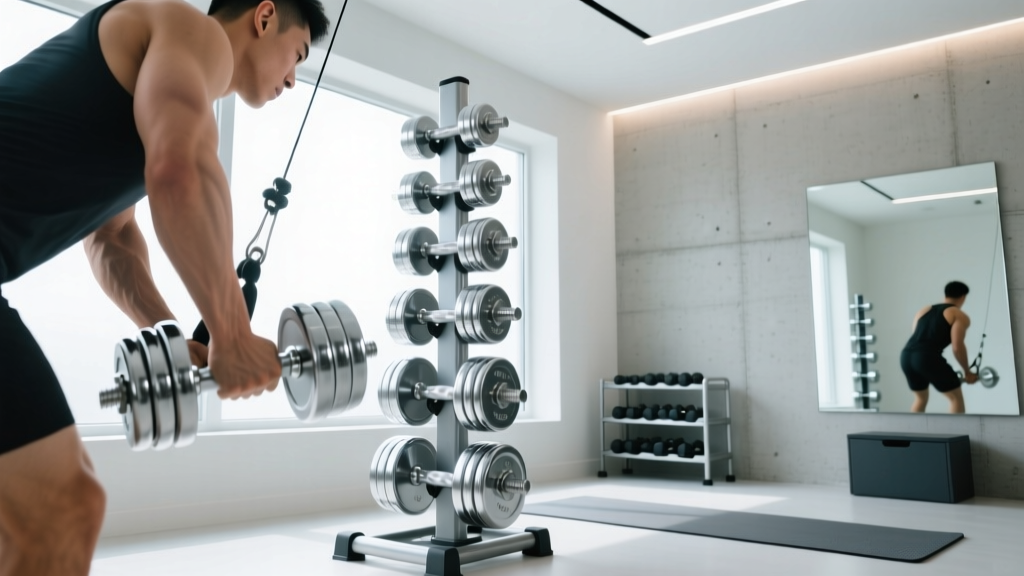
Pull Exercises with Dumbbells: Adjustable Dumbbell Setup & Review
Master pull exercises with dumbbells using our adjustable dumbbell comparison, setup walkthrough, and space-saving rack installation guide.

The Biomechanical Demand of Pull Exercises with Dumbbells
When programming pull exercises with dumbbells—such as single-arm rows, chest-supported rows, and dumbbell pullovers—the equipment you use directly dictates your range of motion, grip ergonomics, and latissimus dorsi activation. Unlike pushing movements where the weight rests securely in the palm, pulling movements require a secure hook grip and adequate lateral clearance for elbow travel. If your adjustable dumbbells are too bulky, or your home gym station is improperly measured, you will compromise scapular retraction and risk impingement.
In this comprehensive 2026 setup and installation walkthrough, we review the top adjustable dumbbells specifically for pulling mechanics, followed by a precise, step-by-step guide to configuring your bench and rack for optimal back development.
Top Adjustable Dumbbells for Pulling: 2026 Comparison Matrix
Not all adjustable dumbbells are created equal. The handle diameter, weight distribution, and physical length of the dumbbell drastically alter the biomechanics of a row. Below is our expert comparison of the three market leaders, evaluated specifically for pulling movements.
| Model | Max Weight | Handle Ergonomics | Dimensions (L x W) | 2026 Price | Pulling Verdict |
|---|---|---|---|---|---|
| Nuobell 80lb | 80 lbs | Knurled steel, standard 1.35" grip | 16.9" x 8.3" | $429 | Best overall for rows; feels like a standard fixed dumbbell. |
| PowerBlock Elite USA | 90 lbs (expandable) | Caged design, multiple grip widths | 12" x 6.5" | $389 | Excellent for pullovers; compact length prevents knee collision. |
| Bowflex 1090 | 90 lbs | Thick rubberized grip, bulky | 17.5" x 8.5" | $599 | Too long for single-arm rows; hits the torso at peak contraction. |
Expert Insight: According to ExRx bent-over row biomechanics, peak lat contraction requires the elbow to travel slightly past the midline of the torso. The Bowflex 1090's 17.5-inch length often collides with the ribcage before full contraction is achieved, making the compact PowerBlock or traditional-feeling Nuobell vastly superior for serious back training.
Complete Setup and Installation Walkthrough
Having the right adjustable dumbbells is only half the battle. To safely and effectively execute pull exercises with dumbbells, your home gym footprint must be calibrated for the specific range of motion these movements demand. Follow this installation walkthrough to configure your station.
Step 1: Calculating Clearance for Elbow Travel
The most common home gym installation error is placing the weight bench too close to a wall or squat rack uprights. During a heavy dumbbell row, your elbow will travel backward and upward.
- Wall Clearance: Position the head of your bench at least 38 inches away from any rear wall. This accounts for a 6-foot-tall lifter's torso length plus the 12-inch dumbbell extending past the hip.
- Lateral Clearance: Ensure you have 24 inches of clear floor space on both sides of the bench for single-arm rows where the non-working arm braces the bench, and the working arm drops toward the floor.
Step 2: Bench Height and Angle Calibration
For chest-supported pull exercises with dumbbells (like the incline dumbbell row), the angle of your adjustable bench is critical. Set your bench to a 30-degree to 45-degree incline. If the bench is too steep (60 degrees), you shift the bias from the mid-back and lats to the rear deltoids and traps. Ensure the bench's support pin is fully seated in the ladder rung; the sheer horizontal force of heavy rowing can cause poorly secured incline benches to slip.
Step 3: Adjustable Dumbbell Tray Placement
Never place adjustable dumbbell trays on the floor if you are doing bent-over rows. Bending down to twist a dial or pull a pin while fatigued compromises your lumbar spine. Install a dedicated 24-inch high dumbbell stand or integrate a tray shelf into your power rack at roughly hip height. This allows you to adjust the weight while maintaining a neutral spine.
⚠️ Warning: Renegade Rows and Equipment Failure
Renegade rows (plank rows) are a popular core and back exercise. However, never use adjustable dumbbells for renegade rows. The impact of dropping the weight onto the floor, combined with the lateral torque of pulling, will shatter the plastic housing and destroy the internal dial or pin mechanisms of Nuobell, Bowflex, and PowerBlock models. Use fixed hex dumbbells or kettlebells for this specific movement.
Biomechanics and Grip Variations
When performing pull exercises with dumbbells, grip orientation changes the muscle recruitment pattern. The ACE Fitness exercise library notes that grip width and pronation/supination heavily influence the kinetic chain.
- Neutral Grip (Palms facing each other): Allows for the heaviest loads and greatest range of motion. The Nuobell's traditional handle excels here, allowing the wrists to stack naturally over the elbows.
- Pronated Grip (Palms facing down): Targets the rhomboids and rear delts. The PowerBlock's caged design can feel restrictive here, as the side bars may dig into the forearms during wide-elbow rows.
- Supinated Grip (Palms facing up): Increases biceps brachii involvement. Requires a thinner handle to maintain grip security; adjustable dumbbells with thick rubber coatings often cause grip fatigue before back fatigue in this position.
Common Installation & Usage Failure Modes
Even with premium 2026 equipment, improper setup leads to mechanical failure. Watch out for these edge cases:
1. Sweat Ingress in Dial Mechanisms
During high-volume pulling circuits, sweat drips down the arms and pools on the dumbbell handles. In dial-based systems, saline sweat can corrode the internal magnetic pins or cause the plastic dials to stick. Solution: Keep a microfiber towel on your rack shelf and wipe the handle and dial housing between every set of rows.
2. Tray Warping Under Load
Many users leave their 80lb or 90lb adjustable dumbbells resting on the plastic storage trays when not in use. Over time, the constant 180lb combined load causes the plastic trays to bow and warp, leading to misaligned weight plates. When you lift the dumbbell, a plate may fail to lock in, creating a severe drop hazard during a pullover. Solution: Always store the dumbbells on a flat, reinforced steel rack shelf, using the plastic trays only for transport or floor placement.
3. Asymmetrical Weight Selection
Unlike fixed dumbbells, adjustable sets require you to manually select the weight on both sides. A common failure mode during heavy bent-over rows is accidentally setting one dumbbell to 70 lbs and the other to 65 lbs. This 5-pound discrepancy creates rotational torque on the thoracic spine, leading to unilateral muscle spasms. Always visually verify the weight indicator windows before lifting.
Final Verdict: Configuring Your Pulling Station
Mastering pull exercises with dumbbells in a home gym requires a synergy between the right equipment and a meticulously measured environment. For pure pulling mechanics, the Nuobell 80lb remains our top recommendation due to its traditional handle geometry and knurled grip, which prevents slipping during heavy, sweaty rows. Pair it with a 30-degree adjustable bench, ensure 38 inches of rear clearance, and elevate your storage trays to hip height. By respecting the biomechanics of the latissimus dorsi and the mechanical limitations of adjustable gear, you can build a world-class back without ever stepping foot in a commercial gym.
More gear to consider
All reviews
Cast Iron vs Competition Kettlebells: 2026 Trends & Dumbbell Diagonal Raises

Rubber vs Urethane: Dumbbell Single Leg Romanian Deadlift Value Guide
Maximize Space for Your Free Dumbbell Workout with Loadable Plates
Home Gym Layout: Bumper vs Iron Plates & Bowflex 52.5 Dumbbells

Space-Saving Loadable Dumbbells for an At Home Upper Body Workout
