Power Rack vs Squat Rack vs Squat Stand + Incline Dumbbell Curl GIF
Compare power racks, squat racks, and squat stands for your home gym. Includes setup steps, 2026 pricing, and an incline dumbbell curl GIF form guide.

The Home Gym Foundation: Choosing Your Rack
Building a home gym in 2026 requires a foundational piece of equipment that dictates the safety, versatility, and longevity of your training. When browsing Rogue Fitness or Titan Fitness, the sheer volume of steel cages, half-racks, and standalone uprights can be paralyzing for beginners. The debate of power rack vs squat rack vs squat stand ultimately comes down to three variables: your available floor space, your budget, and your need for safety spotter arms during solo lifting sessions.
In this step-by-step guide, we will break down the exact dimensions, steel gauges, and pricing of the top rack configurations on the market. Furthermore, we will explore how to maximize your rack for accessory movements, including how to safely set up for isolation exercises using visual aids like an incline dumbbell curl gif to perfect your biomechanics without risking injury.
1. Power Racks (Full Cages)
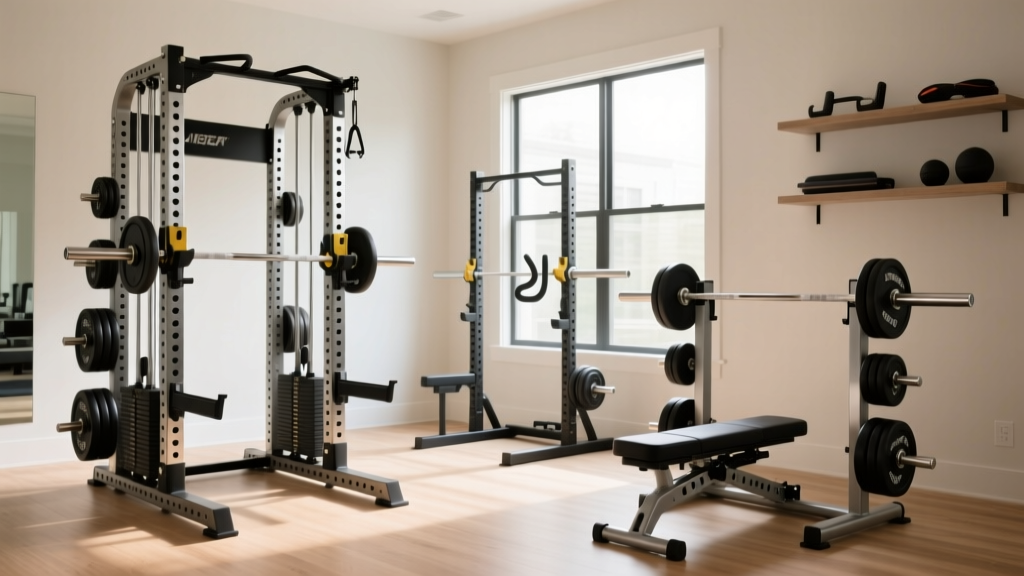
A power rack (or full cage) consists of four main vertical uprights connected by horizontal crossmembers, creating an enclosed 'cage' around the lifter. This is the gold standard for safety and versatility.
Key Specifications & Pricing
- Steel Gauge: Typically 11-gauge or 7-gauge steel (3x3 inch tubing).
- Hole Spacing: 5/8-inch holes with 'Westside' spacing (1-inch spacing in the bench press zone) for precise J-cup placement.
- Footprint: Usually 48x48 inches or 49x49 inches on the outside, requiring a ceiling height of at least 84 to 90 inches.
- 2026 Pricing: The Titan T-3 Series Power Rack retails around $899, while the Rogue R-3 Power Rack sits at approximately $1,050 before attachments.
Pros and Cons
- Pros: Unmatched safety with 4-point spotter arm integration; allows for rack pulls, pin squats, and band work; highest weight capacity (often 1,000+ lbs).
- Cons: Massive footprint; requires bolting to a concrete slab or using heavy rear crossmember storage to prevent tipping; visually dominates a room.
2. Squat Racks (Half Racks)
A squat rack, often referred to as a half rack, features two main front uprights and a rear stabilizing base. It provides an open feel while maintaining a degree of safety through rear-mounted spotter arms.
Key Specifications & Pricing
- Steel Gauge: Usually 11-gauge steel (2x3 or 3x3 inch tubing).
- Footprint: The front footprint is small (e.g., 49x48 inches), but the rear stabilizer feet often extend up to 48 inches backward, meaning the total depth is still substantial.
- 2026 Pricing: The Rogue S-2 Squat Rack is priced around $825, while the Rep Fitness SR-4000 Half Rack comes in at $799.
Half racks are ideal for Olympic lifters who need to 'bail' on a missed snatch or clean by tossing the barbell backward, which is impossible inside a fully enclosed power cage.
3. Squat Stands
Squat stands are two independent (or lightly connected) uprights designed purely to hold the barbell. They are the minimalist's choice.
Key Specifications & Pricing
- Steel Gauge: Often 2x2 inch 14-gauge or 11-gauge steel to keep costs and weight down.
- Footprint: Extremely compact, often just 48x48 inches with no rear stabilizer.
- 2026 Pricing: The Titan T-2 Series Squat Stand is a budget favorite at $349, while the Rogue SML-1 Monster Lite Stand costs about $450.
- Pros: Cheapest option; easily moved or stored away; perfect for low-ceiling garages or apartments.
- Cons: Zero inherent safety. If you fail a rep, you must dump the bar. Spotter arms can be added, but they drastically reduce the stand's stability unless heavily loaded with weight plates on the rear pegs.
Comparison Matrix: Footprint, Cost, and Safety
| Feature | Power Rack (Cage) | Squat Rack (Half) | Squat Stand |
|---|---|---|---|
| Avg. Cost (2026) | $899 - $1,200 | $750 - $900 | $300 - $500 |
| Safety Level | Maximum (Enclosed) | High (Rear Spotters) | Low (Dump Bar Required) |
| Floor Space Needed | ~16 sq ft (4x4) | ~24 sq ft (4x6 depth) | ~16 sq ft (4x4) |
| Best For | Heavy Powerlifting, Solo Training | Olympic Lifting, CrossFit | Beginners, Tight Spaces |
| Attachment Ecosystem | Massive (Cable pulleys, lat towers) | Moderate (Dip bars, spotter arms) | Minimal (J-cups only) |
Step-by-Step: Bolting Down and Setting Up
According to Garage Gym Reviews, failing to secure your rack is the number one cause of home gym accidents. Follow these steps for a safe installation:
- Map the Layout: Ensure you have at least 18 inches of clearance on all sides of the rack for loading plates and walking out squats.
- Mark the Concrete: If bolting a power rack, use a masonry bit (usually 1/2 inch for 3/8 inch wedge anchors) to drill through the base plates. Warning: Never bolt into cinderblock or crumbling concrete; use expansion anchors only in solid poured concrete.
- Level the Uprights: Before tightening the anchor nuts completely, place a magnetic level on the front uprights. Use steel shims under the base if your garage floor slopes (which most do for drainage).
- Install J-Cups and Spotters: Place the J-cups at your upper chest height for benching, and set the safety spotter arms exactly 1 to 2 inches below your lowest range of motion.
Beyond Squats: Bench Setup and the Incline Dumbbell Curl GIF Breakdown
When outfitting your rack with an adjustable FID (Flat/Incline/Decline) bench, the rack transforms into a complete isolation station. A common scenario: you are targeting the long head of the biceps and need to verify your shoulder extension and elbow tracking. Instead of guessing, most lifters pull up an incline dumbbell curl gif on their phone (via resources like ExRx.net's exercise directory) to study the biomechanics of the stretch.
The incline dumbbell curl requires the bench to be set at a 45 to 60-degree angle, allowing the arms to hang behind the torso to maximize the stretch on the biceps brachii. However, reaching muscular failure on a heavy 60 lb dumbbell in this compromised, stretched position is incredibly dangerous for the bicep tendon and your face.
How to Use Your Rack for Safe Isolation
Pro-Tip: Drag your adjustable bench inside the power rack. Set the safety spotter arms horizontally across the rack, positioning them exactly one inch below your elbow's lowest hanging point. Now, when you reference your incline dumbbell curl gif for form, you can push to absolute failure. When your muscles give out, simply open your hands and let the dumbbells drop safely onto the UHMW-lined spotter arms, eliminating the risk of a torn tendon or a crushed skull.
This is where the power rack vastly outshines the squat stand. A squat stand cannot accommodate a bench and spotter arms simultaneously with any degree of safety, severely limiting your ability to train isolation movements to failure.
Expert Verdict: Which Should You Buy?
- Buy the Power Rack if: You have the space (and ceiling height), you train alone, and you want to add cable pulley systems or lat towers in the future. The Titan T-3 or Rogue R-3 are lifetime investments.
- Buy the Squat Rack if: You practice Olympic weightlifting and need to bail backward, or if you prefer an open-air feel while still having rear spotter arms for heavy squats.
- Buy the Squat Stand if: You are on a strict budget under $400, you live in an apartment with low ceilings, or you only plan on doing light to moderate barbell work and can safely dump the bar if needed.
Frequently Asked Questions
Do I need to bolt my squat stand to the floor?
Yes, if you are using spotter arms. Without bolting, the forward leverage of a heavy barbell resting on extended spotter arms will cause a squat stand to tip forward. If you cannot bolt it, you must load the rear weight storage pegs with heavy bumper plates to act as a counterbalance.
What is the difference between 5/8-inch and 1-inch holes?
5/8-inch holes are the industry standard for commercial and high-end home gym racks (like Rogue's Monster Lite line), offering a tighter fit for J-cups with less wobble. 1-inch holes are typically found on budget, imported Amazon racks and often suffer from 'slop' or play when racking heavy weights.
More gear to consider
All reviews
Compact Kettlebells & Dumbbells for Seniors: Cast vs Competition
Incline Dumbbell Press Targets Which Muscle? Best Adjustable Dumbbells

5 8 10 Dumbbell Set Guide: Best Adjustable Alternatives 2026
Olympic Barbell Buying Guide & Quad Workouts with Dumbbells
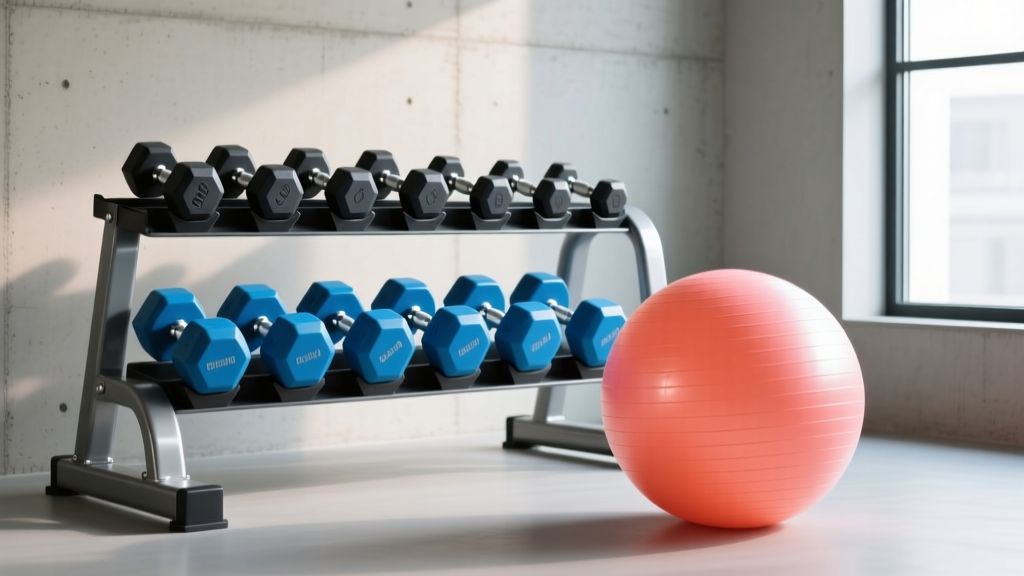
Maintaining Racks for Dumbbell Exercises with Exercise Ball Routines
