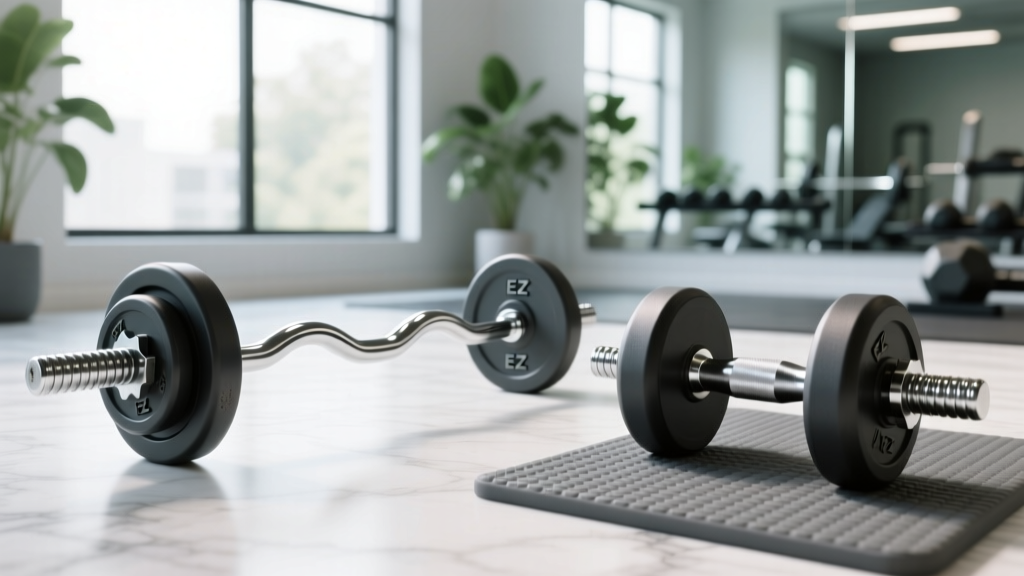
Power Rack vs Squat Rack vs Stand: 50 lb Dumbbell Curl Clearance
Compare power racks, squat racks, and stands. We analyze interior clearance, safety, and space for heavy moves like the 50 lb dumbbell curl.

The Home Gym Clearance Problem
When outfitting a home gym, 90% of buying guides focus entirely on barbell movements. They obsess over J-cup heights for back squats, safety pin placements for bench presses, and pull-up bar clearances. But what happens when you transition to heavy dumbbell isolation work? In the fitness equipment industry, the heavy dumbbell curl is an unofficial benchmark for lateral spatial clearance. If your rack setup cannot accommodate a strict 50 lb dumbbell curl without you scraping your knuckles on steel uprights, your home gym has a critical ergonomic flaw.
Choosing between a full power rack, a half squat rack, and minimalist squat stands requires looking beyond barbell specs. You must evaluate interior width, upright spacing, spotter arm usability, and safe entry/exit zones for heavy dumbbells. As of 2026, with home gym footprints shrinking and equipment modularity increasing, understanding these spatial dynamics is essential for a safe, versatile training space.
The '50 lb Dumbbell Curl' Benchmark Explained
Why use this specific movement as a benchmark? It comes down to biomechanics and equipment dimensions. A standard 50 lb rubber hex dumbbell measures roughly 14.5 inches in total length. When you perform a strict standing curl, your elbows naturally flare outward during the concentric phase. For an average-sized male, the lateral wingspan from the left dumbbell head to the right dumbbell head expands to approximately 42 to 46 inches.
⚠️ The Clearance Trap: If you purchase a budget power rack with a narrow 41-inch interior width, you will physically strike the uprights on every rep of a heavy curl. This forces you to step outside the rack to perform isolation movements, defeating the purpose of an enclosed training space and ruining your floor layout.Furthermore, heavy dumbbell work requires safe entry and exit. Getting 50-pound dumbbells into position for seated presses or floor work inside a cramped cage is a known failure point that leads to dropped weights and foot injuries. According to ExRx spotting safety guidelines, managing heavy dumbbells requires vastly different spatial awareness and bailout zones compared to barbells.
Equipment Comparison Matrix
Below is a breakdown of how the three primary rack categories handle heavy dumbbell work, based on standard 3x3-inch, 11-gauge steel models available in 2026.
| Equipment Type | Standard Interior Width | Dumbbell Clearance | Bailout Safety | 2026 Avg Price |
|---|---|---|---|---|
| Full Power Rack | 43' or 49' | Excellent (if 49') | High (Pin/Pipe) | $700 - $1,200 |
| Squat Rack (Half Rack) | 48' - 54' | Unrestricted | Moderate (Strap/Arm) | $500 - $900 |
| Squat Stands | N/A (Open) | Unrestricted | Low (None/Strap) | $150 - $350 |
Power Racks: The Enclosed Fortress
A full power rack is the gold standard for safety, featuring four uprights that allow for spotter arms or safety pins. However, for dumbbell enthusiasts, the interior width is the single most critical specification.
Model Spotlight: Rogue R-3 Power Rack
The Rogue R-3 Power Rack is a staple in the industry. It comes in two interior width options: 43 inches and 49 inches. While 43 inches is sufficient for barbell benching, it is too narrow for a 50 lb dumbbell curl or heavy seated dumbbell shoulder presses. If you plan to train with heavy dumbbells inside the cage, you must opt for the 49-inch interior width and a minimum depth of 30 inches. This allows you to sit on an adjustable bench, flare your elbows, and curl or press without knuckle-striking the 11-gauge steel uprights.
- Pros: Maximum safety for solo training; allows for rack pulls, pin squats, and enclosed DB work.
- Cons: High cost; massive footprint; requires careful width selection for DB clearance.
Squat Racks (Half Racks): The Open-Front Compromise
Half racks feature two main front uprights and a rear storage/backbone structure. Because the front is entirely open, your lateral wingspan is unrestricted.
Model Spotlight: Titan T-2 Half Rack
The Titan T-2 Half Rack offers an open-front design that completely eliminates the knuckle-scraping issue. You can stand directly on the lip of the rack and perform 50 lb dumbbell curls, lateral raises, or heavy floor presses with zero spatial anxiety. Furthermore, the open front makes picking up heavy dumbbells from the floor significantly easier, as you don't have to navigate a narrow cage door.
The trade-off is safety. Half racks typically rely on strap safeties or short flip-down spotter arms. If you fail a heavy dumbbell bench press, catching two independent 50 lb dumbbells on narrow strap safeties is incredibly difficult and dangerous compared to dropping a single barbell sleeve onto a pin.
Squat Stands: The Minimalist Trap
Squat stands are essentially two independent uprights. They are cheap, portable, and perfect for outdoor gyms or low-clearance basements. Models like the REP PR-2400 or Titan Fitness standalone squat stands are incredibly popular for budget builds.
Failure Mode: Dumbbell Entry and Exit
While squat stands offer infinite lateral clearance for a 50 lb dumbbell curl, they introduce severe logistical hazards. To do heavy dumbbell work, you must position your bench or your body between the stands. If you are performing seated dumbbell curls or overhead presses, the bases of the stands often protrude 15 to 20 inches outward. This creates a tripping hazard and makes it nearly impossible to safely 'bail' or drop the dumbbells to the floor without them bouncing into the stand bases, potentially causing the uprights to tip if they are not bolted down or heavily counterweighted.
'Squat stands are for squatting and pressing barbells. The moment you introduce heavy, independent dumbbells into a squat stand setup, you are managing a complex drop-zone that requires a spotter or an open floor plan.'
Spotter Arm Dynamics for Dumbbell Isolation
A common misconception is that rack spotter arms will save you if you tear a bicep tendon or fail a heavy dumbbell movement. Spotter arms are engineered to catch a 7-foot Olympic barbell by its steel sleeves. They are not designed to catch a 14-inch rubber hex dumbbell.
If you are doing heavy dumbbell floor presses or seated movements inside a power rack, standard pin-and-pipe safeties are virtually useless for dumbbells. The dumbbell will simply slip between the pipes or bounce off the UHMW plastic lining. For heavy dumbbell isolation work, the 'spotter' is your own spatial awareness and the ability to safely guide the weight to the floor, which is why the open-front design of a half rack or the wide footprint of a dedicated dumbbell zone is often superior to being trapped inside a narrow cage.
Final Decision Framework
Use this checklist to finalize your rack purchase based on your dumbbell usage:
- Choose a 49' Power Rack if: You train alone, require overhead safety for barbell work, and have the budget and ceiling height (8+ feet) to accommodate a full cage while needing 49 inches of interior width for dumbbell isolation.
- Choose a Half Rack if: Dumbbell work makes up more than 40% of your routine. The open front allows seamless transitions between heavy barbell squats and 50 lb dumbbell curls without spatial restriction.
- Choose Squat Stands if: You are strictly a barbell lifter, or you only use light-to-moderate dumbbells (under 35 lbs) and have a dedicated open floor space away from the stands for heavy isolation work.
Ultimately, treating the 50 lb dumbbell curl as a spatial benchmark will save you from the frustration of a cramped, inefficient home gym. Measure your wingspan, check the interior specs, and build a space that supports every tool in your arsenal.
More gear to consider
All reviews
Heel Elevated Dumbbell Squats: Bumper vs Iron Plate Value

Olympic vs Standard Plates for Good Bicep Exercises With Dumbbells
2026 Trend Report: Urethane vs Rubber Hex for the Dumbbell Superman
Complete Home Gym Setup: Racking Your 17.5 Dumbbells
Standing Dumbbell Kickbacks: Power Rack vs Squat Rack vs Stand