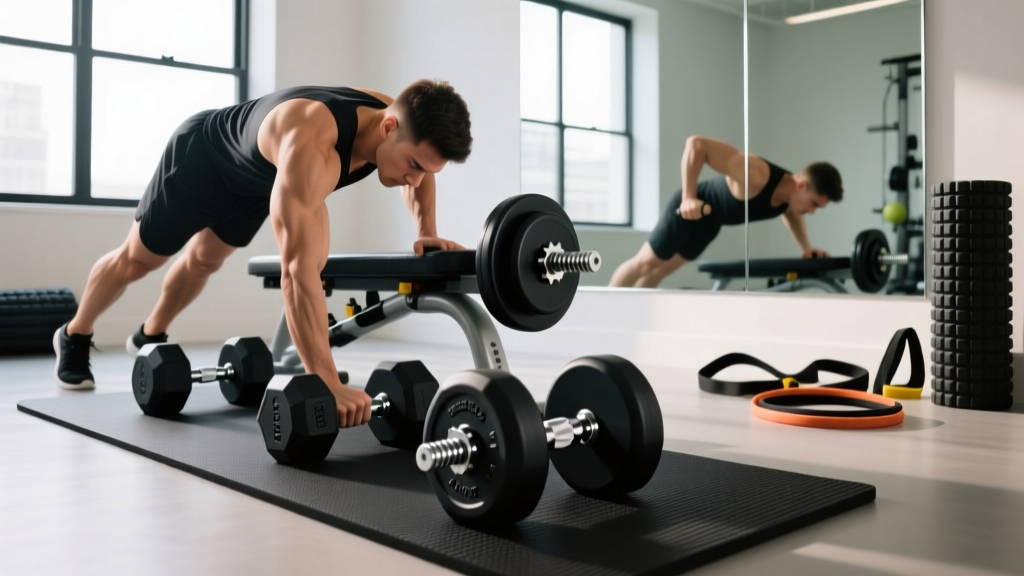
Power Rack vs Squat Rack for CrossFit Dumbbell Exercises
Avoid costly garage gym mistakes. Compare power racks, squat racks, and stands specifically optimized for high-volume CrossFit dumbbell exercises.

The Hidden Conflict: Barbell Rigs vs. Dumbbell WODs
When outfitting a garage gym or affiliate box, the default instinct is to purchase a rig based entirely on barbell movements. However, modern functional fitness programming has shifted dramatically. If your weekly volume heavily features CrossFit dumbbell exercises—such as high-rep thrusters, unilateral snatches, devil presses, and heavy step-ups—your choice between a power rack, a squat rack, and a squat stand dictates your spatial efficiency, equipment longevity, and safety. According to facility design guidelines from the National Strength and Conditioning Association (NSCA), optimizing the training footprint for dynamic, multi-planar movements is critical for injury prevention. In 2026, with premium urethane dumbbells costing upwards of $3.50 per pound, protecting your investment and your floor space requires a highly specific approach to rig selection.
The most common mistake athletes make is overbuying on footprint. A standard 4-post power rack, like the Rogue R-3 (starting around $1,150 in 2026), consumes a massive 90-inch by 43-inch footprint. While excellent for heavy barbell squats, this enclosed steel cage actively interferes with the lateral clearance required for dynamic dumbbell work. Conversely, squat stands offer open-floor versatility but introduce severe stability risks if not properly configured for asymmetric loading. This troubleshooting guide breaks down the exact failure modes of each rig type when subjected to the rigors of CrossFit dumbbell exercises.
⚠️ Critical Mistake #1: The Lateral Strike ZoneWhen performing dumbbell snatches or devil presses adjacent to a power rack, the athlete's elbow or the dumbbell head frequently strikes the rear uprights or safety straps. This not only ruins the urethane coating of the dumbbell but can cause acute elbow contusions. If your primary modality is dumbbell-focused metabolic conditioning, a fully enclosed 4-post power rack is often a spatial liability, not an asset.
Spatial Clearance and the 'Devil Press' Radius
The devil press requires the athlete to drop to the floor, perform a burpee over the dumbbells, and swing them overhead in a single fluid motion. This demands a minimum 36-inch lateral clearance radius on all sides of the working area. The CrossFit Journal frequently highlights the importance of unobstructed movement corridors for high-output metabolic conditioning. If you place a squat rack with wide-set uprights (like the Rogue S-2, 49-inch interior spacing) in a narrow garage bay, the rear crossmembers become a tripping hazard during backward burpee extensions.
Troubleshooting the Space Deficit: If you are locked into a small footprint (e.g., a single-car garage measuring 12x20 feet), abandon the traditional 4-post power rack. Instead, utilize a pair of heavy-duty squat stands, such as the Titan T-2 Series ($289 for the pair). The T-2 features a 48x48-inch base but completely eliminates the rear uprights, opening up the entire rear plane for sprawling movements, wall balls, and dynamic dumbbell complexes.
2026 Rig Comparison Matrix for DB-Heavy Programming
| Rig Type | Model Example (2026) | Approx. Cost | DB Step-Up Utility | Lateral Clearance | Storage Integration |
|---|---|---|---|---|---|
| Power Rack | Rep Fitness PR-4000 | $850 - $1,200+ | Excellent (Multiple crossmembers) | Poor (Enclosed cage limits sprawl) | High (Add-on saddle pegs) |
| Squat Rack | Rogue S-2 Squat Stand | $475 - $600 | Good (Single high crossmember) | Moderate (Open rear, wide base) | Low (Requires separate DB tree) |
| Squat Stand | Titan T-2 Series | $289 - $350 | Poor (Requires bolting/ballast) | Excellent (Zero rear obstruction) | None (Standalone footprint) |
Troubleshooting Stability: The Unilateral Step-Up Failure Mode
Dumbbell step-ups are a staple in Open workouts and regional qualifiers. Athletes frequently use the pull-up bar or a high-mounted crossmember of their rack as the step-up platform. Herein lies the second major mistake: asymmetric tipping.
When an athlete holding two 70-pound dumbbells steps onto the edge of a squat stand's crossmember, the dynamic downward force can exceed 250 pounds of localized pressure. A standard squat stand, which relies on a relatively small base plate and lacks the structural triangulation of a 4-post rack, will violently tip forward or sideways if it is not secured. We see this failure mode constantly in garage gym setups where the stands are merely resting on rubber horse-stall mats.
The Ballast Protocol for Squat Stands
If you must use squat stands for heavy dumbbell step-ups, you must implement a ballast protocol.
- Bolt to the Platform: If you have a raised wooden platform, use 3/8-inch lag bolts to secure the base plates directly into the floor joists.
- Weight Horn Ballast: If bolting is impossible, purchase squat stands with extended rear weight storage horns (like the Titan T-3 or Rogue SML-2C with added pegs). Load at least 150 pounds of bumper plates on the rear horns before attempting heavy unilateral dumbbell step-ups. This shifts the center of gravity rearward, counteracting the forward tipping moment.
- Use Strap Safeties: Never step directly onto the steel uprights or J-cups. Use heavy-duty nylon safety straps pulled taut between the uprights to create a stable, slightly yielding platform that absorbs the impact of the descending dumbbell and the athlete's foot.
Upright Spacing and Urethane Preservation
The third critical mistake involves the destruction of expensive dumbbells. In 2026, high-quality urethane dumbbells (like those from Rogue or Eleiko) represent a massive financial investment. Urethane is highly durable against floor drops, but it is incredibly susceptible to slicing and gouging when dragged across bare, uncoated 11-gauge steel uprights.
Expert Insight: "When racking heavy dumbbells for floor presses or hang cleans, athletes often drag the knurled handles and urethane heads against the rack's uprights. Over a year of high-volume programming, this will strip the urethane down to the iron core, causing the dumbbell to rust and the rack's finish to degrade. Always spec UHMW (Ultra-High-Molecular-Weight) plastic liners for your uprights if your programming includes frequent dumbbell racking."
Furthermore, upright spacing dictates how easily you can transition between barbell and dumbbell work. Standard 49-inch spacing (common on older squat racks) makes it difficult to utilize the rack for dumbbell floor presses, as the safety straps are too wide to catch a dropped dumbbell safely. Opt for 43-inch interior spacing (like the Rogue R-3 or Rep PR-4000) which allows standard 41-inch safety straps to sit perfectly inside the uprights, creating a secure 'floor' for heavy dumbbell presses without requiring a spotter.
5-Point Diagnostic Checklist for Your Current Setup
Before your next WOD, run your rig through this troubleshooting checklist to ensure it is optimized for your specific programming:
- Clearance Test: Lie flat on the floor where you plan to do devil presses. Extend your arms fully with a mock object. Are you within 12 inches of a steel upright? If yes, relocate the rig or switch to squat stands.
- Step-Up Stability Test: Apply 50% of your body weight to one side of the pull-up bar or crossmember. Does the rear of the rig lift off the ground? If yes, implement the ballast protocol immediately.
- Hardware Check: Inspect your J-cups. Are you using standard bare steel cups? Swap them for sandwich J-cups with UHMW plastic padding to protect your dumbbell handles during rack pulls and hang cleans.
- Storage Interference: If you use a dumbbell tree or wall-mount rack, ensure it is not placed in the 'dismount zone' of your pull-up bar. Kipping or butterfly pull-ups require a clear forward fall path; a DB tree in this zone is a severe laceration hazard.
- Matting Continuity: Ensure your drop-zone matting extends at least 36 inches beyond the rack's perimeter. Dumbbell snatches often result in wide, uncontrolled drops that will shatter concrete if the matting footprint is too tight to the rig.
Final Verdict: Matching the Rig to Your Programming
There is no universally 'best' rig; there is only the right rig for your specific movement diet. If your training is 80% barbell-centric with occasional dumbbell accessory work, a 4-post power rack provides the safety and storage you need. However, if your daily grind consists of high-volume CrossFit dumbbell exercises, metabolic conditioning, and dynamic sprawling movements, the enclosed footprint of a power rack will actively hinder your performance. For the dedicated functional fitness athlete operating in a space-constrained garage, a pair of heavily ballasted, UHMW-lined squat stands offers the ultimate blend of open-floor versatility, cost-efficiency, and movement freedom. Stop letting barbell-centric marketing dictate your dumbbell training environment.
More gear to consider
All reviews
EZ Bar vs Straight Bar: 2026 Trends & Dumbbell Thrust Data

Barbell vs Dumbbell: Beginner Guide to Olympic Bar Weight & Knurl

Barbell Collar & Clamp Comparison: Setup for Dumbbell Strict Press

Kettlebell Guide & Overhead Extensions Dumbbells: Budget 2026
Loadable Dumbbell Value: Budgeting Good Dumbbell Exercises for Arms