Pec Deck Flyes vs Dumbbells: Hex vs Urethane Space Layouts
Reclaim home gym space by replacing the pec deck. Compare rubber hex vs urethane dumbbells for optimal layout, storage, and dumbbell flye performance.

The Spatial Economics: Ditching the Pec Deck
The modern home gym is a masterclass in spatial economics. Every square foot must justify its existence through versatility and functional ROI. When researching pec deck flyes dumbbells alternatives, the primary goal is reclaiming square footage without sacrificing chest isolation. A standard commercial pec deck machine (like the Body-Solid GPC-185) commands a footprint of roughly 68 inches by 42 inches, consuming nearly 20 square feet of prime floor space. In a compact garage or basement gym, that is an unacceptable luxury.
By transitioning to a dedicated dumbbell flye zone utilizing an adjustable bench and a compact weight rack, you can reduce the footprint to under 12 square feet. However, this spatial optimization hinges entirely on the geometry and material of the dumbbells you choose. The debate between rubber hex dumbbells and urethane dumbbells is not just about durability or odor; it is fundamentally about storage geometry, rack compatibility, and floor plan efficiency.
Rubber Hex vs. Urethane: The Storage Geometry
To optimize a small layout, you must consider how the equipment rests when not in use. The physical shape and material coating of your dumbbells dictate the type of storage rack you can deploy, which directly impacts your room's traffic flow.
The Rubber Hex Advantage: Flat Shelving
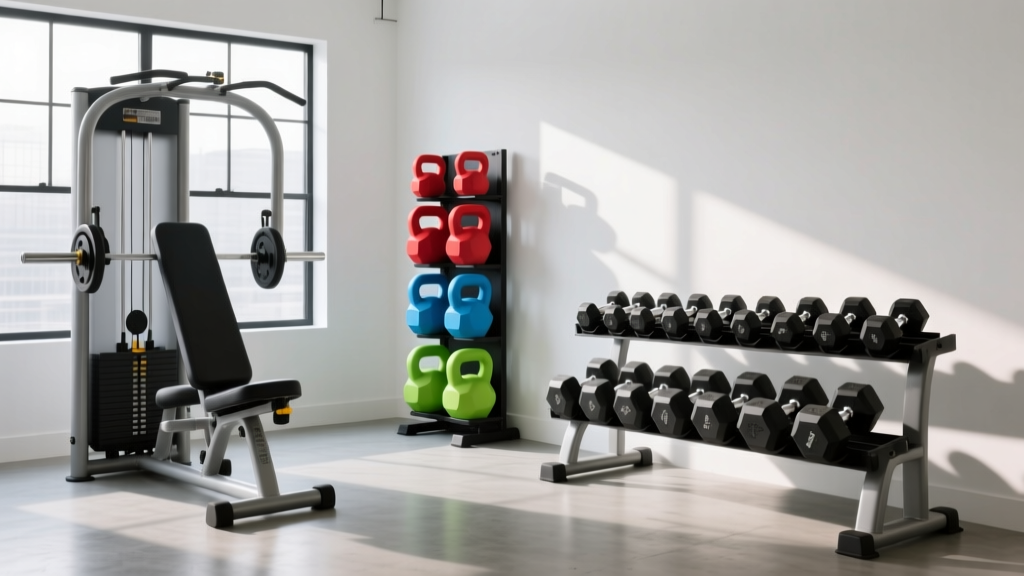
Rubber-coated hexagonal dumbbells are the undisputed champions of flat, wall-mounted storage. Because of their flat edges, they can be stacked flush against one another on heavy-duty steel wall shelves. A standard 3-tier wall shelf protrudes only 10 to 12 inches from the wall, leaving your floor completely clear. According to the Garage Gym Reviews comprehensive dumbbell guide, hex shapes are explicitly preferred by garage gym owners with narrow layouts because they eliminate the rolling hazard and allow for high-density, low-profile storage.
The Drawback: Virgin rubber off-gasses heavily. In a small, poorly ventilated space, the VOCs (volatile organic compounds) can be overwhelming. Furthermore, cheap rubber degrades, chips, and leaves black scuff marks on your flooring and bench upholstery over time.
The Urethane Route: Premium Density and Tiered Racks
Urethane is a premium elastomer that offers zero off-gassing, extreme drop resistance, and a sleek, matte finish. However, space optimization with urethane requires careful planning. While urethane hex dumbbells exist (such as the Rep Fitness Urethane Hex line), many premium sets are round. Round dumbbells cannot be safely stacked on flat shelves; they require A-frame or tiered cradle racks. A standard 3-tier A-frame rack has a depth of 24 to 28 inches, effectively doubling the storage footprint compared to a wall-mounted hex shelf.
Space-Saving Matrix: Hex vs. Urethane
| Feature | Rubber Hex | Urethane (Hex/Round) |
|---|---|---|
| Storage Type | Flat Wall Shelves (10" depth) | A-Frame / Cradle Racks (24"+ depth) |
| Floor Clearance | Maximum (Wall-mounted) | Moderate (Floor-standing racks) |
| Odor / Off-Gassing | High (requires ventilation) | None (ideal for indoor/basement) |
| Durability | Moderate (prone to chipping) | Exceptional (commercial grade) |
| 2026 Avg Cost per lb | $2.20 - $2.80 | $4.50 - $6.00 |
Layout Blueprint: Designing the Dumbbell Flye Zone
Executing a proper dumbbell flye requires significant lateral clearance. When mapping out your floor plan, you must account for the user's wingspan plus the length of the dumbbells.
- Bench Footprint: A compact adjustable bench (e.g., Rogue AB-3) measures roughly 48" x 20".
- Lateral Clearance: You need a minimum of 24 inches on both the left and right sides of the bench to accommodate a 50lb dumbbell (approx. 14" long) plus arm extension.
- Total Active Zone: 96 inches wide by 48 inches deep (32 square feet of active movement space, though the physical equipment only occupies 12 square feet).
Pro-Tip for Tight Spaces: Mount your hex dumbbell shelves directly behind the head of the bench. This creates a linear flow where you step up to the wall, grab your weights, and sit directly onto the bench, eliminating the need for a wide walking path between a floor rack and the bench.
The Biomechanics Hack: Mimicking the Pec Deck
The primary reason lifters cling to the pec deck machine is the constant tension curve. During a dumbbell flye, gravity only pulls straight down; when your arms reach the top of the movement, tension on the pectorals drops to near zero. The pec deck's cam system maintains tension throughout the entire range of motion.
You can replicate this biomechanical advantage in your space-optimized dumbbell zone without buying a machine. Use the Band-Resisted Dumbbell Flye technique:
- Anchor a heavy resistance band to the base of your steel dumbbell storage rack.
- Loop the other end around the handles of your hex dumbbells.
- As you perform the flye, the band adds horizontal accommodating resistance, pulling your hands apart and forcing the pecs to work at the top of the contraction, exactly like a pec deck.
"By combining free weights with elastic band tension, lifters can alter the resistance profile of traditional exercises, effectively mimicking the constant-tension mechanics of cable and cam-based machines in a fraction of the space." — Principles of Biomechanics and Strength Training
2026 Gear Recommendations for Compact Layouts
If you are outfitting a tight space in 2026, here is how the top-tier space-saving options stack up in terms of real-world pricing and layout integration.
The Budget Space-Saver: Rogue Rubber Hex
The Rogue Rubber Hex Dumbbells remain a staple for wall-shelving layouts. Priced around $2.50 per pound, a 5-50lb set (10 pairs) will cost roughly $1,375. Pair this with a 3-tier flat wall shelf, and you reclaim approximately 8 square feet of floor space compared to an A-frame rack. Just ensure your gym has adequate airflow for the first 30 days to clear the rubber odor.
The Premium Indoor Solution: Rep Fitness Urethane Hex
If your gym is in a finished basement or spare bedroom where odor is a dealbreaker, the Rep Fitness Urethane Hex line is the ultimate compromise. You get the space-saving flat-edge geometry of a hex dumbbell, paired with the odorless, ultra-durable urethane coating. At roughly $4.80 per pound, a 5-50lb set is an investment nearing $2,600, but it protects your indoor air quality and prevents scuff marks on hardwood or luxury vinyl plank flooring.
Final Verdict on Space Optimization
Eliminating the pec deck is one of the smartest spatial decisions you can make for a home gym. By utilizing a flat adjustable bench and a wall-mounted storage system, you maintain complete chest isolation capabilities while keeping the floor open for deadlifts, kettlebell swings, or mobility work. Choose rubber hex if you are on a budget and have garage ventilation; choose urethane hex if you demand premium air quality and commercial-grade longevity in a tight, indoor footprint.
Frequently Asked Questions
Can I do pec deck flyes with just dumbbells?
Yes, but the resistance curve differs. Dumbbell flyes lose tension at the top of the movement. To fix this in a small space, anchor resistance bands to your dumbbell rack and loop them around the weights to simulate the constant tension of a pec deck machine.
Which takes up less space: a pec deck or a dumbbell set?
A dumbbell set stored on wall-mounted shelves takes up zero floor space, while the bench requires about 12 square feet. A commercial pec deck machine requires nearly 20 square feet of permanent, dedicated floor space, making dumbbells the clear winner for space optimization.
Are hex dumbbells better for small home gyms?
Hex dumbbells are superior for small spaces because their flat edges allow them to be stored flush on shallow, wall-mounted shelves, whereas round dumbbells require deep, floor-standing A-frame racks that obstruct traffic flow.
More gear to consider
All reviews
Power Rack vs Squat Rack vs Stand: Training Forearms with Dumbbells

Dumbbell Squats vs Barbell: 2026 Adjustable Dumbbell Review
Bumper Plate vs Iron Plate: Protecting Your Delt Fly Dumbbell Gear

Dumbbell Goblet Squat Care: Urethane vs Rubber Hex Longevity
Bowflex 1090 Dumbbells With Stand vs Heavy-Duty Adjustable Picks 2026