
Overhead Dumbbell Squat Errors & Barbell Collar Types
Troubleshoot overhead dumbbell squat form errors and compare barbell collar types. Learn how to secure loadable handles and prevent plate shift.

The Intersection of Biomechanics and Hardware Security
When evaluating free weight training, lifters often compartmentalize their focus: biomechanics on one side, equipment maintenance on the other. However, advanced compound movements demand a seamless integration of both. The overhead dumbbell squat is a premier example. It is an unforgiving assessment of ankle dorsiflexion, thoracic extension, and core bracing. Yet, when performed with loadable Olympic dumbbell handles rather than fixed hex dumbbells or adjustable selectors, it also becomes a critical test of your hardware—specifically, your barbell collars and clamps.
A shifting plate during the descent of an overhead squat doesn't just ruin the set; it introduces sudden asymmetrical rotational inertia that can severely compromise the rotator cuff or wrist ligaments. This comprehensive troubleshooting guide dissects the most common form errors of the overhead dumbbell squat and transitions into a deep-dive comparison of barbell collar types to ensure your equipment is as secure as your kinetic chain.
Part 1: Troubleshooting the Overhead Dumbbell Squat
According to the ExRx Overhead Squat Assessment protocols, the overhead squat is primarily a diagnostic tool for identifying mobility restrictions and stability leaks. When holding dumbbells overhead, the unilateral or bilateral load demands extreme shoulder flexion and core rigidity.
Mistake 1: Wrist Extension and Grip Failure
Many lifters allow the dumbbell handle to roll down into the fingers, causing excessive wrist extension (hyperextension). Under heavy loads, this places immense shear force on the radiocarpal joint. The Fix: Stack the joints. The dumbbell handle should rest directly over the radius bone, with a neutral or slightly flexed wrist. If you are using loadable dumbbell handles, ensure the knurling is aggressive enough to prevent micro-slips, and always use a full false grip or standard hook grip depending on your wrist mobility.
Mistake 2: Anterior Pelvic Tilt and Rib Flare
As lifters descend into the hole, a lack of ankle dorsiflexion often forces the pelvis into an anterior tilt to maintain an upright torso. This causes the ribs to flare and the lumbar spine to hyperextend, leaking power and risking disc injury. The Fix: Elevate the heels on 5lb or 10lb fractional plates to artificially increase ankle dorsiflexion. Cue a 'ribs down' position by exhaling fully before bracing the core via the Valsalva maneuver.
Mistake 3: Ignoring Equipment Security on Loadable Handles
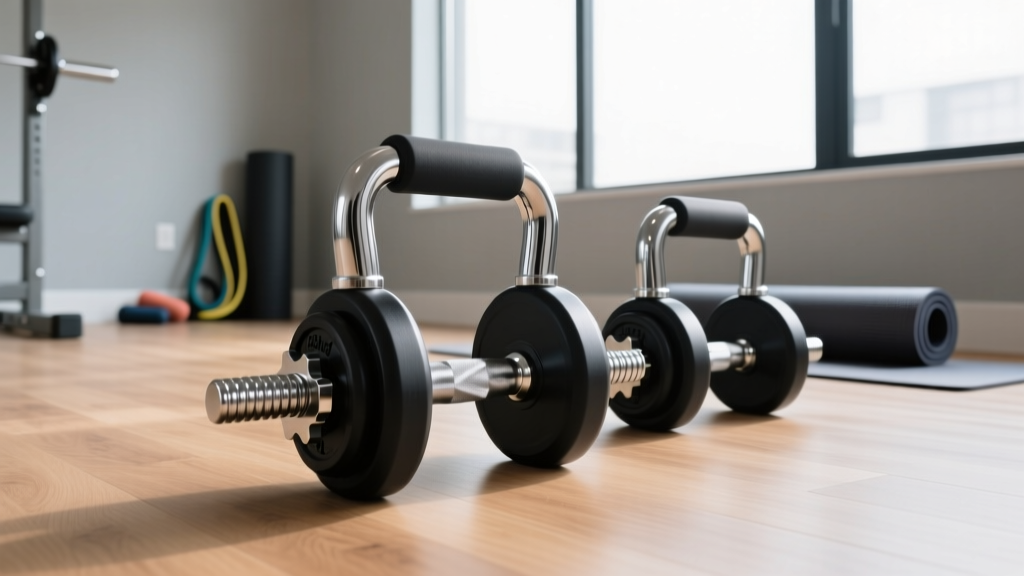
If you are using 14-inch loadable Olympic dumbbell handles (such as those from Titan Fitness or Rogue), the sleeves are short but subject to high-velocity directional changes. Relying on cheap spring collars here is a critical error. The overhead position amplifies any lateral plate shift, creating a dangerous torque on the shoulder joint. This brings us to the hardware.
⚠️ Critical Safety Warning: Never use standard wire spring collars for dynamic Olympic lifts, overhead squats, or drop-sets. Repetitive compression degrades the steel's memory, leading to a rapid loss of clamping force and catastrophic plate ejection mid-lift.Part 2: Barbell Collar and Clamp Types Comparison
As of 2026, the market for barbell and dumbbell collars has evolved significantly, moving away from rudimentary metal springs toward advanced polymers and CNC-machined aerospace aluminum. Choosing the right clamp is about matching the clamping force and material durability to your specific training modality.
| Collar Type | Model Example (2026) | Material & Mechanism | Avg. Price | Best Use Case |
|---|---|---|---|---|
| Quick-Release Lever | Rogue HG 2.0 Collars | Glass-Filled Nylon / Cam Lever | $45.00 | Heavy deadlifts, drops, powerlifting |
| Snap-Fit Resin | Lock-Jaw Pro Olympic | ABS Resin / Tension Snap | $32.00 | High-rep CrossFit WODs, quick changes |
| Precision Threaded | Eleiko Olympic Training | CNC Aluminum / Threaded Screw | $85.00 | Competition lifting, precise micro-loading |
| Wire Spring | Generic Chrome Spring | Spring Steel / Tension Coils | $12.00 | Light static isolation, commercial gyms |
Deep Dive: Material Science and Clamping Force
The Rogue Fitness HG 2.0 Collars utilize a glass-filled nylon composite. This material is critical because standard ABS plastic can become brittle over time when exposed to the UV light and temperature fluctuations of a garage gym. The cam-lever mechanism on the HG 2.0 generates an estimated 300+ lbs of inward clamping force, effectively welding the collar to the Olympic sleeve and eliminating the 'rattle' that distracts lifters during heavy squats.
Conversely, snap-fit resin collars like the Lock-Jaw Pro prioritize speed. They are ideal for high-intensity interval training where you must strip 45lb bumpers and load 25lb bumpers in under 10 seconds. However, their clamping force degrades if the inner resin teeth wear down against the chrome or zinc sleeve of the barbell.
For pure precision, Eleiko Weightlifting Collars remain the gold standard in Olympic weightlifting. The threaded CNC aluminum design ensures zero lateral play. When performing the overhead dumbbell squat with loadable handles, this zero-play tolerance is vital to maintain the exact center of gravity of the implement.
Failure Modes: When Collars Slip and Plates Shift
Understanding how and why collars fail is essential for troubleshooting your equipment setup. Here are the three most common failure modes encountered in free weight training:
- The Sleeve Taper Gap: Many economy Olympic bars have a slight taper where the sleeve meets the hub. If a spring collar is placed too close to this gap, it will sit at an angle, reducing surface area contact and allowing plates to slide outward during the eccentric phase of a lift.
- Thermal Expansion and Contraction: In unheated garage gyms during winter, metal spring collars contract, while the polymer bushings inside the barbell sleeve also change tolerances. Quick-release nylon collars are largely immune to this thermal variance.
- Rotational Shear: During movements like the snatch or the overhead dumbbell squat, the implement rotates in the hands. If the collar does not grip the sleeve tightly enough, the rotational shear force will spin the collar off the sleeve, leading to immediate plate ejection.
Step-by-Step Secure Loading Protocol
To guarantee maximum safety, especially before attempting high-risk movements like the overhead dumbbell squat or heavy barbell squats, follow this standardized loading protocol:
- Inspect the Sleeve: Wipe down the barbell or dumbbell handle sleeve with a microfiber cloth. Chalk dust and sweat act as dry lubricants, severely reducing the friction required for collars to grip.
- Seat the Inner Plate: Push the first bumper or iron plate completely flush against the inner sleeve hub. Tap it with your palm to ensure it is fully seated.
- Apply the Collar: Slide the collar onto the sleeve, leaving exactly 1mm of space between the collar and the outermost plate.
- Engage and Lock: For cam-lever collars, push the lever down until you hear a distinct 'click' or feel the tension lock past the 90-degree apex. For threaded collars, tighten until the inner pad compresses firmly against the sleeve.
- The Shake Test: Lift the loaded implement off the ground and give it a single, sharp horizontal shake. If you hear metallic clicking, the collar is too loose or the plates are mismatched in width. Re-seat and re-lock.
Expert Insight: 'The overhead dumbbell squat is a magnifying glass for asymmetries. If your right loadable dumbbell handle has a slightly looser collar than the left, the micro-vibrations of the shifting plates will force your right shoulder to overcompensate, entirely altering the diagnostic value of the lift.' — Biomechanics & Free Weight Hardware Analysis, FitGearPulse Labs.
Frequently Asked Questions (FAQ)
Can I use standard 1-inch spinlock collars for overhead dumbbell squats?
Standard 1-inch spinlock handles are generally too short and the threaded plastic nuts add unpredictable weight (often 1.5 to 2.5 lbs each), which ruins micro-loading progressions. Furthermore, the plastic threads strip easily under the torque of overhead movements. Upgrade to 2-inch Olympic loadable handles with precision aluminum collars.
Do adjustable dumbbells like Nuobell or PowerBlock require collars?
No. Selectorized adjustable dumbbells utilize internal magnetic or mechanical locking pins. However, you must regularly inspect these internal pins for wear and tear, as a failed internal pin during an overhead squat carries the exact same catastrophic risk as a slipped barbell collar.
How often should I replace my quick-release barbell collars?
High-quality glass-filled nylon collars (like the Rogue HG 2.0) should last 5 to 7 years under normal home gym use. If the cam lever becomes loose, or the inner grip pad shows visible tearing, replace them immediately. The $45 investment is negligible compared to the cost of a rotator cuff repair.
More gear to consider
All reviews
Beyond the Free Dumbbell: Olympic Barbell Weight and Knurling Guide
How Big Are the Dumbbells You Lift? Sizing Loadable Handles
Standard vs Olympic Plates for Good Tricep Exercises with Dumbbells

2026 Market Trends: Bumper vs Iron Plates & 15 lb Dumbbell Workouts

Exercising with Dumbbell Beginners: Kettlebell Space Guide
