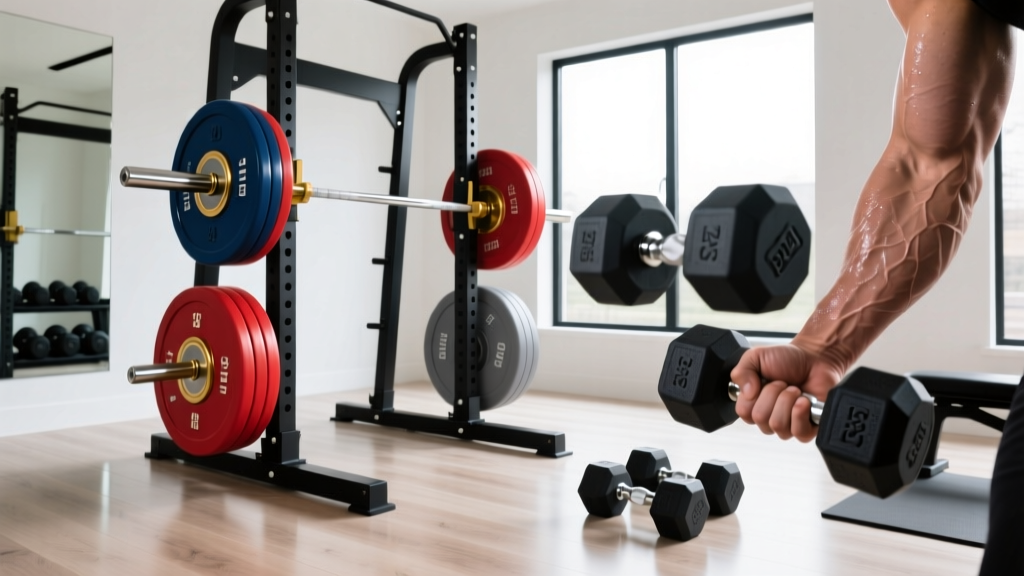
One Dumbbell Shoulder Exercises: A Beginner's Neoprene Guide
Master step-by-step one dumbbell shoulder exercises using neoprene coated weights. A beginner-friendly guide for safe, effective home gym routines.

Why Neoprene Coated Dumbbells Are Ideal for Home Shoulder Workouts
When building a home gym, the sheer variety of free weights can be overwhelming. However, for beginners focusing on isolation movements like one dumbbell shoulder exercises, neoprene coated dumbbells are arguably the best investment you can make. Neoprene (polychloroprene) is a synthetic rubber that provides a soft, slightly textured grip. This is crucial for shoulder training, where grip fatigue often precedes muscle failure.
Unlike traditional cast iron or heavy-duty urethane plates designed for powerlifting, neoprene dumbbells are typically manufactured in the 2 lb to 25 lb range. This aligns perfectly with the biomechanical realities of the deltoid muscles, which are relatively small and require lighter loads with higher time-under-tension compared to the glutes or chest. Furthermore, neoprene protects your home flooring from scuffs and significantly dampens the acoustic impact if you accidentally drop a weight during a challenging final rep.
Material Comparison: Neoprene vs. Rubber vs. Urethane
To understand why neoprene wins for home shoulder isolation, let us look at the current market landscape. As of 2026, entry-level home gym enthusiasts heavily favor neoprene for its ergonomic and aesthetic benefits.
| Material | Avg. Cost per lb (2026) | Grip Texture | Odor/Off-gassing | Best Use Case |
|---|---|---|---|---|
| Neoprene | $1.50 - $2.50 | Soft, sweat-resistant | None | Light isolation, home gyms, beginners |
| Hex Rubber | $1.20 - $1.80 | Hard, can be slippery | Strong initial odor | General fitness, floor presses |
| Urethane | $3.50 - $6.00+ | Smooth, very durable | None | Heavy commercial gym drops, powerlifting |
Selecting Your Starting Weight for Unilateral Training
Unilateral training (using one dumbbell at a time) is a cornerstone of physical therapy and beginner strength training. According to guidelines published by the Mayo Clinic, starting with lighter weights allows you to master the movement pattern while actively engaging your core to resist rotational forces. When you perform one dumbbell shoulder exercises, your obliques and transverse abdominis must work overtime to keep your torso upright.
For beginners, we recommend purchasing a single neoprene dumbbell in the 8 lb to 12 lb range for women, and 12 lb to 15 lb range for men. Brands like CAP Barbell and Yes4All offer excellent neoprene options in the $15 to $25 range per piece. Look for models with contoured, ergonomic handles rather than perfectly cylindrical bars, as this reduces forearm strain during overhead pressing.
Expert Tip: Never buy a single heavy dumbbell for shoulder isolation. The shoulder joint (glenohumeral joint) is highly mobile but inherently unstable. Prioritize flawless form with a 10 lb neoprene weight over sloppy reps with a 25 lb weight.Step-by-Step: 5 One Dumbbell Shoulder Exercises
The deltoid muscle is divided into three distinct heads: anterior (front), lateral (side), and posterior (rear). A complete routine must target all three to ensure balanced development and joint health. Below is a step-by-step breakdown of the most effective unilateral movements.
1. Single-Arm Seated Overhead Press (Anterior & Lateral Deltoids)
The overhead press is the king of shoulder mass builders. Performing it seated removes the temptation to use leg drive, isolating the shoulder complex entirely.
- Setup: Sit on a bench or sturdy chair with back support. Hold your neoprene dumbbell in one hand at shoulder height, palm facing forward.
- Execution: Brace your core and press the weight directly upward until your elbow is fully extended but not locked out.
- Descent: Lower the weight slowly (3-second negative) back to the starting position.
- Common Mistake: Arching the lower back. Keep your ribcage pulled down and your spine flush against the backrest.
2. Single-Arm Scapular Plane Lateral Raise (Lateral Deltoid)
Most beginners perform lateral raises directly out to their sides, which can cause shoulder impingement. The ACE Fitness Exercise Library recommends moving in the 'scapular plane'—about 30 degrees forward of your torso—to align with the natural orientation of the shoulder blade.
- Setup: Stand tall, holding the dumbbell in one hand. Let it rest against your outer thigh.
- Execution: Raise the dumbbell upward and slightly forward (in the scapular plane) until your arm is parallel to the floor.
- Cue: Lead with your elbow, not your hand. Imagine your elbow is being pulled toward the ceiling by a string.
- Descent: Control the weight back down. Do not let it drop.
3. Single-Arm Bent-Over Rear Delt Fly (Posterior Deltoid)
The rear delt is often neglected, leading to rounded shoulders and poor posture. Neoprene dumbbells are perfect here, as the rear delt requires very light loads to stimulate growth.
- Setup: Hinge at your hips, pushing your glutes back until your torso is nearly parallel to the floor. Hold the dumbbell in one hand, letting it hang straight down with a neutral grip (palm facing your body).
- Execution: Keeping a slight bend in your elbow, raise the dumbbell out to the side, squeezing the back of your shoulder at the top.
- Descent: Lower slowly. Ensure your torso does not twist upward to help lift the weight.
4. Single-Arm Scaption (Y-Raise) (Full Deltoid & Rotator Cuff)
Scaption is a favorite among physical therapists for building bulletproof shoulders. It targets the supraspinatus (a key rotator cuff muscle) alongside the front and side delts.
- Setup: Stand with the dumbbell in one hand. Turn your thumb so it points toward the ceiling (supinated grip).
- Execution: Raise the dumbbell at a 45-degree angle (forming a 'Y' shape with your body) until it reaches eye level.
- Focus: Keep your shoulder blade depressed (away from your ear) throughout the movement.
5. Single-Arm Arnold Press (Rotational Mechanics)
Named after Arnold Schwarzenegger, this variation increases the range of motion and time under tension, hitting all three deltoid heads in one fluid motion.
- Setup: Sit or stand holding the dumbbell in front of your chest, palm facing your body (supinated).
- Execution: As you press the weight upward, simultaneously rotate your wrist so that at the top of the movement, your palm faces forward.
- Descent: Reverse the rotation on the way down, finishing with the dumbbell back in front of your chest, palm facing you.
'Strength training is not just about building muscle; it is about preserving joint integrity and functional mobility as we age. Unilateral exercises are vital for identifying and correcting left-to-right strength asymmetries.' — Harvard Health Publishing
The 20-Minute Home Neoprene Shoulder Routine
Combine the exercises above into this efficient, beginner-friendly circuit. Rest for 60 seconds between sets, and 90 seconds before switching arms.
- Warm-up: 3 minutes of arm circles and band pull-aparts (no weight).
- Exercise 1: Single-Arm Arnold Press — 3 sets of 8-10 reps per arm.
- Exercise 2: Single-Arm Scapular Lateral Raise — 3 sets of 12-15 reps per arm.
- Exercise 3: Single-Arm Bent-Over Rear Delt Fly — 3 sets of 12-15 reps per arm.
- Exercise 4: Single-Arm Scaption — 2 sets of 10 reps per arm (lighter weight).
Maintenance: Prolonging the Life of Neoprene
While neoprene is durable, it is not invincible. To protect your investment and maintain the hygienic, non-slip surface of your dumbbells, follow these care instructions:
- Avoid UV Exposure: Do not store your neoprene dumbbells in direct sunlight or outside on a patio. Prolonged UV exposure causes the polychloroprene to dry out, crack, and flake.
- Proper Cleaning: Wipe down the handles after every workout with a damp microfiber cloth and a mild dish soap solution. Never use bleach, ammonia, or harsh chemical degreasers, as these will strip the coating and leave a slick, dangerous residue.
- Storage: Keep them on a dedicated rack or a rubber mat. While neoprene protects your floor, dropping them repeatedly on concrete can eventually cause the inner cast-iron core to shift and tear the outer coating from the inside out.
Final Thoughts on Unilateral Shoulder Training
Mastering one dumbbell shoulder exercises with a high-quality neoprene weight is one of the smartest moves a beginner can make. It builds foundational strength, corrects muscular imbalances, and establishes the mind-muscle connection necessary for more advanced lifting in the future. Start light, respect the scapular plane, and prioritize the eccentric (lowering) phase of every rep. Your shoulders will reward you with improved aesthetics, better posture, and injury-free longevity.
More gear to consider
All reviews
Power Rack vs Squat Stand: Seated Row Dumbbell Alternative Setups

Best Collars for Olympic Dumbbell Weight & Barbells in 2026
Home Setup: Arm Workout Routine With Dumbbells & Neoprene Gear

Setup Guide: Barbell Knurling & Dumbbell Exercises for Arm Fat
Rogue vs Rep Barbells: Knurling, Weight & Kickbacks with Dumbbells