
Olympic vs Standard Plates: Beyond the Low Chest Dumbbell Workout
Transitioning from a low chest dumbbell workout to barbell training? Learn the critical differences between Olympic vs standard weight plates in this guide.

The Home Gym Progression Trap
You have successfully built a solid foundation with your low chest dumbbell workout routines, utilizing adjustable spinlock dumbbells and basic 1-inch standard plates. But as your pectoral strength increases, you hit a wall: your standard bars are bending, your plates are maxing out, and you need a real power rack. This step-by-step guide bridges the gap between beginner gear and serious lifting by breaking down the critical differences between Olympic and standard weight plates.
Step 1: Understand the Core Dimensional Divide
The most fundamental difference between weight plate types is the center hole diameter, which dictates the entire ecosystem of barbells, dumbbell handles, and rack sleeves you can use.
Standard Plates (1-Inch / 25.4mm)
Standard plates feature a 1-inch center hole. They are predominantly sold in big-box sporting goods stores and are designed for cheap, hollow-core or solid steel spinlock dumbbell handles and lightweight straight bars. While adequate for light isolation work, standard bars rarely possess the yield strength to support heavy compound lifts. Most standard bars begin to permanently deform (bend) when loaded past 200 lbs, making them a safety hazard for heavy pressing or squatting.
Olympic Plates (2-Inch / 50.8mm)
Olympic plates feature a 2-inch center hole, matching the specifications set by the International Weightlifting Federation (IWF). This 2-inch sleeve diameter allows for thicker, high-tensile steel barbell shafts (like the renowned Rogue Ohio Bar) that can withstand 1,500+ lbs of static load without bending. According to the American College of Sports Medicine (ACSM), progressive overload is the primary driver of muscular hypertrophy; Olympic gear ensures your equipment will never be the bottleneck to that progression.
Step 2: Compare Plate Materials and Failure Modes
Once you commit to the 2-inch Olympic standard, you must choose your material. Each type has specific failure modes and ideal use cases.
1. Cast Iron Plates
The traditional choice. Cast iron plates are compact, allowing you to load more weight onto a barbell sleeve. However, they are prone to rust if kept in unclimate-controlled garages, and dropping them can crack the iron or damage your flooring. Best for: Controlled movements like bench pressing, squatting, and heavy dumbbell-style loading on Olympic handles.
2. Bumper Plates (Virgin Rubber)
Bumper plates are solid rubber with a stainless steel center insert. They are all the same diameter (450mm / 17.7 inches) regardless of weight, meaning a 10 lb plate takes the same drop impact as a 45 lb plate. As highlighted in the Garage Gym Reviews weight plate guide, high-quality virgin rubber bumpers (like the Rogue Echo Bumper Plates V2) offer a 'dead bounce' to prevent the bar from bouncing back into your shins during Olympic lifts. Best for: Deadlifts, Olympic lifting, and CrossFit-style dropping.
3. Urethane Plates
Urethane is a premium polymer that is virtually indestructible, odorless, and resistant to UV fading. While they cost significantly more upfront, commercial gyms favor them because they do not degrade or emit the 'tire smell' associated with cheap crumb-rubber bumpers.
Step 3: 2026 Market Pricing & Space Analysis
When upgrading your home gym, budget and floor space are your primary constraints. Below is a comparative analysis of a standard 260 lb plate set (pairs of 45s, 25s, 10s, and 5s) based on current 2026 market averages.
| Plate Type | Center Hole | Avg Cost (260lb Set) | Cost Per LB | Thickness / Space |
|---|---|---|---|---|
| Standard Cast Iron | 1-Inch | $130 - $180 | $0.50 - $0.70 | Compact (Varies) |
| Olympic Cast Iron | 2-Inch | $350 - $450 | $1.35 - $1.75 | Compact (1.5" per 45) |
| Olympic Bumper (Rubber) | 2-Inch | $550 - $750 | $2.10 - $2.90 | Bulky (3.5"+ per 45) |
| Olympic Urethane | 2-Inch | $800 - $1,100 | $3.00 - $4.25 | Compact (Grip plates) |
Pro Tip: Never buy 'concrete-filled vinyl' standard plates. They are massively bulky, degrade rapidly, and have zero resale value. Always opt for solid iron or rubber.
Step 4: Biomechanics and Rack Compatibility
Why does this plate distinction matter for your specific training goals? Let us revisit your low chest dumbbell workout. Targeting the sternal (lower) head of the pectoralis major typically requires decline dumbbell presses or high-to-low cable crossovers. These movements rely heavily on independent stabilizer muscles and a deep stretch.
As you progress, you may want to transition to heavy barbell decline presses or weighted dips to maximize mechanical tension. Here is where standard gear fails you:
- Safety Spotter Arms: True Olympic power racks and squat stands feature 2-inchx2-inch or 3-inchx3-inch uprights with heavy-duty spotter arms. Standard 'department store' racks lack the width and structural integrity to safely catch a dropped barbell during a decline press.
- Sleeve Length: A standard 1-inch barbell sleeve is usually only 6 to 8 inches long. If you use thick bumper plates, you might only fit one 45 lb plate and a collar per side. Olympic sleeves are 16+ inches long, accommodating 500+ lbs of bumpers.
- Knurling and Grip: Olympic bars feature engineered knurling and yield-strength steel that whips slightly under heavy loads, reducing joint strain during heavy chest and leg days.
Step 5: Your Step-by-Step Purchasing Checklist
Follow this exact sequence to upgrade your home gym without wasting money on incompatible gear.
- Audit Your Current Gear: Confirm you are outgrowing your 1-inch standard plates. If your heaviest dumbbell rows or chest presses are limited by the physical space on your spinlock handles, it is time to upgrade.
- Buy the Barbell First: Purchase a high-quality 2-inch Olympic barbell (e.g., a 20kg / 44lb multi-purpose bar with 190k PSI tensile strength).
- Select Your Plates Based on Lifts: If you only do controlled powerlifting (squat, bench, deadlift), buy Olympic Cast Iron. If you do Olympic lifts, CrossFit, or drop your deadlifts, buy Bumper Plates.
- Invest in an Olympic Rack: Buy a squat stand or power rack with 2-inch x 2-inch uprights and compatible J-cups.
- Use Adapters (Temporarily): If you already own an Olympic barbell but want to use your old 1-inch standard plates for light accessory work, you can purchase Olympic-to-Standard sleeve adapters (usually $15-$20 a pair) to slide over the 2-inch sleeves.
⚠️ Warning: The 'Fake Olympic' Trap
Some budget brands sell 'Olympic-sized' plates that are actually just cast iron with a 2-inch hole, but they lack the precise 450mm diameter required for proper deadlift starting heights. Always verify the plate diameter is exactly 17.7 inches (450mm) to ensure your barbell sits at the correct 8.75-inch height off the floor.
Frequently Asked Questions
Can I use standard plates on an Olympic bar?
Not without an adapter. The 1-inch hole of a standard plate will slide freely and unsafely over the 2-inch sleeve of an Olympic barbell. You must use a metal or plastic sleeve adapter to bridge the gap.
Are bumper plates necessary for bench pressing?
No. In fact, cast iron plates are preferred for bench pressing because they are thinner, allowing you to load more weight onto the sleeve, and they do not have the slight 'give' or bounce that rubber bumpers exhibit when slammed onto J-cups.
How do I maintain cast iron plates in a garage gym?
Wipe them down with a microfiber cloth after use to remove sweat. Once a year, lightly scrub any surface rust with a wire brush and apply a thin coat of 3-in-One oil or mineral oil to prevent oxidation.
More gear to consider
All reviews
Kettlebell Guide & Overhead Extensions Dumbbells: Budget 2026

Best Loadable Dumbbells for Incline Dumbbell Press (2026)
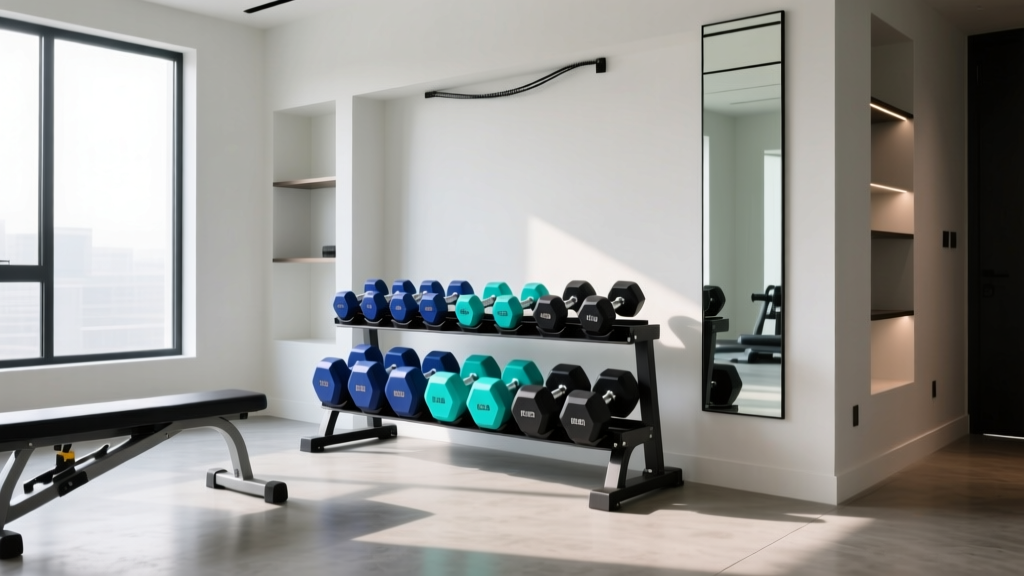
Dumbbell Pectoral Exercises No Bench: Space-Saving Rack Layouts

Barbell Knurling & Weight: What Size Dumbbell Should I Use First?

Urethane vs Rubber Hex: Gym Layouts & Proper Dumbbell Deadlift Form
