Standard vs Olympic Plates: Planning a Delt Workout with Dumbbells
Compare Olympic vs standard weight plates for your home gym. Discover how plate types and loadable handles impact your next delt workout with dumbbells.

Building a home gym in 2026 requires navigating a maze of equipment specifications, and few decisions cause as much long-term regret as choosing the wrong weight plate standard. The debate between 1-inch standard plates and 2-inch Olympic plates is often framed entirely around barbell lifting capacity. However, this binary view ignores a critical downstream effect: how your plate choice dictates your dumbbell options, particularly when utilizing loadable dumbbell handles for isolation movements. If you are meticulously programming a targeted delt workout with dumbbells, the physical dimensions, sleeve thickness, and plate diameter of your chosen weight system will directly impact your biomechanics, range of motion, and overall muscle stimulus.
In this head-to-head comparison, we dissect the metallurgical differences, cost-per-pound realities, and spatial footprints of standard versus Olympic plates. More importantly, we bridge the gap between heavy compound lifting and precision isolation work, revealing why your plate selection might be secretly sabotaging your shoulder development.
The Metallurgical and Dimensional Divide
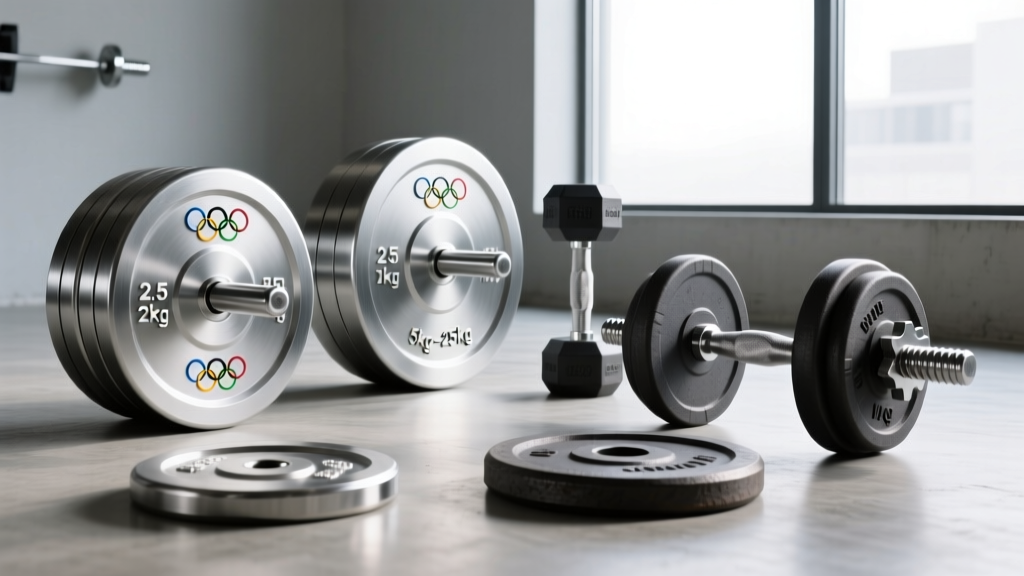
At the most basic level, the distinction between standard and Olympic plates lies in the center hole diameter. Standard plates feature a 1-inch (25.4mm) hole, designed to slide onto entry-level, solid steel or threaded barbells and dumbbell handles. Olympic plates feature a 2-inch (50.8mm) hole, engineered to fit the rotating steel sleeves of high-capacity barbells and specialized loadable dumbbells.
However, the hole size is merely the tip of the iceberg. The manufacturing standards associated with each category differ wildly:
Standard Plates (1-Inch): Typically cast from lower-grade grey iron or manufactured as cement-filled vinyl shells. They lack precision calibration, often varying by 5-10% from their stated weight. The center holes are rarely machined, leading to paint buildup that makes them difficult to slide onto handles.Olympic Plates (2-Inch): Feature precision-machined steel hubs (or stainless steel inserts in bumper plates). Whether you are buying cast iron, virgin rubber, or premium urethane, Olympic plates are held to tighter weight tolerances (usually within 1-2%). The steel hubs ensure a smooth, scratch-free glide onto knurled or zinc-plated dumbbell sleeves.
Head-to-Head Comparison Matrix
To understand the financial and practical commitments of each system, review the head-to-head data below based on average 2026 market pricing for quality home gym gear.
| Feature | Standard (1-Inch) | Olympic (2-Inch) |
|---|---|---|
| Center Hole | 1.0 inch (Cast Iron / Vinyl) | 2.0 inch (Machined Steel Hub) |
| Avg Cost Per Pound | $1.20 - $1.80 / lb | $2.50 - $4.50 / lb |
| Max Handle Capacity | ~150 lbs (before handle bending) | 300+ lbs (yield strength dependent) |
| 10lb Plate Diameter | ~6.5 inches (Compact) | ~9.0 inches (Bulky) |
| Dumbbell Sleeve Fit | Threaded or smooth 1" handles | 2" loadable dumbbell handles |
The Loadable Dumbbell Dilemma: Bulk vs. Biomechanics
Most home gym owners eventually purchase loadable dumbbells to save space and money compared to buying a full rack of fixed hex dumbbells. This is where the Olympic vs. Standard debate drastically alters your training experience, particularly for upper-body isolation.
Consider the Rogue Loadable Dumbbell Handles, a premier Olympic-compatible option. These feature a 1.9-inch sleeve diameter and a robust 15-inch overall length. They are indestructible and perfect for heavy floor presses or goblet squats. Conversely, a standard 1-inch handle, like the CAP Barbell 14-inch threaded dumbbell handle, costs roughly $25 and features a much thinner sleeve profile.
How Plate Size Sabotages a Delt Workout with Dumbbells
When programming a targeted delt workout with dumbbells, the physical dimensions of your equipment matter just as much as the weight. The lateral deltoid is best stimulated through strict, full-range lateral raises. According to the biomechanical principles outlined in ExRx.net's analysis of the dumbbell lateral raise, the exercise requires the weight to hang freely at the side to maintain constant tension on the medial deltoid fibers without impingement.
Here is the failure mode of the Olympic system for this specific movement: If you load an Olympic loadable dumbbell with 10-pound or 25-pound plates, you are forced to deal with the wide 9-inch to 12-inch diameter of those plates, combined with the 2-inch thickness of the sleeve itself. When you lower the dumbbell to the bottom of a lateral raise, the bulky Olympic plates physically collide with your thighs. This prematurely stops the range of motion, robbing the lateral delt of the crucial stretched position where maximum muscle fiber recruitment occurs.
"For strict isolation movements like lateral raises, rear delt flyes, and front raises, the unobstructed clearance of standard 1-inch handles paired with compact cast-iron plates provides a vastly superior biomechanical path compared to the bulky sleeves of Olympic loadable dumbbells."
Standard 1-inch cast iron plates, particularly the 5lb and 10lb increments, have a significantly smaller physical footprint. A 10lb standard plate is roughly 6.5 inches in diameter and barely an inch thick. When loaded onto a slender 1-inch dumbbell handle, the weight hangs cleanly past the thigh, allowing for a complete, unobstructed delt workout with dumbbells. You achieve full adduction at the bottom and can focus entirely on the mind-muscle connection rather than contorting your wrists to avoid hitting your legs.
Real-World Scenarios: Which System Should You Buy?
The choice between standard and Olympic is rarely about which is objectively "better" in a vacuum; it is about aligning the equipment with your specific training modalities and spatial constraints in 2026.
- The Heavy Compound Lifter (Choose Olympic): If your primary focus is powerlifting, Olympic weightlifting, or heavy barbell rows, the 2-inch Olympic system is non-negotiable. The machined steel hubs and high-tensile strength of Olympic bars (like the Rogue Echo Bumper Plates ecosystem) ensure safety under 400+ lb loads. Accept that your loadable dumbbell work will be limited to pressing movements and heavy farmer's carries where thigh clearance is irrelevant.
- The Hypertrophy and Isolator (Choose Standard or Fixed): If your training revolves around bodybuilding, joint-friendly isolation, and meticulous delt workout with dumbbells routines, the standard 1-inch system offers superior ergonomics for loadable handles. Alternatively, bypass loadable handles entirely and invest in a set of 12-sided urethane fixed dumbbells (5lb to 50lb increments). Fixed dumbbells eliminate the sleeve-bulk issue entirely, offering the ultimate solution for strict shoulder isolation without the spatial footprint of an entire plate ecosystem.
- The Hybrid Athlete (The Compromise): Buy an Olympic barbell and plates for your heavy squats and deadlifts, but maintain a separate, inexpensive set of 1-inch standard handles and a small collection of standard cast-iron plates (up to 25lbs) exclusively dedicated to your dumbbell isolation work. This hybrid approach costs less than $150 extra and saves your shoulder mechanics from the bulk of Olympic sleeves.
Frequently Asked Questions
Can I use Olympic plates on a standard 1-inch dumbbell handle?
No. The 2-inch center hole of an Olympic plate will not fit onto a 1-inch standard handle. While cheap plastic adapters exist to convert 2-inch plates to 1-inch bars, they introduce severe slop, imbalance, and safety hazards, especially during dynamic movements like a delt workout with dumbbells where wrist stability is paramount.
Are standard weight plates safe for heavy pressing?
Standard cast-iron plates themselves are safe, but the 1-inch solid steel dumbbell handles and barbells they slide onto are not rated for extreme loads. A standard 1-inch dumbbell handle will typically begin to bend or warp when loaded past 120-150 lbs total. For heavy floor presses or bench work, you must upgrade to Olympic loadable handles.
Why do urethane Olympic plates cost so much more than standard iron?
Urethane is a premium, high-density synthetic polymer that resists UV degradation, chalking, and odor—unlike cheap recycled rubber. Furthermore, the 2-inch stainless steel or machined brass hubs required for Olympic plates add significant manufacturing and material costs compared to the simple sand-cast holes of standard iron plates.
More gear to consider
All reviews
Power Rack vs Squat Stand: Or Bench Press With Dumbbells on Floor?

Best Dumbbell Racks for Standing Dumbbell Shrugs & Small Gyms

Rubber Hex vs Urethane Dumbbells & Kettlebell Handles for Dumbbells

Space-Saving Loadable Dumbbell for Weighted Crunches

Kettlebell Buying & Care: Full Arm Workout with Dumbbells
