
Olympic vs Standard Weight Plates Guide & Bowflex Dumbbells Review
Compare Olympic vs standard weight plates for your home gym. Plus, read our in-depth Bowflex dumbbells review to see if adjustable weights beat plates.

The Core Dilemma: Building Your Free Weight Arsenal
When outfitting a home gym, the foundation of your strength training ecosystem relies on a critical choice: the type of free weights you invest in. The debate between standard and Olympic weight plates is one of the oldest in the fitness industry, yet it remains highly relevant for modern lifters. Furthermore, as urban living spaces shrink and home gym footprints become premium real estate, many athletes are pivoting toward adjustable technology. In this comprehensive guide, we break down the biomechanical and financial differences between 1-inch standard plates and 2-inch Olympic plates, and we conclude with an exclusive Bowflex dumbbells review to help you determine if space-saving adjustable weights are the right alternative for your training goals.
Expert Insight: Never mix standard and Olympic equipment. The tolerance differences in sleeve diameters and plate holes mean that attempting to use a 2-inch Olympic plate on a 1-inch standard bar will result in catastrophic slippage and severe injury risk.Standard Weight Plates: The 1-Inch Entry Point
Standard weight plates feature a center hole diameter of exactly 1 inch (usually measuring 1.03 inches to allow for manufacturing variances). These plates are designed to fit standard barbells and dumbbell handles, which are typically solid steel or chrome-plated iron without rotating sleeves.
Material and Construction
In 2026, standard plates are primarily manufactured in two forms:
- Cast Iron: The traditional choice. Durable, compact, and usually coated in a baked enamel or hammertone finish to prevent rust. Pricing generally hovers between $1.20 and $1.60 per pound.
- Cement/Vinyl: Filled with concrete and encased in a plastic vinyl shell. These are bulkier, prone to cracking if dropped, and degrade over time. They are cheaper upfront (around $0.80 per pound) but offer poor long-term value.
The Limitations of Standard Gear
The primary failure mode of standard equipment is the barbell itself. Standard bars lack rotating sleeves, meaning the entire bar and plate assembly rotates during Olympic lifts or heavy pulling movements. This creates immense torque on the wrists and elbows. Furthermore, standard bars typically max out at a weight capacity of 200 to 300 pounds before experiencing dangerous 'whip' or permanent bending. According to biomechanics data tracked by ExRx.net, the lack of sleeve rotation on standard bars severely limits their utility for dynamic movements like cleans or snatches.
Olympic Weight Plates: The 2-Inch Gold Standard
Olympic plates feature a 2-inch (50.6 mm) center hole, designed to mate with Olympic barbells that possess thick, rotating sleeves equipped with bushings or needle bearings. This is the universal standard for competitive powerlifting, Olympic weightlifting, and serious commercial gyms.
Types of Olympic Plates
- Cast Iron / Machined Steel: Ideal for powerlifting where precise weight and minimal thickness are required. Calibrated steel plates offer a weight tolerance of +/- 10 grams.
- Virgin Rubber / Urethane: Coated to protect flooring and reduce noise. Urethane is vastly superior to rubber as it does not off-gas a toxic smell and resists UV degradation.
- Bumper Plates: Made of dense, virgin rubber with a stainless steel insert. Designed to be dropped from overhead. The Rogue Echo Bumper Plates remain the industry benchmark in 2026, featuring a dead bounce rating that prevents the bar from rebounding dangerously off the floor.
Why Olympic Dominates Serious Training
Olympic bars can safely hold 1,000 to 1,500 pounds. The rotating sleeves dissipate rotational kinetic energy, protecting the lifter's joints. While the initial investment is higher—expect to pay $2.00 to $4.50+ per pound depending on the material—the resale value of Olympic gear is exceptionally high. You can easily liquidate used Olympic plates for 70% of their retail value, whereas standard plates are nearly impossible to resell.
Head-to-Head Comparison Matrix
| Feature | Standard Plates (1-Inch) | Olympic Plates (2-Inch) |
|---|---|---|
| Hole Diameter | 1.03 inches | 2.00 inches (50.6 mm) |
| Barbell Sleeve Rotation | No (Fixed sleeve) | Yes (Bushings/Bearings) |
| Max Safe Bar Capacity | 200 - 300 lbs | 1,000 - 1,500+ lbs |
| Average Cost (Per Lb) | $1.20 - $1.60 | $2.00 - $4.50+ |
| Drop Tolerance | Low (Will chip floors/plates) | High (If using Bumper plates) |
| Resale Value | Poor | Excellent |
Space Constraints? Our Bowflex Dumbbells Review
While a full Olympic plate collection and a 7-foot barbell is the ultimate goal for strength athletes, the reality of modern home gyms often involves strict spatial constraints. Storing a barbell, collars, and 300 pounds of iron requires a dedicated footprint that many apartments or small garages simply cannot accommodate. This is where high-end adjustable dumbbells enter the equation as a highly viable primary tool for hypertrophy and general fitness.
To help you decide if adjustable tech can replace traditional free weights, we conducted an extensive Bowflex dumbbells review, focusing on the flagship SelectTech line, which remains a dominant force in the adjustable weight market in 2026.
Bowflex SelectTech 552: The Hypertrophy Workhorse
The SelectTech 552 adjusts from 5 to 52.5 pounds in 15 distinct increments, effectively replacing 15 separate sets of traditional dumbbells. The mechanism relies on a dual-injection molded plastic cover and an ABS plastic dial system that locks the internal steel plates into place.
- Pricing: Retails around $429 for a pair in 2026.
- Footprint: Measures just 16.9 inches long, easily fitting on a nightstand or small desk.
- Ergonomics: The handle features a textured rubber grip that mimics a traditional dumbbell, though the bulky plastic housing at the ends can slightly interfere with certain movements like deep goblet squats or tight renegade rows.
Bowflex SelectTech 1090: For Heavy Compound Movements
For lifters who need more resistance for heavy unilateral rows, split squats, and floor presses, the 1090 model adjusts from 10 to 90 pounds per hand. While it replaces 17 sets of weights, the physical dimensions are massive—nearly 18 inches long and exceptionally wide. Users with shorter arm spans may find the 1090 cumbersome during bilateral movements like dumbbell chest presses, as the bulky ends can collide at the top of the range of motion.
Warning: The Drop-Test Failure ModeThe most critical vulnerability identified in our Bowflex dumbbells review is the internal dial housing. Because the weight selection relies on precise plastic interlocking tabs, dropping the dumbbells—even from waist height—can shatter the internal mechanism. Unlike cast iron or urethane Olympic plates, adjustable dumbbells must be placed down gently. If you perform high-intensity interval training (HIIT) or heavy drop sets where releasing the weight is necessary, Bowflex is not the right tool for you.
For more technical specifications on the internal locking mechanisms and warranty coverage (typically 2 years on parts and plates), you can reference the official Bowflex equipment portal.
The 2026 Home Gym Decision Framework
How do you choose between standard plates, Olympic plates, and adjustable dumbbells? Use this practical decision matrix:
- Choose Standard Plates ONLY if: You are on an extreme budget (under $300 total), you only plan to do light isolation work or bodybuilding-style movements, and you do not intend to perform dynamic Olympic lifts or heavy barbell squats.
- Choose Olympic Plates if: You are committed to progressive overload, powerlifting, or Olympic weightlifting. If you have a garage or basement with adequate floor space and a lifting platform, Olympic gear is a lifelong investment that will never need to be upgraded.
- Choose Adjustable Dumbbells (Bowflex) if: You live in an apartment, your primary goal is muscle hypertrophy (bodybuilding), you train alone without a spotter, and you strictly perform controlled repetitions where the weights are never dropped.
Frequently Asked Questions
Can I use an adapter to fit Olympic plates on a standard bar?
No. While 1-inch to 2-inch sleeve adapters exist (allowing standard plates on Olympic bars), there is no safe way to mount a heavy 2-inch Olympic plate onto a thin 1-inch standard bar. The structural integrity of the standard bar will fail under the load.
Are Bowflex dumbbells worth the $400+ price tag?
Yes, if space is your primary constraint. Purchasing 15 pairs of commercial-grade hex dumbbells to replicate the 5-52.5 lb range would cost upwards of $1,200 and require a massive 6-foot dumbbell rack. The Bowflex SelectTech 552 offers immense spatial efficiency, provided you treat the equipment with care and never drop it.
Why do Olympic bumper plates all have the same diameter?
According to International Weightlifting Federation (IWF) standards, all bumper plates from 10 lbs to 55 lbs share the exact same 450 mm diameter. This ensures that when a barbell is dropped overhead, the impact is distributed evenly across the widest plates, protecting the barbell sleeves and the lighter plates from absorbing concentrated shock.
More gear to consider
All reviews
Rubber Hex vs Urethane: Best Gear for the Dumbbell Step Up Exercise

Resistance Bands for Dumbbells: Adjustable Set Mistakes & Reviews

Cable Flyes vs Dumbbell Flys: Adjustable Dumbbell Guide
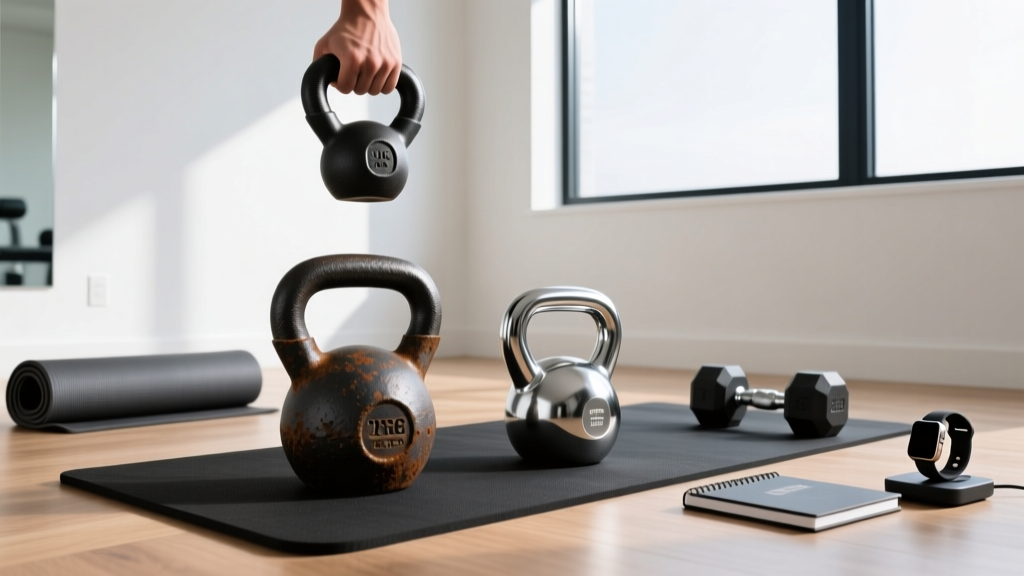
Beyond a Dumbbell Only Workout: Cast Iron vs Competition Kettlebells

Power Rack vs Squat Rack vs Squat Stand: Dumbbell Mat Bench NYT Guide
