Olympic vs Standard Plates for the Single Dumbbell Shoulder Raise
Compare Olympic vs standard weight plates for your home gym. Learn how hole diameter, pricing, and balance affect lifts like the single dumbbell shoulder raise.

The Core Divide: 2-Inch vs 1-Inch Ecosystems
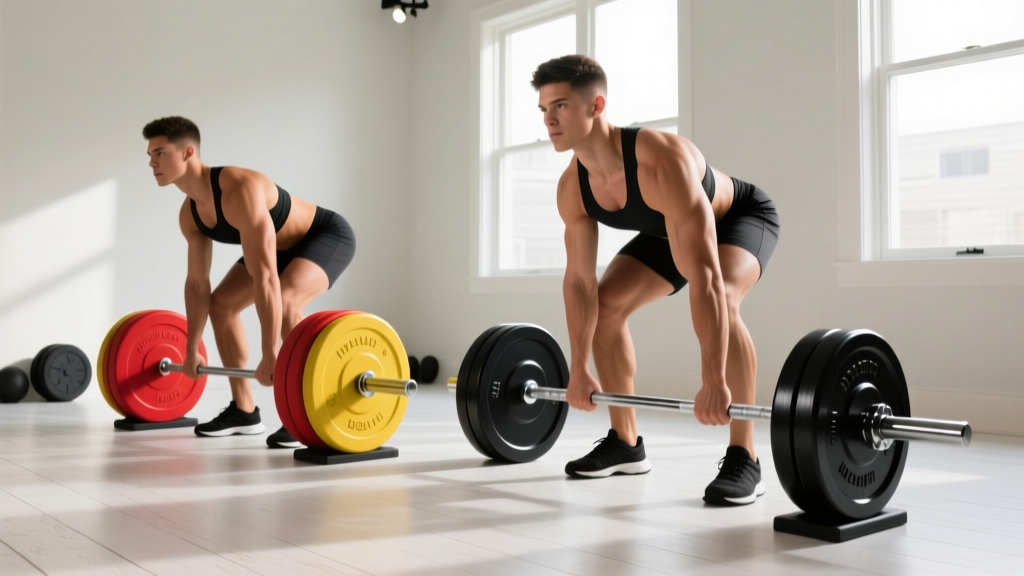
When outfitting a home gym or commercial facility, the decision between Olympic and standard weight plates is the foundational choice that dictates your entire equipment ecosystem. This is not merely a matter of aesthetics or brand loyalty; it is a strict bifurcation of hardware compatibility. The difference hinges entirely on the center hole diameter: standard plates feature a 1-inch (25.4mm) aperture, while Olympic plates are manufactured with a 2-inch (50.6mm) center hole. According to the International Weightlifting Federation (IWF) Technical Rules, the 50mm sleeve diameter is the global standard for competitive and heavy-duty lifting, ensuring that barbells can withstand extreme loads without yielding.
However, the implications of this 1-inch versus 2-inch divide extend far beyond heavy barbell squats and deadlifts. It profoundly impacts your ability to perform precise, unilateral isolation movements. If you are utilizing loadable dumbbell handles for accessory work, the plate ecosystem you choose will directly influence the balance, grip ergonomics, and acoustic feedback of exercises like the single dumbbell shoulder raise. In this 2026 comprehensive buying guide, we dissect the material science, pricing structures, and biomechanical realities of both plate types to help you make an informed, future-proof investment.
Standard Plates: The Budget-Friendly Accessory Route
Standard weight plates are the legacy of mid-century home gyms. Designed to slide onto 1-inch diameter threaded or smooth bars, these plates are typically manufactured from cast iron or, in ultra-budget tiers, cement-filled plastic casings. Brands like CAP Barbell and Yes4All dominate this space, offering entry-level price points that appeal to casual lifters.
Material and Pricing Realities
As of 2026, standard cast iron plates average between $1.20 and $1.60 per pound, while cement-filled variants can drop as low as $0.80 per pound. While the upfront cost is undeniably attractive, the physical footprint of cement-filled plates is massive. A 25-pound cement plate can be up to 2.5 inches thick, severely limiting the amount of weight you can load onto a standard 14-inch dumbbell handle.
The Spinlock Rattle Factor
When performing a single dumbbell shoulder raise using a 1-inch spinlock dumbbell handle, loose manufacturing tolerances in cheap standard plates often cause a distracting 'rattle' effect. Because the 1-inch hole on budget plates is frequently stamped rather than precision-machined, it can measure up to 1.15 inches. This micro-movement shifts the plate's center of mass mid-rep, disrupting the mind-muscle connection and altering the moment arm during strict lateral or anterior shoulder isolation.
Olympic Plates: Heavy Duty and Precision Calibrated
Olympic plates represent the gold standard for serious lifters. The 2-inch center hole accommodates the thick, high-tensile steel sleeves found on Olympic barbells and premium loadable dumbbell handles. This ecosystem supports a vast array of specialized materials, from virgin rubber bumpers to calibrated steel competition plates.
Urethane and Calibrated Steel Dominance
In 2026, urethane remains the premier material for commercial and high-end home gyms due to its resistance to UV degradation, odor, and impact fracturing. Rogue Fitness LB Training Plates and Titan Fitness Elite Urethane plates are industry benchmarks. Expect to pay between $2.50 and $4.50 per pound for high-quality urethane or rubber-coated Olympic plates. For those requiring extreme precision, calibrated steel plates (like those from Eleiko or Rogue) are machined to within 10 grams of their stated weight, costing upwards of $6.00 to $9.00 per pound.
Head-to-Head: 2026 Market Comparison Matrix
The following table breaks down the critical specifications, market pricing, and use cases for both ecosystems based on current 2026 industry data.
| Feature | Standard Plates (1-Inch) | Olympic Plates (2-Inch) |
|---|---|---|
| Center Hole Diameter | 1 inch (25.4mm) | 2 inches (50.6mm) |
| Max Bar Load Capacity | ~200 - 300 lbs (Bar yielding risk) | 700 - 1,500+ lbs (High-tensile steel) |
| Average Cost per Pound | $0.80 (Cement) to $1.60 (Iron) | $2.50 (Rubber) to $9.00 (Calibrated) |
| Material Options | Cast Iron, Cement/Vinyl | Cast Iron, Rubber, Urethane, Steel |
| Fractional Increments | Rare (Usually 2.5 lb minimum) | Common (0.25 lb to 1 lb available) |
Biomechanics and Loading: The Single Dumbbell Shoulder Raise
The American Council on Exercise (ACE) emphasizes that isolation movements targeting the deltoids require strict form and precise load management to avoid impingement and maximize hypertrophy. The single dumbbell shoulder raise—whether performed laterally, anteriorly, or in the scapular plane—is highly sensitive to equipment balance and weight distribution.
The Micro-Loading Advantage
The shoulder complex fatigues rapidly, and the jump from a 15-pound dumbbell to a 20-pound dumbbell represents a massive 33% increase in load. This is where the Olympic ecosystem proves its worth for accessory work. By utilizing an Olympic loadable dumbbell handle (such as the Rogue Loadable Dumbbell or the Titan Fitness Loadable Handle), you can pair your Olympic plates with fractional change plates (0.5 lb or 1 lb). Standard 1-inch dumbbell handles rarely support fractional plates, forcing lifters into awkward progression jumps that compromise the biomechanics of the single dumbbell shoulder raise.
Grip Ergonomics and Handle Thickness
It is crucial to note that an Olympic loadable dumbbell handle features a 2-inch thick grip, compared to the 1-inch grip of a standard spinlock handle. While a 2-inch grip is excellent for grip strength and forearm activation during heavy rows or deadlifts, it can be fatiguing during high-rep isolation work. For the single dumbbell shoulder raise, lifters with smaller hands may find the 2-inch Olympic handle cumbersome, potentially limiting their range of motion or causing the wrist to extend unnaturally. In this specific edge case, a machined 1-inch standard handle with tight-tolerance cast iron plates might actually offer a superior ergonomic experience, provided the plates do not rattle.
Failure Modes and Edge Cases to Avoid
- Standard Bar Yielding: Never attempt heavy barbell squats or deadlifts with a 1-inch standard bar. Under loads exceeding 225 lbs, the steel will physically bend, causing the plates to slide inward and creating a severe crushing hazard.
- Cement Plate Degradation: Cement-filled standard plates are prone to internal shifting. If dropped, the internal concrete can fracture, causing the plate to become unbalanced. An unbalanced plate on a dumbbell handle will pull your wrist into ulnar deviation during a shoulder raise.
- Urethane vs. Rubber Odor: When buying Olympic plates, avoid cheap 'recycled rubber' bumpers for indoor home gyms. They off-gas volatile organic compounds (VOCs) for months. Always opt for virgin rubber or urethane.
Verdict: Which Ecosystem Should You Buy?
If your budget allows, the Olympic 2-inch ecosystem is the undisputed winner for long-term scalability, safety, and equipment longevity. The ability to use calibrated plates, heavy-duty barbells, and fractional loading makes it ideal for progressive overload. However, if you are strictly building a lightweight accessory station focused purely on rehabilitation or high-rep isolation work like the single dumbbell shoulder raise, a high-quality machined 1-inch standard cast iron set paired with a solid steel spinlock handle offers superior grip ergonomics at a fraction of the cost.
Frequently Asked Questions
Can I use Olympic plates on a standard bar?
No. Olympic plates have a 2-inch hole and will simply slide off a 1-inch standard bar. While you can purchase plastic adapter bushings that fit into the 2-inch hole to reduce it to 1 inch, these adapters introduce slop and wobble, making them unsafe for dynamic movements.
Are hex-shaped standard plates better for dumbbells?
Hex-shaped plates are excellent for preventing dumbbells from rolling away when placed on the floor. However, when loading a dumbbell handle for a single dumbbell shoulder raise, hex plates can create an awkward, non-cylindrical weight distribution that feels unbalanced in the hand compared to round plates.
How do I maintain cast iron plates to prevent rust?
Whether standard or Olympic, bare cast iron plates require maintenance. Wipe them down with a light coat of 3-in-One oil or mineral oil every few months, especially in humid environments or garage gyms, to prevent surface oxidation and keep the center holes smooth for easy loading.
More gear to consider
All reviews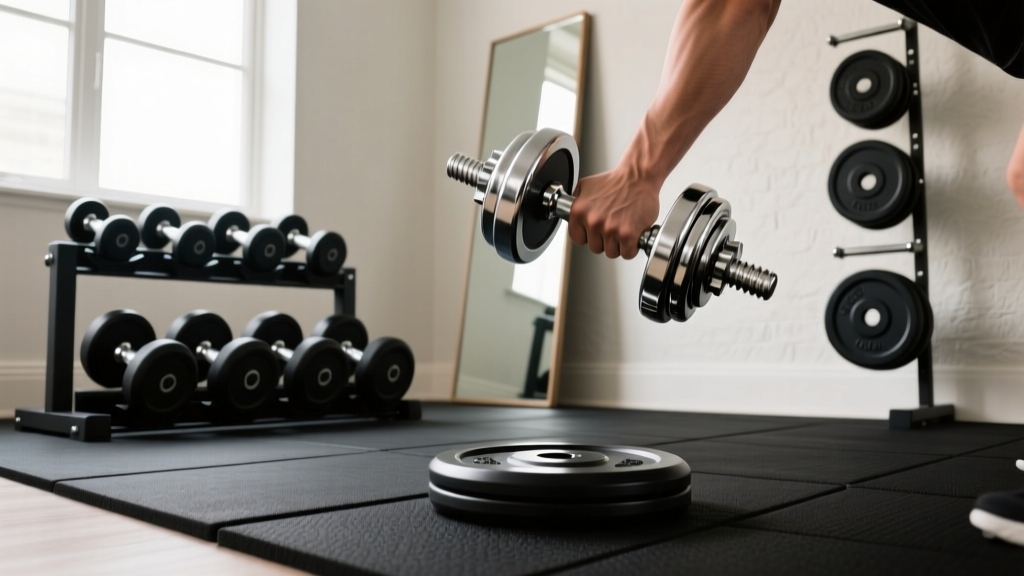
What Do Dumbbell Rows Target? Best Loadable Dumbbells

Dumbbell Pullovers for Lats: EZ Curl Bar vs Straight Bar
Budget Loadable Dumbbells: Complete Leg Workout With Dumbbells

Space-Saving Loadable Dumbbells for a Heavy Dumbbell Curl Workout

Best Neoprene Dumbbells for Decline Bench Workouts: 2026 Guide