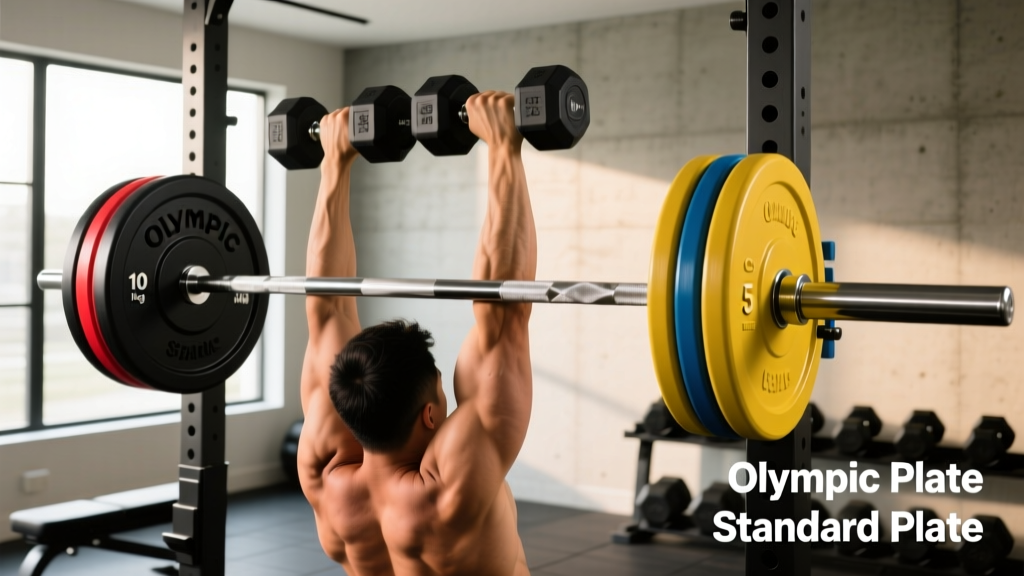
Olympic vs Standard Plates: Pull-Up Alternative with Dumbbells
Compare Olympic vs standard weight plates for your 2026 home gym. Discover how plate choice impacts heavy lat work and pull-up alternatives with dumbbells.

The Core Divide: 2-Inch vs. 1-Inch Architecture
When outfitting a home gym in 2026, the foundational decision of your entire weightlifting ecosystem comes down to a single measurement: the center hole diameter of your weight plates. The debate between Olympic (2-inch / 50mm) and Standard (1-inch / 25mm) plates is not just about compatibility; it dictates your equipment's longevity, weight accuracy, and the types of accessory movements you can safely perform. According to BarBend's comprehensive breakdown of plate architectures, choosing the wrong system can lead to severe safety hazards and capped progress, especially when adapting your space for specific biomechanical needs.
Quick Spec Check:• Olympic Plates: 50mm (approx. 2-inch) center hole. Designed for high-load barbells, heavy plate-loaded machines, and Olympic dumbbell handles.
• Standard Plates: 25mm (approx. 1-inch) center hole. Typically found on budget spin-lock dumbbells, lightweight home gym machines, and entry-level solid steel bars.
Head-to-Head Comparison Matrix
Before diving into specific training applications, it is crucial to understand how these two plate types compare across critical performance metrics. The table below highlights the stark differences in manufacturing, tolerance, and real-world utility.
| Feature | Olympic Plates (2-Inch) | Standard Plates (1-Inch) |
|---|---|---|
| Center Hole | 50mm (Precision machined or cast) | 25mm (Often stamped or cheaply cast) |
| Weight Accuracy | +/- 1% to 2% (Calibrated are +/- 10g) | +/- 5% to 10% (Highly variable) |
| Max Load Capacity | 1,000+ lbs (Limited by barbell) | 200 - 250 lbs (1-inch bars yield) |
| Common Materials | Cast Iron, Urethane, Virgin Rubber | Concrete-filled vinyl, cheap cast iron |
| Resale Value | High (Holds 70-80% of retail value) | Low (Often given away or discarded) |
Failure Modes: Where Standard Plates Break Down
While standard plates offer an attractive entry price, they introduce severe failure modes that compromise both safety and training efficacy. The most common budget standard plates are concrete-filled vinyl shells. In unheated garages or over extended periods of UV exposure, these plastic casings become brittle. Dropping a 25-lb standard plate from waist height can easily fracture the shell, leaking sand or concrete dust across your gym floor.
The 200-Pound Bend and Thread Stripping
The 1-inch solid steel bars required for standard plates lack the tensile strength of high-grade Olympic spring steel. When loaded past 200 pounds, a standard 1-inch barbell will experience permanent plastic deformation (bending). Furthermore, standard spin-lock dumbbell handles rely on threaded ends and star collars. Under heavy, dynamic loads, these threads can strip, or the collars can vibrate loose mid-set, resulting in plates sliding off the sleeve—a catastrophic failure mode during overhead or bench pressing movements.
Designing Your Gym: Plate Footprint and the Pull-Up Alternative with Dumbbells
The choice between Olympic and standard plates extends far beyond barbell squats and deadlifts; it directly impacts your accessory work and spatial planning. Many home gym owners in 2026 face structural constraints, such as low basement ceilings, slanted roofs, or strict rental agreements, making it impossible to mount a traditional pull-up bar. This spatial limitation forces lifters to seek a pull-up alternative with dumbbells to adequately target the latissimus dorsi and rhomboids.
Movements like the heavy single-arm dumbbell row, chest-supported dumbbell pullover, and renegade row require significant load to mimic the stimulus of pulling your entire body weight. According to biomechanics research referenced by the American Council on Exercise (ACE), achieving muscular hypertrophy in the back requires matching the resistance curve of bodyweight pull-ups, which often means rowing 100+ lb dumbbells per hand for advanced lifters.
Why Standard Plates Fail the Pull-Up Alternative Test
If you attempt to build heavy dumbbells using standard 1-inch plates and spin-lock handles, you will hit a physical wall. Standard plates are incredibly bulky. A 25-lb concrete-filled standard plate has a massive diameter and thickness. Stacking them onto a 14-inch standard dumbbell handle leaves almost no room for your hand, alters the center of gravity, and makes the implement dangerously unbalanced during a single-arm row.
To execute a true pull-up alternative with dumbbells, you need the dense, compact profile of cast-iron Olympic plates loaded onto specialized Olympic dumbbell handles (such as the Titan Fitness 20-inch Loadable Handles) or a high-end adjustable set like Nuobell. The compact diameter of a 45-lb Olympic cast-iron plate allows for a greater, unhindered range of motion during a floor-based dumbbell row or pullover, whereas the bulky profile of standard plates would physically strike the floor or bench before your lats reach full extension.
"When substituting vertical pulling movements with horizontal or floor-based dumbbell alternatives, the physical dimensions of your weight plates matter just as much as the load. Bulky plates artificially limit your range of motion, robbing the latissimus dorsi of the deep stretch required for optimal hypertrophy."
Top Dumbbell Lat Movements (No Pull-Up Bar Required)
- Heavy Single-Arm Dumbbell Row: Utilize a flat bench. Load an Olympic plate-loaded dumbbell handle to 90-120 lbs. Focus on driving the elbow toward the hip to engage the lower lats.
- Dumbbell Pullover: Lie perpendicular across a bench. Hold a single heavy dumbbell (or a plate-loaded handle) with both hands. Lower it behind your head to stretch the lats and serratus anterior, mimicking the overhead extension of a pull-up.
- Chest-Supported Incline Row: Set an adjustable bench to 30 degrees. Lie face down and row two heavy dumbbells. This removes lower-back momentum and isolates the upper back.
2026 Pricing and Long-Term ROI
When evaluating the financial commitment, it is vital to look at the cost per pound and the secondary market. Based on current Rogue Fitness manufacturing specs and retail pricing, here is what you can expect to pay in the 2026 market:
- Standard Concrete/Vinyl Plates: $0.80 to $1.20 per pound. (High degradation rate, near-zero resale value).
- Standard Cast Iron: $1.50 per pound. (Harder to find, as the industry has largely abandoned 1-inch casting molds).
- Olympic Cast Iron: $2.00 to $2.80 per pound. (The gold standard for budget-conscious, serious lifters).
- Olympic Urethane/Rubber: $3.00 to $4.50+ per pound. (Ideal for noise reduction and protecting garage floors).
While the upfront cost of Olympic plates and a compatible barbell or rack is roughly 40% higher than a standard big-box store kit, the Olympic system is a buy-it-for-life investment. Standard kits inevitably end up in landfills or on the curb for free, whereas Olympic plates retain immense value on the used fitness equipment market.
Final Verdict: Which System Should You Buy?
The head-to-head comparison yields a definitive winner for 95% of home gym builders. Olympic plates are the undisputed champion regarding safety, durability, weight accuracy, and exercise versatility. The 2-inch architecture supports the heavy loads required for advanced progressive overload and enables the use of specialized implements like loadable dumbbell handles, which are critical for executing a heavy pull-up alternative with dumbbells in spaces lacking a traditional bar.
Standard plates should only be considered if you are outfitting a temporary, ultra-budget space, or if you are purchasing a specific lightweight, 1-inch selectorized home gym machine that explicitly requires them. For everyone else, invest in the 50mm standard and never look back.
Frequently Asked Questions
Can I use Olympic plates on a standard barbell?
No. Olympic plates feature a 50mm hole, while standard barbells have 25mm sleeves. The plates will simply slide over the bar and fall off. There are sleeve adapters available (1-inch to 2-inch), but they are generally unsafe for heavy, dynamic lifting as they introduce sleeve play and reduce the loadable sleeve length.
Are all Olympic plates the exact same size?
No. While the 45-lb (20-kg) Olympic plates adhere to the International Powerlifting Federation (IPF) standard of 450mm in diameter, lighter plates (like 10-lb or 25-lb fractionals) have much smaller diameters. This is crucial to remember when performing floor-based pull-up alternatives with dumbbells, as smaller plates will alter your starting height and range of motion.
Why do urethane Olympic plates cost so much more than rubber?
Urethane is a highly durable, synthetic polymer that resists UV degradation, moisture, and scratching far better than recycled rubber. It also produces significantly less odor, making it the premium choice for indoor home gyms and commercial facilities in 2026.
More gear to consider
All reviews
Power Rack vs Squat Rack vs Stand for 120 Pound Dumbbells & Barbells

Bumper vs Iron Plates: 2026 Trends & Flat Dumbbell Press Form

Barbell vs Dumbbell Rows: Olympic Barbell Knurling & Weight
Best Neoprene Dumbbells for Dumbbell Thrusts: 2026 Comparison

Best Adjustable Dumbbells for Overhead Dumbbell Curls: 2026 Guide
