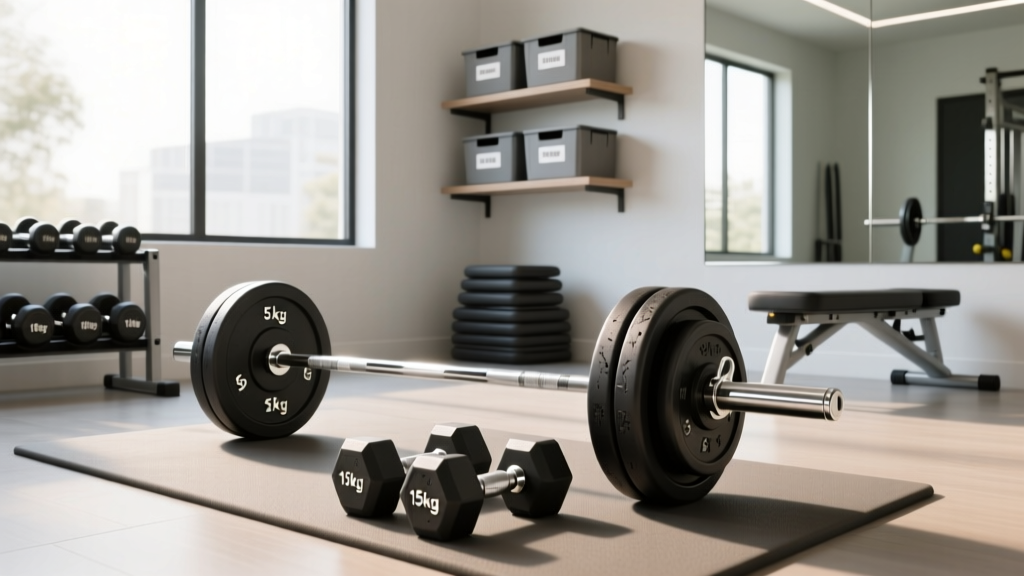
Olympic vs Standard Plates: Troubleshooting & PowerBlock Pro Dumbbells
Avoid costly home gym mistakes. We troubleshoot Olympic vs standard weight plate mismatches and integrate PowerBlock Pro dumbbells for space-saving.

The 'One-Inch' Disaster: Understanding the Core Mismatch
The most common and expensive mistake in home gym construction is confusing Olympic and standard weight plate specifications. While they may look identical in online thumbnails, the physical interface between the plate and the barbell sleeve is fundamentally different. An Olympic weight plate features a center hole measuring exactly 50.8mm (2 inches), designed to slide onto the thick, rotating sleeves of an Olympic barbell. A standard weight plate features a 25.4mm (1-inch) center hole, meant for lightweight, non-rotating starter bars.
When lifters attempt to mix these standards, they encounter immediate mechanical failure. You cannot physically fit an Olympic plate onto a standard bar. Conversely, sliding a standard plate onto an Olympic barbell results in a dangerous, off-center wobble that can cause the plate to slip mid-lift, leading to severe injury or equipment damage.
Warning: Never attempt to use duct tape, shims, or improvised wedges to center a 1-inch standard plate on a 2-inch Olympic sleeve. The kinetic energy generated during a heavy deadlift or clean will easily dislodge the plate.Troubleshooting the 'Adapter Sleeve' Trap
When home gym owners realize they have purchased the wrong plates, the most common troubleshooting search leads to 'standard-to-Olympic adapter sleeves.' These are small, $10 to $15 plastic or steel cylinders that slide over a standard bar to thicken it to 2 inches, or insert into an Olympic plate to reduce the hole to 1 inch.
Why Adapter Sleeves Fail Under Load
- Sleeve Length Reduction: Adding an adapter to a standard bar reduces the usable sleeve length. A standard 7-foot barbell typically only has 12 inches of sleeve space. An adapter consumes 2 to 3 inches, severely limiting the number of plates you can load.
- Shear Stress and Snapping: Standard bars are generally constructed from low-grade steel with a tensile strength below 100,000 PSI. Loading them with heavy cast-iron plates via adapters increases the leverage and shear stress on the bar's collar. According to equipment testing data referenced by Rogue Fitness, standard bars can suffer permanent plastic deformation (bending) at loads as low as 200 lbs.
- Lack of Sleeve Rotation: Standard bars do not have bushings or bearings. When you perform dynamic movements like power cleans, the inability of the sleeve to rotate transfers massive torque directly into your wrists and elbows.
Space, Progression, and the PowerBlock Pro Dumbbells Alternative
Many lifters who fall into the standard plate trap eventually realize that cheap barbell setups limit their progressive overload. Furthermore, buying a full set of standard plates (from 2.5 lbs to 45 lbs) consumes up to 15 square feet of floor space and requires a dedicated storage tree. If your goal is hypertrophy, joint-friendly pressing, and space efficiency, pivoting away from cheap iron plates toward premium adjustable dumbbells is a highly effective troubleshooting strategy.
This is where the PowerBlock Pro dumbbells become a critical asset. Specifically, the PowerBlock Pro EXP series offers a commercial-grade, urethane-encased adjustable system that entirely bypasses the need for a sprawling plate collection.
Footprint and Cost Analysis: Iron Plates vs. Adjustable Systems
| Equipment Setup | Approx. Cost (2026) | Floor Footprint | Max Load / Capacity | Progression Increments |
|---|---|---|---|---|
| Standard 300lb Plate Set + Bar | $180 - $220 | 12 - 15 sq. ft. | 200 lbs (Bar limit) | 2.5 lbs - 5 lbs |
| Olympic 300lb Bumper Set + Bar | $650 - $850 | 12 - 15 sq. ft. | 1,000+ lbs | 2.5 lbs - 5 lbs |
| PowerBlock Pro EXP (Base 5-50) | $429 / pair | 1.5 sq. ft. | 50 lbs per hand | 2.5 lbs (with add-on) |
| PowerBlock Pro EXP (Stage 3 Kit) | $767 total | 1.5 sq. ft. | 90 lbs per hand | 5 lbs increments |
By investing in the PowerBlock Pro EXP system, you secure a 5 to 50 lb range right out of the box. If you outgrow this, the proprietary expansion kits (Stage 2 for 70 lbs, Stage 3 for 90 lbs) allow you to scale the weight without buying a single iron plate or sacrificing additional floor space. The welded steel core and durable urethane coating also eliminate the rust, chipping, and floor-damage issues inherent to cheap standard cast-iron plates.
Biomechanics: Why Olympic Standards Matter for Heavy Compounds
If you are troubleshooting a home gym setup to prioritize heavy compound barbell lifts (squats, deadlifts, Olympic lifts), you must abandon standard plates entirely. The biomechanical necessity of Olympic plates lies in the barbell sleeve rotation.
'During the transition phases of the snatch and clean, the barbell rotates rapidly. If the sleeves do not rotate independently of the shaft via high-quality bushings or needle bearings, the rotational inertia is transferred to the lifter's joints, significantly increasing the risk of wrist and elbow pathology.' — Biomechanical principles outlined by Eleiko weightlifting engineering standards.
Olympic plates are designed with precise tolerances to sit flush against the inner collar of an Olympic barbell sleeve. This flush fit prevents lateral shifting. Standard plates, even when used on a standard bar, often suffer from poor casting tolerances, resulting in a 'clanking' effect that disrupts barbell balance during heavy deadlifts.
Step-by-Step Home Gym Audit and Correction Protocol
If you suspect your free weight setup is compromised by mismatched standards or inefficient space usage, follow this 4-step troubleshooting protocol:
- Measure the Sleeve Diameter: Use digital calipers to measure your barbell sleeve. If it reads ~50mm, you need Olympic plates. If it reads ~25mm, you have a standard bar. Do not rely on visual estimates.
- Assess Your Barbell Tensile Strength: Check the manufacturer stamp or manual for your barbell's tensile strength (measured in PSI). If it is below 150,000 PSI, do not load it past 250 lbs, regardless of the plates you own.
- Liquidate Standard Iron: Standard plates have very low resale value, but local community marketplaces or high school weight rooms will often take them off your hands. Recoup whatever cash you can.
- Reallocate Budget to Space-Saving Heavy Hitters: Take the funds you would have spent replacing standard plates with Olympic plates and consider a hybrid approach. Buy a high-quality Olympic barbell and a minimal set of Olympic bumpers (e.g., a 160 lb set) for heavy pulls, and invest the remainder into the PowerBlock Pro dumbbells for your high-volume hypertrophy and accessory work.
Frequently Asked Questions
Can I use standard plates to adjust the weight of my PowerBlock Pro dumbbells?
No. The PowerBlock Pro dumbbells utilize a proprietary, enclosed selector pin and internal adder weight system. You cannot hang external standard or Olympic plates onto the cage.
Are standard plates ever the right choice?
Standard plates are only recommended for extreme budget constraints, youth fitness programs, or lightweight rehabilitation setups where the total loaded weight will never exceed 100 lbs and dynamic barbell rotation is not required.
More gear to consider
All reviews
Dala Loves Dumbbells vs CAP: Best Neoprene Dumbbells 2026
Barbell Collar Comparison & Dumbbell Overhead Press Machine Setup

Replacing Barbell Curls With Dumbbells: A Beginner's Step-by-Step Guide

Neoprene Dumbbells & T-2 Series Dumbbell Weight Bar Holders
Best Dumbbell Workouts to Barbells: Knurl & Weight Buying Mistakes