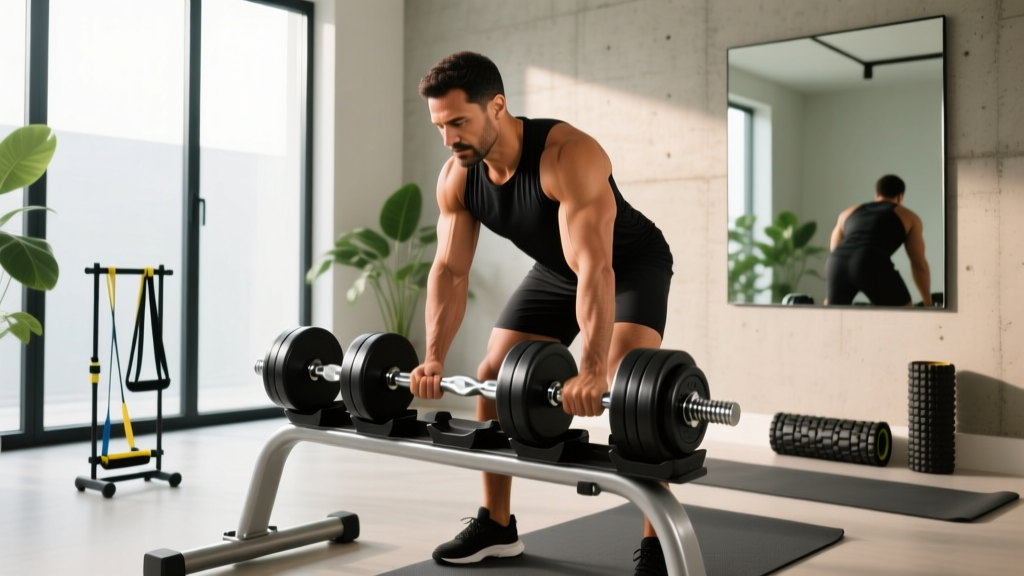
Budget Racks for Shoulder Exercises With Dumbbells for Women
Analyze the best budget dumbbell racks and storage solutions optimized for shoulder exercises with dumbbells for women. Compare costs, footprints, and safety.

The Biomechanics of Storage: Why Rack Height Dictates Workout Quality
When designing a home gym, storage is often treated as an afterthought—a place to hide clutter. However, from a biomechanical and programming standpoint, your dumbbell rack is an active piece of workout equipment. This is especially true when executing high-volume isolation movements. For instance, when programming shoulder exercises with dumbbells for women, coaches frequently utilize drop sets, mechanical advantage sets, and high-repetition hypertrophy blocks targeting the medial and posterior deltoids.
Movements like lateral raises, front raises, and bent-over rear delt flyes typically require lighter to moderate weights (ranging from 5 lbs to 25 lbs). Transitioning between these weights repeatedly during a drop set means you are picking up and putting down dumbbells every 10 to 15 seconds. If your storage solution is on the floor, the repeated lumbar flexion required to retrieve the next set of weights not only breaks your intra-abdominal brace but also introduces unnecessary lower back fatigue. According to Mayo Clinic guidelines on safe lifting mechanics, repeatedly bending at the waist to lift objects—even light ones—under fatigued conditions is a primary catalyst for lumbar strain.
A budget-friendly, ergonomically placed dumbbell rack solves this by keeping weights at waist or chest height, allowing you to maintain tension, protect your spine, and keep your heart rate in the target hypertrophy zone. Let us break down the 2026 market for budget storage solutions, analyzing cost-per-pound, footprint efficiency, and structural integrity.
2026 Budget Breakdown: Tiered Storage Solutions
The home fitness market has stabilized post-pandemic, meaning budget racks are no longer just flimsy wire shelves. We have categorized the top budget storage solutions into three distinct tiers based on structural design and price point.
| Tier | Rack Style | Price Range | Weight Capacity | Footprint | Best For |
|---|---|---|---|---|---|
| Tier 1 | Neoprene/Vinyl Tree | $35 - $55 | 150 - 200 lbs | 1.5 sq ft | Lightweight sets (5-15 lbs) |
| Tier 2 | Steel A-Frame | $60 - $95 | 250 - 350 lbs | 2.2 sq ft | Hex dumbbells up to 25 lbs |
| Tier 3 | 3-Tier Horizontal | $110 - $160 | 400 - 600 lbs | 3.5 sq ft | Full sets (5-50 lbs) |
Tier 1: The Under-$55 Neoprene Organizers
Brands like BalanceFrom and Amazon Basics dominate this tier. These are typically vertical 'tree' designs with pegs or small angled shelves.
Value Analysis: At roughly $0.25 per pound of storage capacity, these are the most cost-effective options for beginners. However, they suffer from a high center of gravity. If you load the top pegs with 15 lb dumbbells and leave the bottom empty, the rack becomes a tipping hazard.
Verdict: Ideal only if your entire dumbbell collection consists of neoprene-coated weights under 12 lbs, commonly used for high-rep shoulder isolation work.
Tier 2: The $60–$95 A-Frame Sweet Spot
The CAP Barbell A-Frame Dumbbell Rack and the Yes4All Heavy-Duty A-Frame are the undisputed champions of budget home gyms. The triangular base distributes weight evenly, mitigating the tipping risks of vertical trees.
Expert Insight: The Hex vs. Round DilemmaA-frames rely on gravity and friction to keep dumbbells in place. If you are using round, rubber-coated dumbbells, they will roll off the angled shelves. A-frames are strictly for hex-shaped dumbbells. If your budget includes round urethane dumbbells, you must skip Tier 2 and invest in a Tier 3 horizontal rack with raised lips.
Tier 3: The $110–$160 3-Tier Horizontal Racks
Models like the Synergee 3-Tier Dumbbell Rack offer a commercial-gym feel at a fraction of the cost. These racks feature three horizontal shelves with curved or lipped edges.
Value Analysis: While the upfront cost is higher, the 'Cost Per Square Foot' of gym space saved is superior. By stacking three tiers horizontally, you can store up to 10 pairs of dumbbells in a 4-foot wide footprint. Furthermore, the middle tier sits exactly at waist height (approx. 30 inches from the floor), making it the perfect ergonomic retrieval point for lateral raises and overhead presses without breaking your spinal neutrality.
Real-World Failure Modes in Budget Racks
When analyzing budget equipment, it is critical to look beyond the marketing copy and identify where these products actually fail in a home gym environment. Based on long-term stress testing and community feedback documented by authorities like Garage Gym Reviews, here are the primary failure modes to watch for:
- Weld Shear on A-Frames: Budget A-frames often use spot welds rather than continuous MIG welds at the shelf brackets. If you drop a 25 lb hex dumbbell onto the shelf from a height of 6 inches (common when finishing a grueling set of Arnold presses), the sudden impact force can snap spot welds over time. Solution: Always place the dumbbell down gently, or add rubber matting to the metal shelves.
- Hardwood Floor Destruction: Many sub-$100 racks come with hard plastic feet or thin rubber caps that degrade and fall off within six months. Dragging a loaded 200 lb rack across engineered hardwood will cause deep gouges. Solution: Factor in an extra $15 for heavy-duty furniture felt pads or a dedicated rubber horse-stall mat cut to size.
- Shelf Width Incompatibility: A common oversight is buying a rack with 14-inch wide shelves for oversized, thick-handled rubber hex dumbbells. If the dumbbell head is wider than the shelf depth, it will overhang, creating a dangerous leverage point that can tip the rack forward.
The Footprint-to-Cost Matrix: Maximizing Small Spaces
For many women building home gyms in apartments, spare bedrooms, or garages, floor space is at a premium. The value of a dumbbell rack isn't just about holding weight; it is about reclaiming usable square footage. Here is how the tiers compare regarding spatial efficiency:
- Scattered Floor Storage: Takes up roughly 12 to 15 sq ft for 5 pairs of dumbbells. Creates tripping hazards and ruins the aesthetic of a multi-purpose room.
- Tier 1 (Vertical Tree): Occupies ~1.5 sq ft. Excellent spatial efficiency, but limits you to lighter weights and poses a tipping risk if not anchored.
- Tier 2 (A-Frame): Occupies ~2.2 sq ft. The best balance of safety, cost, and footprint for users focusing on 5 to 25 lb hex dumbbells.
- Tier 3 (3-Tier Horizontal): Occupies ~3.5 to 4 sq ft. Requires a dedicated wall or corner but offers the safest, most ergonomic retrieval for heavy, high-volume training blocks.
Final Verdict: Aligning Storage with Your Training Goals
Storage is not a passive accessory; it is an active participant in your training longevity. If your primary focus is high-repetition, low-weight isolation work—such as targeted shoulder exercises with dumbbells for women—a Tier 2 A-Frame rack ($60-$95) offers the highest return on investment. It elevates the weights off the floor, protecting your lower back during rapid drop sets, while maintaining a minimal footprint in your home.
However, if your programming includes progressive overload that will eventually push your dumbbell weights past 30 lbs, bypass the A-frames entirely. The kinetic energy of dropping heavier weights will eventually compromise budget spot-welds. In that scenario, the Tier 3 Horizontal Rack ($110-$160) is a non-negotiable investment in safety and structural integrity.
By matching your storage solution to your specific biomechanical needs and training volume, you ensure that every dollar spent on your home gym directly supports your performance, safety, and long-term consistency.
More gear to consider
All reviews
Top Picks for Wrist Workouts With Dumbbells: Rubber Hex vs Urethane
Dumbbell Deadlift to Press: Loadable Dumbbell ROI

Barbell Collar Setup for a Safe Dumbbell Workout Program

2026 Kettlebell Market: Cast Iron vs Competition & Skull Crusher Data
Maintaining Loadable Dumbbells for Rear Delt Dumbbell Exercises