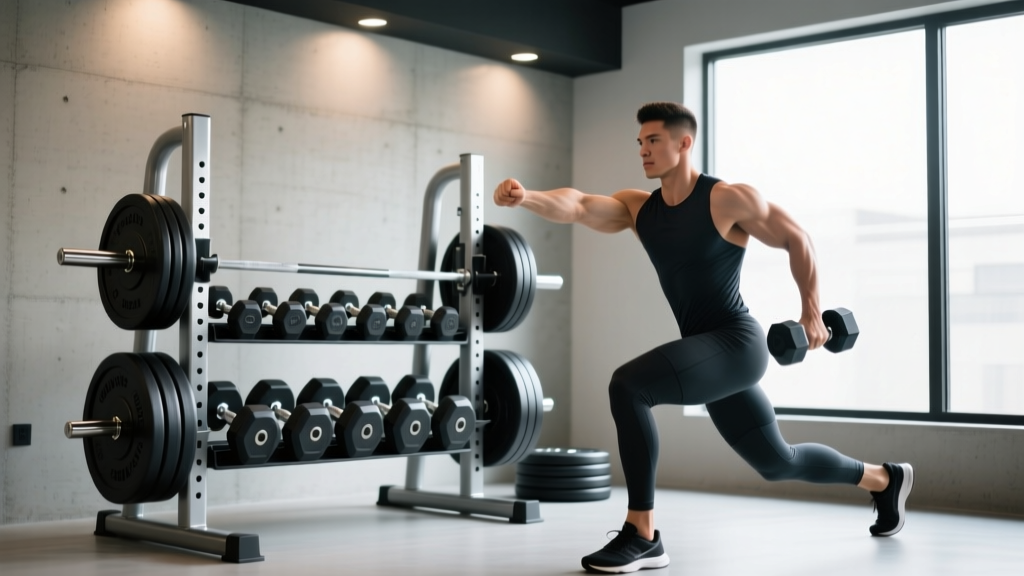
Olympic vs Standard Plates & Dumbbell Walking Lunge Alternative
Discover the key differences between Olympic and standard weight plates, plus a step-by-step guide to the best dumbbell walking lunge alternative for home gyms.

Building a home gym is one of the most rewarding investments you can make for your fitness journey, but the sheer volume of equipment specifications can quickly overwhelm beginners. One of the most common stumbling blocks is understanding the difference between weight plate types—specifically, the divide between Olympic and standard plates. This decision not only dictates the barbells and dumbbell handles you can use, but it also influences your exercise selection, especially when space and equipment limitations force you to adapt your programming.
In this beginner-friendly, step-by-step guide, we will break down the exact specifications, pricing, and practical applications of Olympic versus standard weight plates. Furthermore, because standard equipment often limits traditional unilateral movements, we will provide a comprehensive tutorial on the ultimate dumbbell walking lunge alternative that maximizes muscle activation while accommodating the realities of a compact home gym setup.
Step 1: Decoding the 1-Inch vs 2-Inch Plate Divide
The fundamental difference between standard and Olympic weight plates lies in the center hole diameter and the corresponding barbell sleeve they are designed to fit. While they may look similar to the untrained eye, their engineering and load capacities are worlds apart.
- Standard Plates (1-Inch): These feature a center hole measuring exactly 1.06 inches (approx. 27mm). They are designed for lightweight, budget-friendly barbells and adjustable dumbbell handles. The sleeves on these bars do not rotate, meaning the bar and the plates spin together during dynamic lifts, which can cause wrist torque during Olympic lifts or heavy pressing.
- Olympic Plates (2-Inch): The gold standard for commercial and serious home gyms. The center hole measures 1.97 inches (50mm). Olympic bars feature rotating sleeves equipped with bronze bushings or needle bearings, allowing the plates to spin independently of the barbell shaft, drastically reducing rotational inertia and joint stress.
Equipment Comparison Matrix
| Feature | Standard (1-Inch) | Olympic (2-Inch) |
|---|---|---|
| Center Hole | 1.06" (27mm) | 1.97" (50mm) |
| Barbell Sleeve | Fixed, no rotation | Rotating (Bushings/Bearings) |
| Max Load Capacity | 200 - 350 lbs | 500 - 1,500+ lbs |
| 2026 Avg Cost (Iron) | $1.20 - $1.50 / lb | $1.80 - $2.50 / lb |
| 45lb Plate Diameter | ~14.5 inches | 17.7 inches (450mm IWF Spec) |
Step 2: Budgeting for Your First Plate Set in 2026
As of early 2026, supply chain stabilization has brought cast iron prices down from their pandemic-era peaks, making it an excellent time to buy. However, your budget should align with your long-term strength goals.
The Standard Route (Budget & Space-Constrained)
A 300 lb cast-iron standard plate kit (including a 5-foot bar and dumbbell handles) from brands like CAP Barbell typically retails between $350 and $420. This is an attractive entry point. However, the primary failure mode of standard dumbbell handles is sleeve length. A standard 14-inch dumbbell handle can only hold about 60 to 80 lbs of standard plates before you run out of threading space for the spin-lock collar. This severely limits your ability to perform heavy unilateral leg exercises as you progress.
The Olympic Route (Long-Term Investment)
Outfitting a gym with Olympic plates requires a higher initial capital outlay. A pair of 45 lb REP Fitness Cast Iron Olympic plates costs roughly $180 ($2.00/lb), while premium urethane-coated options from Rogue Fitness can exceed $4.00/lb. You must also purchase an Olympic barbell (starting around $200 for a decent dual-knurl power bar). While the upfront cost is higher, the equipment will outlive you and holds its resale value exceptionally well.
Step 3: The Space & Equipment Dilemma
Beginners often purchase standard plate kits because they include adjustable dumbbell handles, assuming they can easily replicate commercial gym dumbbell exercises. The reality is that loading multiple 10lb or 25lb standard plates onto a short handle creates a bulky, unbalanced cylinder. The plates are wide, interfering with your grip and altering the biomechanics of movements like lunges, where the weights hang close to your legs.
Furthermore, walking lunges require significant floor space—often 15 to 20 feet of clear runway—which is a luxury most garage and basement gyms lack. When you combine the bulky nature of loaded standard dumbbells with limited square footage, you need a highly effective dumbbell walking lunge alternative that delivers equal or greater hypertrophy without the spatial or equipment drawbacks.
Step 4: The Ultimate Dumbbell Walking Lunge Alternative
The most biomechanically sound alternative to the walking lunge for home gym owners is the Deficit Reverse Lunge. Research published in the National Center for Biotechnology Information (NCBI) highlights that unilateral training is critical for correcting left-to-right strength asymmetries and reducing spinal loading compared to heavy bilateral squats.
By utilizing your weight plates as a deficit platform, you increase the range of motion (ROM), forcing the glutes and quadriceps to work through a deeper stretch under load. This eliminates the forward momentum and balance issues associated with walking lunges, making it safer to perform with awkward standard dumbbells or heavy kettlebells in a confined space.
Step-by-Step Execution Guide
- Build the Deficit Platform: Stack two flat, rubber-coated or cast-iron weight plates (either 10lb or 25lb Olympic/Standard plates work perfectly) on the floor. This creates a stable elevated platform roughly 1.5 to 2 inches high. Ensure the plates are free of debris so they do not slide.
- Starting Position: Stand with your right foot firmly planted on the stacked plates. Your left foot should rest on the floor behind you. Hold your dumbbells or kettlebells at your sides in a neutral grip. Keep your chest proud and your core braced.
- The Descent: Instead of stepping forward, step backward with your left foot, lowering your hips until your left knee gently kisses the floor (or a foam pad). Because your right foot is elevated on the plates, you will achieve a much deeper hip flexion and quad stretch than a standard floor lunge.
- The Drive: Press through the mid-foot and heel of your elevated right foot to drive your body back up to the starting position. Do not push off the back toe; the back leg is merely a kickstand for balance.
- Repetitions: Complete all prescribed reps (typically 8-12) on the right leg before switching the plate stack to the left foot. As noted by the American Council on Exercise (ACE), completing all reps on one side before switching maximizes motor unit recruitment and stabilizer fatigue.
"The deficit reverse lunge removes the deceleration forces required when stepping forward into a walking lunge. By stepping backward, the primary working leg absorbs 85% of the load, making it vastly superior for hypertrophy, especially when using sub-optimal or bulky home gym dumbbells."
Step 5: Equipment Maintenance & Collar Safety
Whether you chose standard or Olympic plates, securing your loads is a critical safety step often overlooked by beginners.
- Standard Spin-Lock Collars: These rely on threaded steel nuts. Over time, the threads can strip if cross-threaded. Always tighten them firmly against the plates, but avoid using a wrench, which can warp the nut. Replace standard collars every 12-18 months if used heavily.
- Olympic Spring Collars: Standard spring clips are fine for light pressing, but for heavy squats and deadlifts, invest in locking clamp collars (like Rogue HG 2.0 or OSO Pro). These clamp onto the 50mm sleeve with a cam-lock mechanism, preventing the plates from shifting laterally, which is vital for maintaining barbell balance during heavy unilateral or asymmetrical loading.
Frequently Asked Questions (FAQ)
Can I use Olympic plates on a standard barbell?
No. Olympic plates have a 2-inch (50mm) hole and will simply slide off a 1-inch standard barbell sleeve. While you can buy plastic adapter sleeves that fit over a standard bar to accept Olympic plates, this is highly discouraged for any lift over 100 lbs, as the plastic can crack under sheer stress, leading to catastrophic plate failure.
Are bumper plates better than cast iron for home gyms?
Bumper plates (which are Olympic-sized but made of dense rubber) are excellent for home gyms with thin flooring because they can be dropped from overhead without damaging the subfloor. However, they are thicker than cast iron, meaning you can fit less weight on the barbell sleeve. For beginners focusing on slow-tension hypertrophy (like the deficit reverse lunge), standard cast iron Olympic plates are more cost-effective and space-efficient.
Why do my standard dumbbell handles feel unbalanced?
Standard dumbbell handles often have very short loadable sleeves (sometimes only 4 to 5 inches). If you use 10lb standard plates, which are quite wide in diameter, you may only fit two plates per side. This places the weight far away from the handle's center of gravity, creating a lever-arm effect that makes the dumbbell feel wobbly during precise movements. Upgrading to an adjustable dumbbell system (like PowerBlock or Nuobell) or switching to Olympic loading is the best long-term fix.
More gear to consider
All reviews
Barbell Collar Types and Dumbbell Front Squats: Safety Mistakes

Bumper vs Iron Plates: 2026 Trends & Standing Dumbbell Side Bends
Incline Bench Dumbbell Trends 2026: Urethane vs Rubber Hex

York Dumbbell Review: Rubber Hex vs Urethane Weights

Rubber Hex vs Urethane: Top Picks for Dumbbell Exercises for Calves
