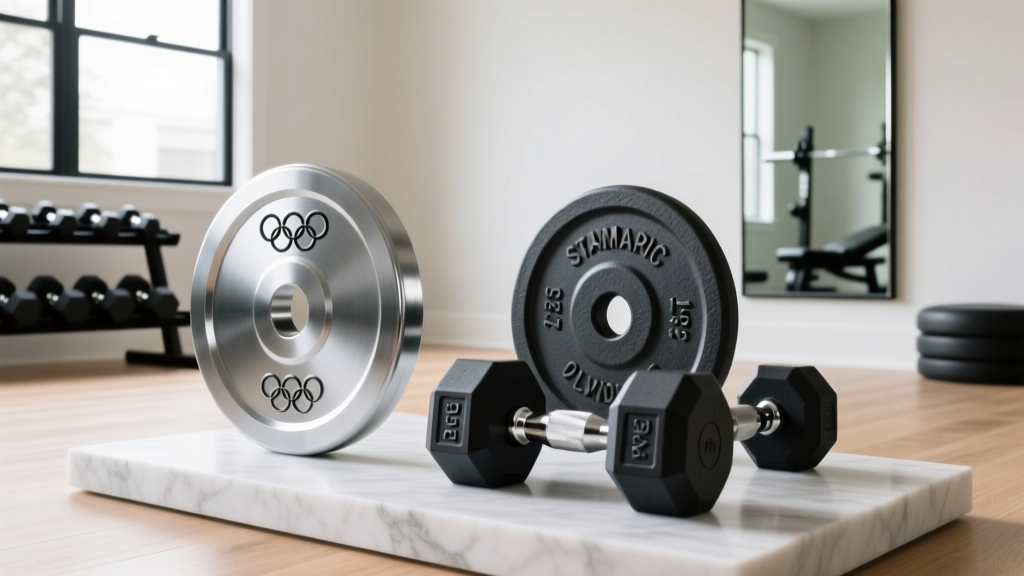
Olympic vs Standard Plates for Lower Pec Exercises Dumbbells
Discover the differences between Olympic and standard weight plates. Learn how to choose the right setup for lower pec exercises dumbbells and bench work.

The Home Gym Dilemma: Olympic vs Standard Weight Plates
Building a home gym in 2026 means navigating a sea of equipment specifications. If your primary goal is developing the sternal head of the chest—specifically through lower pec exercises dumbbells routines like the decline press or dumbbell pullover—you will quickly encounter a fundamental crossroads: should you invest in Standard (1-inch) or Olympic (2-inch) weight plates? While Olympic plates are the undisputed king of the power rack, the geometry of adjustable dumbbells tells a much more nuanced story. This beginner-friendly, step-by-step guide breaks down the exact mechanical differences, pricing, and safety considerations to help you build the ultimate chest-isolation setup.
Core Specifications: Standard vs Olympic Plates
Before we load up a decline bench, we need to understand the physical dimensions of the iron (or urethane) we are lifting. The terms 'Standard' and 'Olympic' do not refer to the quality of the metal, but strictly to the diameter of the center hole and the corresponding equipment sleeves.
| Feature | Standard (1-Inch) Plates | Olympic (2-Inch) Plates |
|---|---|---|
| Center Hole Diameter | 1 inch (25.4mm) | 2 inches (50.8mm) |
| Compatible Sleeve Size | ~1.1 inches (Standard spin-lock) | ~1.96 inches (Olympic bars/handles) |
| Max Dumbbell Load Capacity | Typically 40-50 lbs per handle | 100+ lbs per handle (Loadable handles) |
| 2026 Average Cost | $1.20 - $1.80 per lb (Cast Iron) | $2.50 - $4.50 per lb (Urethane/Rubber) |
| Plate Profile | Thicker, wider diameter for same weight | Denser, thinner profile (especially urethane) |
Why Plate Geometry Matters for Lower Pec Exercises
When programming lower pec exercises dumbbells are often the superior tool for isolating the sternal fibers without the tricep dominance seen in barbell pressing. According to kinesiology data from ExRx.net's Exercise Directory, the decline dumbbell press requires a deep stretch at the bottom of the movement to fully activate the lower pectoralis major. This is where your choice of plates and handles becomes critical.
The 'Width' Problem with Olympic Dumbbells
Olympic loadable dumbbell handles (like the popular Titan Fitness Olympic Dumbbell Handles) feature massive 2-inch sleeves. While this allows you to load 120 lbs per hand, the physical width of the handle and the 2-inch plates creates a bulky silhouette. During a deep decline dumbbell flye or press, the inner edges of the plates can collide with each other or your torso before your pecs reach maximum stretch, artificially limiting your range of motion (ROM).
Conversely, Standard 1-inch spin-lock dumbbell handles (such as the CAP Barbell 14-inch Cast Iron Spin-Lock Set) are much narrower. The smaller center hole and slimmer profile of standard cast iron plates allow the dumbbells to pass closely together at the bottom of the movement, facilitating the deep stretch required for optimal lower pec hypertrophy.
💡 Expert Insight: If you are strictly focused on hypertrophy and lower pec isolation, modern adjustable dumbbells (like Nuobell or PowerBlock) or Standard 1-inch spin-lock sets often provide better biomechanical clearance than heavy Olympic loadable dumbbells.Step-by-Step Guide: Building Your Lower Pec Setup
Let's walk through the exact steps to assemble a safe, effective, and budget-friendly station for your chest routine.
Step 1: Select the Right Bench
You need a bench that offers a secure decline angle (typically -15 to -30 degrees). The Fitness Reality 1000 Super Max remains a staple in 2026 for beginners, offering a -15 degree decline and a leg-lock brace, which is non-negotiable for safety when holding heavy dumbbells over your face. Ensure the bench pad is no wider than 12 inches; wider pads will interfere with your shoulder blades retracting at the bottom of the press.
Step 2: Choose Your Dumbbell Handles
- For Beginners (Under 50 lbs per hand): Purchase a pair of 14-inch Standard 1-inch spin-lock handles. The threaded ends and star-lock collars ensure plates stay secured even when inverted on a decline bench.
- For Advanced Lifters (Over 60 lbs per hand): You will need Olympic loadable handles. Look for models with shorter sleeves (around 5 to 6 inches of loadable space) to minimize the width issue mentioned earlier. The Rogue Loadable Dumbbell Handles feature a 35mm grip and compact sleeves, making them the premium choice for heavy decline presses.
Step 3: Buy the Correct Plates
Avoid cheap 'rubber-coated' standard plates if you are training in a poorly ventilated garage; they off-gas a strong chemical odor that degrades over time. Instead, opt for Urethane Olympic plates or raw cast iron Standard plates. Urethane is virtually odorless, highly resistant to dropping, and features a thinner profile that maximizes sleeve space.
Execution: The Decline Dumbbell Press
Once your equipment is matched and loaded, proper execution is vital. The National Strength and Conditioning Association (NSCA) emphasizes strict scapular control during all pressing variations to protect the rotator cuff.
- The Lock-In: Sit on the decline bench, secure your feet under the rollers, and hinge back. Bring the dumbbells to your shoulders with a neutral grip (palms facing each other).
- The Rotation & Press: As you press upward, rotate your wrists so your palms face forward at the top. This internal rotation at the peak of the movement heavily recruits the sternal (lower) pec fibers.
- The Eccentric: Lower the weights slowly (3-second negative) until you feel a deep stretch in the lower chest. Do not let the plates clink together at the bottom; stop just before they touch.
- The Squeeze: Press back up, focusing on pulling your biceps across your torso rather than just pushing the weight up.
Troubleshooting Common Beginner Mistakes
Mistake 1: Overloading the Decline Angle. Many beginners assume a steeper decline (-45 degrees) equals more lower pec activation. In reality, a steep decline shifts the load to the anterior deltoids and causes blood to pool in the head, leading to dizziness. Stick to a mild -15 degree decline for optimal lower pec isolation and safety.
Mistake 2: Ignoring Plate Diameter. If you are using Standard 1-inch plates, be aware that a 10lb standard plate has a much larger outer diameter than a 10lb Olympic plate. When doing dumbbell pullovers across a flat bench, the wide profile of large standard plates might graze the floor before your lats and pecs are fully stretched. Keep your standard plates in the 5lb and 2.5lb increments to maintain a compact dumbbell head.
Final Verdict: Which Should You Buy?
If your home gym is exclusively built around dumbbell work, isolation movements, and lower pec exercises dumbbells routines, a high-quality Standard 1-inch cast iron setup is the most cost-effective and biomechanically friendly choice for beginners. It keeps the dumbbell profile compact and costs roughly $1.50 per pound in 2026. However, if you plan to eventually add a barbell, power rack, and Olympic barbell bench press to your arsenal, invest in Olympic urethane plates from day one, and purchase a pair of compact-sleeve Olympic loadable dumbbell handles to bridge the gap.
More gear to consider
All reviews
Space-Saving Loadable 15 kg Dumbbells: Home Gym Layout Guide

Olympic vs Standard Weight Plates for Dumbbell Bars: Mistakes & Fixes

Prone Dumbbell Row Safety: Maintaining Loadable Dumbbells
Power Walking With Dumbbells to Lifting: Olympic vs Standard Plates
Bumper Plate vs Iron Plate: Protecting Your Delt Fly Dumbbell Gear
