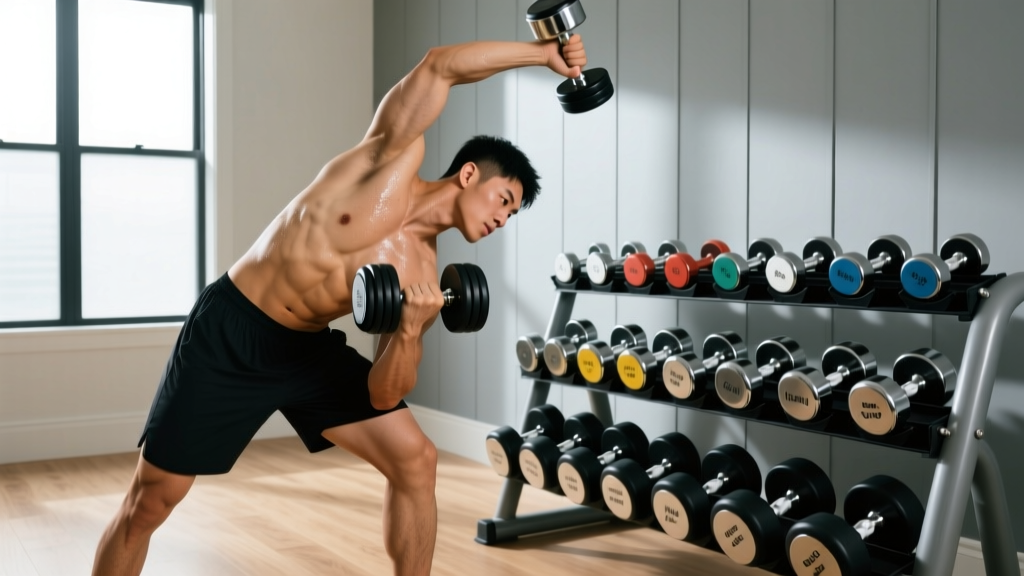
Olympic vs Standard Plates & Incline Dumbbell Lateral Raises Guide
Compare Olympic vs standard weight plates for your home gym. Discover the best dumbbell setups for incline dumbbell lateral raises and isolation work.

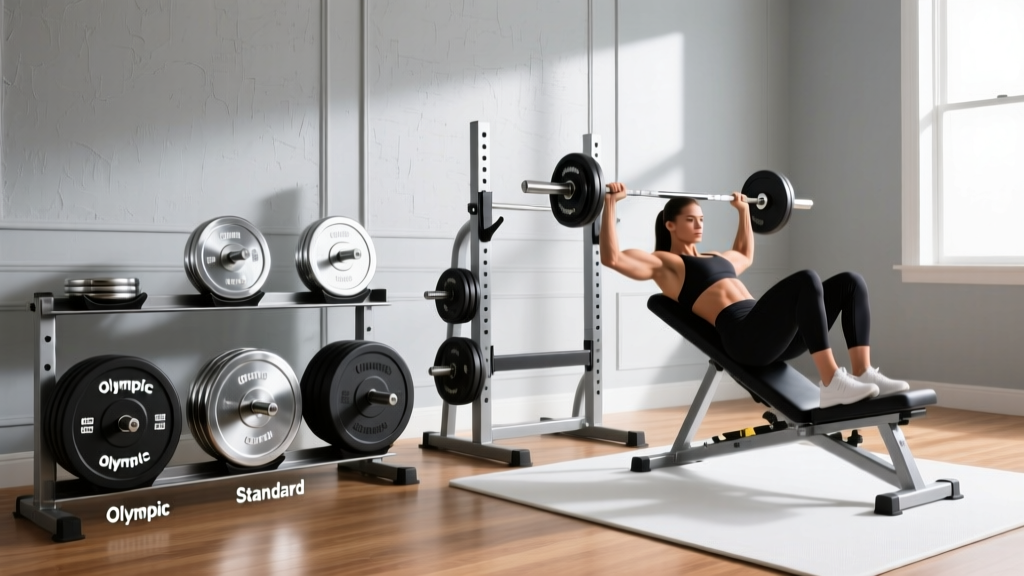
The Foundation: Olympic vs. Standard Weight Plates
Building a home gym in 2026 requires making a foundational decision that will dictate your equipment ecosystem for years: do you invest in Olympic weight plates or stick with standard plates? While the debate often centers around barbell lifting and heavy power racks, the choice between a 2-inch (50mm) Olympic system and a 1-inch (25mm) standard system has profound implications for your dumbbell training, accessory work, and isolation exercises. Understanding the mechanical and financial differences between these two plate types is crucial before dropping hundreds of dollars on cast iron or urethane.
Quick Terminology Check: 'Standard' plates feature a 1-inch (25.4mm) center hole, while 'Olympic' plates feature a 2-inch (50.4mm) center hole. Despite the name, standard plates are not the official standard for competitive lifting; they are simply the legacy commercial and budget-friendly home gym format.Head-to-Head Comparison Matrix
Before diving into how these plates interact with specific dumbbell movements, let us break down the raw specifications and market realities of both systems in the current fitness equipment landscape.
| Feature | Standard (1-Inch) | Olympic (2-Inch) |
|---|---|---|
| Center Hole Diameter | 1 inch (25.4mm) | 2 inches (50.4mm) |
| Average Cost per Pound | $0.90 - $1.50 (Cast Iron) | $1.80 - $4.00+ (Bumper/Steel) |
| Loadable Sleeve Material | Solid steel or chrome-plated | Stainless steel, zinc, or hard chrome |
| Weight Tolerance | +/- 2% to 5% | +/- 1% (Calibrated) |
| Dumbbell Handle Compatibility | Excellent for light isolation | Poor for strict isolation movements |
The Dumbbell Dilemma: Why Handle Size Matters for Isolation
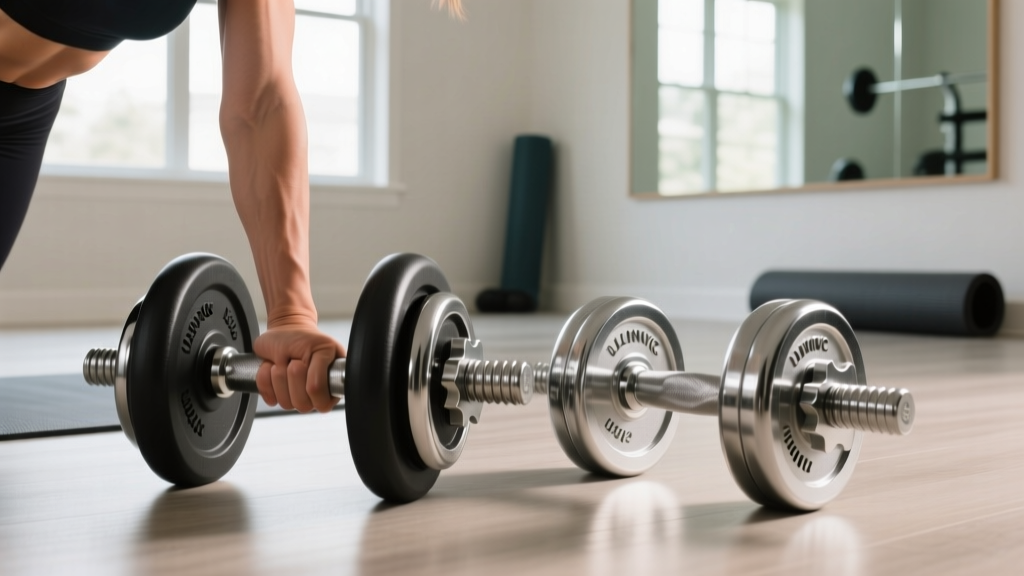
Most buyers focus on how plates fit on a barbell inside a power rack. However, if you plan to use loadable dumbbell handles, the plate system you choose will drastically alter your training experience. Olympic dumbbell handles—such as the 18-inch Titan Fitness Olympic Handles—feature thick 2-inch sleeves. An empty Olympic dumbbell handle typically weighs between 6 and 8 pounds. Conversely, a standard 14-inch CAP Barbell solid steel handle weighs roughly 3.5 pounds and features a much narrower grip profile.
This distinction becomes a massive factor when programming strict, low-weight, high-tension isolation movements. When you are targeting smaller muscle groups with precise biomechanics, the physical bulk of the equipment can actively hinder your range of motion and grip stability.
Biomechanics of Incline Dumbbell Lateral Raises
To understand why plate and handle selection matters, we must look at the mechanics of incline dumbbell lateral raises. According to exercise kinetics databases like ExRx.net, standard standing lateral raises suffer from a poor resistance curve; tension on the lateral deltoid is virtually zero at the bottom of the movement and peaks at the top. By setting an adjustable bench to a 30-degree or 45-degree incline and lying sideways (or performing a chest-supported incline variation), you alter the moment arm. This places maximum, continuous tension on the lateral deltoid from the very first inch of the lift.
Because incline dumbbell lateral raises eliminate the ability to use body English or momentum, the weight required drops significantly. Most advanced lifters perform this movement with dumbbells ranging from 10 to 25 pounds. Here is where the Olympic system fails the home gym user:
- The Grip Interference: Holding a 2-inch diameter Olympic sleeve in one hand while trying to maintain a neutral or slightly pronated wrist in the scapular plane is incredibly awkward. The thick sleeve forces the hand open, reducing grip strength and shifting the neurological focus away from the deltoid.
- The Starting Weight Penalty: If your empty Olympic handle weighs 7 lbs, and the smallest Olympic plates you own are 2.5 lbs, your starting weight is 12 lbs. For strict incline dumbbell lateral raises, especially for beginners or those rehabbing a rotator cuff, 12 lbs may be too heavy to maintain proper form.
- Micro-Loading Limitations: Fractional Olympic plates (0.25 lb to 1.25 lb) exist but are expensive and cumbersome to secure on short dumbbell sleeves. Standard 1-inch fractional plates are cheaper and easier to swap out, allowing for the precise progressive overload recommended by the American Council on Exercise (ACE) for small muscle group hypertrophy.
Loadable Handles vs. Adjustable Dumbbells in 2026
If your primary goal is heavy compound lifting (squats, deadlifts, bench press) and you only occasionally perform accessory work, an Olympic plate ecosystem is non-negotiable. Brands like Rogue Fitness offer precision-calibrated Olympic plates that are essential for serious powerlifters. However, if your programming heavily features isolation work like incline dumbbell lateral raises, tricep extensions, and hamstring curls, you have two optimal paths:
Path 1: The Hybrid Approach
Purchase an Olympic plate set for your barbell and squat rack, but buy a separate set of standard 1-inch cast iron plates (approx. 100 lbs) and a pair of 14-inch standard loadable dumbbell handles. Standard cast iron plates are incredibly cheap on the used market, often selling for under $1.00 per pound. This gives you the heavy-duty durability of Olympic gear for compounds, and the nimble, lightweight precision of standard gear for isolation.
Path 2: The Modern Adjustable Dumbbell
For most modern home gyms, bypassing loadable dumbbell handles entirely in favor of high-end adjustable dumbbells is the superior choice. Systems like the Nuobell 80lb or the PowerBlock Elite use proprietary internal weight blocks that mimic the compact profile of a fixed hex dumbbell. This allows you to perform incline dumbbell lateral raises with perfect biomechanics, adjusting the weight in 2.5 lb or 5 lb increments without dealing with loose plates, spin-lock collars, or thick 2-inch sleeves.
Cost Analysis: Building Your Plate Roster
Let us break down the actual financial commitment required for both systems as of 2026 market pricing.
Budget Warning: Never buy cement-filled or sand-filled standard plates. They are excessively bulky, prone to cracking, and the weight distribution is often inaccurate. Always opt for solid cast iron or machined steel when buying standard 1-inch plates.Standard 300lb Cast Iron Set (1-inch):
A typical 300lb set (four 45s, two 25s, two 10s, four 5s) from a brand like CAP Barbell will cost between $280 and $350. Add $30 for a pair of 14-inch solid steel handles. Total investment: ~$350. This setup is phenomenal for general fitness and isolation work but lacks the durability for heavy barbell drops.
Olympic 300lb Urethane/Rubber Set (2-inch):
A 300lb set of high-quality virgin rubber or urethane grip plates (like those from Titan Fitness or Rep Fitness) will cost between $550 and $750. If you opt for calibrated steel competition plates, expect to pay upwards of $1,200 for the same weight. Add $90 for a pair of Olympic dumbbell handles. Total investment: ~$700+. This setup is mandatory for heavy barbell work and commercial-grade durability.
Final Verdict: Which System Should You Buy?
The choice between Olympic and standard weight plates ultimately comes down to your training intensity and exercise selection. If you are pushing past 225 lbs on the bench press, deadlifting heavy, or participating in CrossFit-style drop workouts, the 2-inch Olympic system is the only safe and viable option. The structural integrity of Olympic bars and plates is vastly superior.
However, if you are building a budget-friendly garage gym focused on bodybuilding, hypertrophy, and joint-friendly isolation movements, do not underestimate the utility of standard 1-inch plates. When paired with standard loadable handles, they provide an unmatched, cost-effective solution for precise micro-loading on exercises like incline dumbbell lateral raises, ensuring your lateral deltoids get the exact stimulus they need without the biomechanical interference of bulky Olympic hardware.
Frequently Asked Questions
Can I use Olympic plates on a standard barbell?
No. Olympic plates have a 2-inch center hole, while standard barbells and dumbbell handles have a 1-inch diameter sleeve. The Olympic plate will simply slide off and is entirely incompatible with standard equipment without a specialized (and unsafe) adapter.
Why do my wrists hurt during incline dumbbell lateral raises?
Wrist pain during this movement is often caused by gripping equipment that is too thick (like an Olympic dumbbell sleeve) or using a weight that forces you to break a neutral wrist alignment. Switch to a compact adjustable dumbbell or a standard 1-inch handle, and drop the weight by 20% to focus on the scapular plane.
Are fractional plates worth the investment for isolation work?
Absolutely. For small muscle groups like the lateral and rear deltoids, jumping from 15 lbs to 20 lbs is a massive 33% increase in load. Fractional plates (0.5 lb and 1 lb) allow for smooth, sustainable progressive overload, which is critical for long-term hypertrophy without risking tendinopathy.
More gear to consider
All reviews
Budget Dumbbell Racks, Storage Hacks & Dumbbell Fly GIF Form Guide

EZ vs Straight Bar: Single Arm Dumbbell Pullover Market Trends 2026

Olympic vs Standard Plates: Setup for Exercises with Only One Dumbbell
Beyond the Heaviest Dumbbell at Planet Fitness: Home Neoprene Guide
Dumbbell Chest Fly for Women: Olympic vs Standard Plate Guide