Olympic vs Standard Plates & Dumbbell Tower Rack Storage Mistakes
Avoid costly mistakes with Olympic vs standard weight plates. Learn compatibility rules, sleeve sizing, and dumbbell tower rack storage troubleshooting.

The Hidden Costs of Mixing Weight Plate Standards
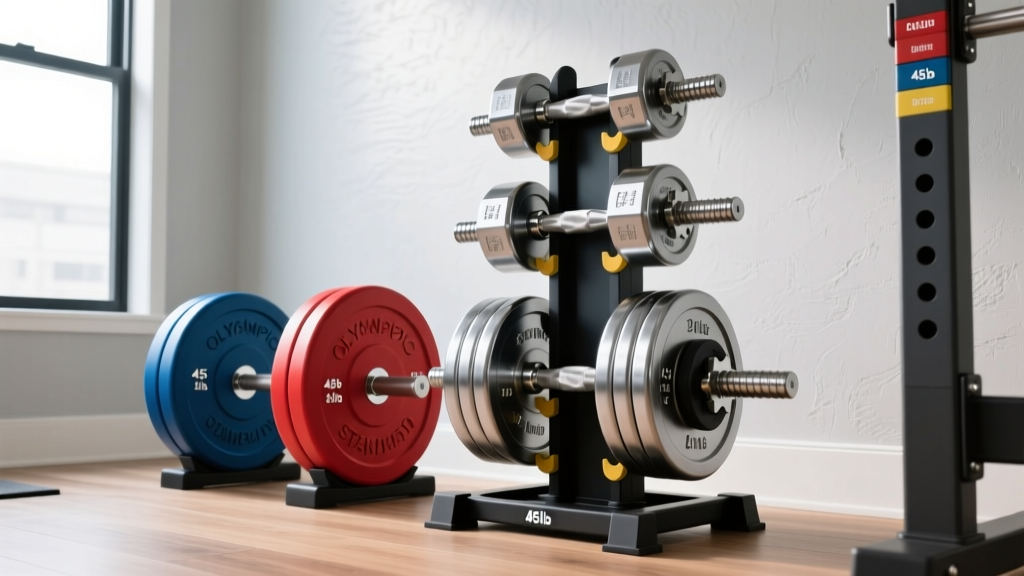
Building a home gym in 2026 requires meticulous spatial planning and equipment foresight. One of the most frequent—and expensive—errors new lifters make is misunderstanding the fundamental differences between Olympic and standard weight plates. This confusion rarely stops at the barbell sleeve; it cascades into severe storage and safety issues, particularly when lifters attempt to integrate heavy iron into multi-purpose storage units like a combined dumbbell tower rack and plate tree.
Standard plates (with a 1-inch center hole) and Olympic plates (with a 2-inch center hole) are not merely different in size; they represent entirely different engineering philosophies, load tolerances, and geometric footprints. When you attempt to force compatibility between these two systems, or when you misjudge how their physical dimensions interact with your storage racks, you risk catastrophic equipment failure and compromised gym safety.
Dimensional Breakdown: Olympic vs Standard Plates
Before troubleshooting your storage layout, you must understand the exact manufacturing tolerances of the plates you own. According to the International Weightlifting Federation (IWF) technical rules, Olympic equipment is built to precise metric standards designed for high-impact drops and heavy dynamic loading. Standard plates, conversely, are largely a legacy imperial design meant for light-duty, static home use.
| Specification | Standard Cast Iron | Olympic Cast Iron | Olympic Bumper |
|---|---|---|---|
| Center Hole Diameter | 1 inch (25.4 mm) | 2 inches (50.6 mm) | 2 inches (50.6 mm) |
| 45 lb Plate Diameter | ~14.5 inches (varies) | 17.7 inches (450 mm) | 17.7 inches (450 mm) |
| Max Static Load (per peg) | 150 - 200 lbs | 500+ lbs | 500+ lbs |
| Avg Cost per Pound (2026) | $1.00 - $1.30 | $1.60 - $2.20 | $2.50 - $4.50 |
Notice the diameter discrepancy. A 45-pound standard cast iron plate is often an inch or two narrower than a 45-pound Olympic plate. While this makes standard plates slightly easier to store in tight spaces, it severely limits the barbell's clearance from the floor during deadlifts, altering your biomechanics. For a deep dive into how these dimensional shifts affect lifting mechanics, refer to Rogue Fitness's official plate specifications and engineering guidelines.
Common Mistake #1: The 3-in-1 Dumbbell Tower Rack Hack
The most dangerous troubleshooting scenario we see in home gyms involves the ubiquitous '3-in-1' storage unit. These budget-friendly racks typically feature a dumbbell tower rack on the top tier, a barbell holder in the middle, and standard 1-inch weight plate pegs on the bottom tier.
⚠️ CRITICAL SAFETY WARNING: The Adapter Trap
Lifters who upgrade from standard to Olympic plates often purchase cheap '1-inch to 2-inch' sleeve adapters to hang their new Olympic plates on the existing 1-inch pegs of their combo rack. Do not do this.
The 1-inch pegs on a budget dumbbell tower rack combo are typically made of low-grade steel tubing with a shear strength limit of around 150 lbs. By adding a 3-pound steel adapter and loading it with 200 lbs of Olympic bumpers, you create an extreme lever arm. The downward torque will either bend the peg permanently, snap the weld holding the peg to the frame, or cause the entire narrow-footprint tower to tip forward, potentially crushing a foot or damaging your floor.
The Physics of the Tipping Point
A standard vertical dumbbell tower rack relies on a relatively small base footprint (often just 24 x 24 inches) to maintain balance. The weight of the dumbbells is distributed vertically down the center of gravity. When you hang 45-pound Olympic plates on a bottom-tier peg using an adapter, the weight is pushed outward, shifting the center of gravity outside the base of support. The moment you pull a heavy dumbbell from the top tier, the rack becomes top-heavy and forward-biased, resulting in an immediate tip-over hazard.
Common Mistake #2: Miscalculating Plate Geometry and Clearance
If you are transitioning from standard plates to Olympic plates, your existing storage geometry will likely fail. Here is where the physical dimensions of the plates cause secondary troubleshooting nightmares:
- The A-Frame Pinch: Standard plates scale in diameter based on weight (a 10 lb plate is tiny; a 45 lb plate is wide). Olympic bumper plates maintain a uniform 17.7-inch diameter from 45 lbs all the way down to 10 lbs. If your A-frame rack was spaced tightly to accommodate the smaller standard plates, your Olympic bumpers will scrape against the side rails or fail to slide down the pegs entirely.
- Thickness Overload: A 45 lb standard cast iron plate is roughly 1.2 inches thick. A 45 lb competition Olympic bumper plate is 2.15 inches thick, and a standard crumb-rubber bumper can be up to 3.5 inches thick. A horizontal plate tree peg that comfortably held ten standard 45s (12 inches of sleeve space) will only hold four thick bumpers before they spill over the edge of the peg.
Step-by-Step Troubleshooting: Fixing Your Storage Layout
If you have outgrown standard plates and are migrating to the Olympic ecosystem, you must decouple your plate storage from your dumbbell storage. Follow this actionable framework to reorganize your gym safely.
- Isolate the Dumbbell Tower Rack: Remove all weight plate pegs from your combo unit if possible, or simply refuse to use them. Dedicate the upper tiers strictly to hex or urethane dumbbells. Ensure the base is bolted to the floor or weighted with sandbags if the footprint is smaller than 30x30 inches.
- Invest in a Dedicated Horizontal Plate Tree: Purchase a standalone, 2-inch Olympic plate tree with a wide, tripod-style base. Look for models with a minimum 500 lb capacity per peg and a base footprint that extends at least 6 inches past the loaded plates to prevent tipping.
- Calculate Your Peg Depth: Before buying a new tree, measure your thickest plates. If you use 45 lb eco-bumpers (which are exceptionally thick), ensure the horizontal pegs are at least 16 inches long to accommodate 5 plates per peg safely.
- Address the 1-Inch Dumbbell Handles: If you own standard 1-inch spin-lock dumbbell handles, they cannot accept your new Olympic plates. Sell the standard handles and standard plates as a bundle on the used market. Reinvest those funds into a pair of loadable Olympic dumbbell handles (like the Rogue Loadable Dumbbell Handles) which accept your new 2-inch plates.
Expert Verdict: Which System Should You Commit To?
The choice between Olympic and standard plates ultimately dictates the ceiling of your home gym's capabilities. In 2026, the price gap between entry-level Olympic cast iron and premium standard plates has narrowed significantly, making the 'budget' argument for standard plates largely obsolete.
'Standard plates are a dead end for any lifter planning to progress beyond intermediate strength milestones. The lack of compatible, high-quality barbells and the structural limitations of standard storage racks make it a system you will eventually have to abandon and replace entirely.'
If you are strictly doing light isolation work, physical therapy, or outfitting a low-budget apartment gym where dropping weights is forbidden, standard plates paired with a lightweight dumbbell tower rack remain a viable, space-efficient choice. However, if you intend to deadlift, power clean, or progressively overload a barbell, commit to the 2-inch Olympic standard from day one. Buy a dedicated, heavy-duty plate tree, keep your dumbbell storage separate, and never compromise the structural integrity of your racks with cheap sleeve adapters.
More gear to consider
All reviews
EZ Bar vs Straight Bar: Maintenance for Free Dumbbell Workouts

How to Hit Rear Delts With Dumbbells: 2026 Adjustable Guide

EZ Curl Bar vs Straight Bar: Maintenance & Seated Dumbbell Press Care

EZ Curl Bar vs Straight Bar: Training for a 350 lb Dumbbell

Olympic Barbell Guide: Beyond the Basic Dumbbell Back Routine
