
Olympic vs Standard Plates: Setup Guide & Dumbbell Pic Layouts
Master your home gym setup. We compare Olympic vs standard weight plates, analyze costs, and share dumbbell pic layouts for beginner lifters.

The Home Gym Dilemma: Visualizing Your Space
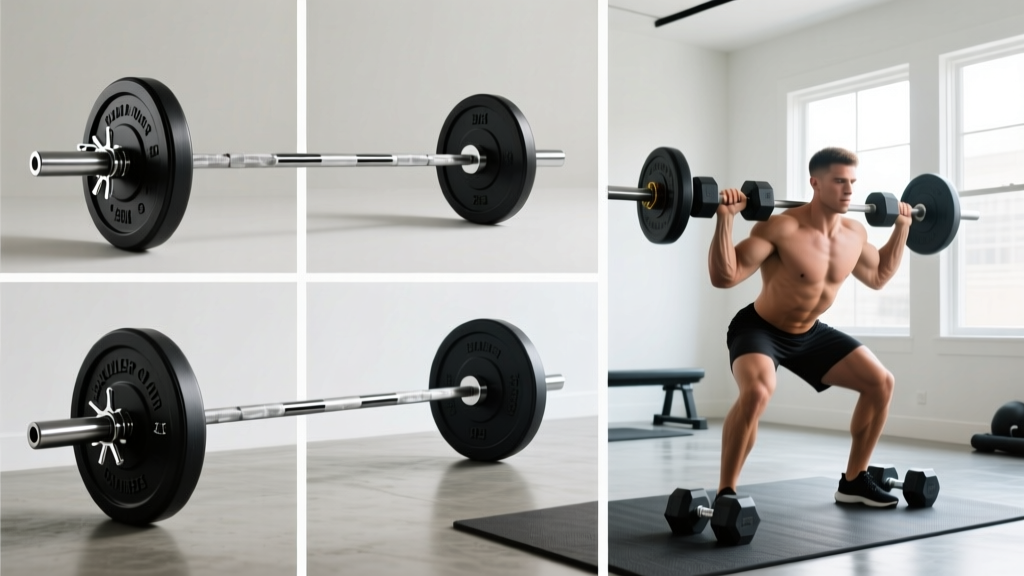
When planning your first home gym, you have likely scrolled through countless fitness feeds, saving the perfect dumbbell pic or aesthetic power rack layout for inspiration. Most of those pristine, heavy-duty setups feature Olympic-sized gear. But as a beginner, dropping hundreds of dollars on a barbell and plates isn't always the right first step. The foundational decision of your weight room comes down to a single measurement: the diameter of the hole in your weight plates. Choosing between Olympic and standard weight plates dictates not only your budget but the longevity, safety, and versatility of your entire setup.
In this step-by-step beginner's guide, we will break down the exact mechanical differences, analyze 2026 market pricing, and help you decide which plate ecosystem belongs in your garage.
Step 1: Decode the Sizing (The 1-Inch vs 2-Inch Rule)
The entire debate between standard and Olympic plates boils down to the center hole diameter and the corresponding barbell sleeve.
- Standard Plates: Feature a center hole of exactly 1 inch (25.4mm). They are designed to slide onto standard barbells and adjustable dumbbell handles that have 1-inch diameter sleeves.
- Olympic Plates: Feature a center hole of exactly 2 inches (50.4mm). They are engineered for Olympic barbells, which have thicker, rotating sleeves designed to handle massive loads and dynamic movements like the clean and jerk.
Step 2: Compare the Specs (Data Matrix)
Before making a purchase, review this side-by-side comparison of how both plate types perform across critical metrics for beginner lifters.
| Metric | Standard Plates (1-Inch) | Olympic Plates (2-Inch) |
|---|---|---|
| Hole Diameter | 1 inch (25.4mm) | 2 inches (50.4mm) |
| Barbell Max Capacity | 200 - 300 lbs (typically) | 500 - 1,000+ lbs |
| Weight Distribution | Poor on heavy loads; bars bend | Excellent; weight is pushed to the ends |
| Drop Safety | Low (cast iron chips, cement cracks) | High (bumper plates absorb impact) |
| Average 2026 Cost | $0.90 - $1.50 per lb | $1.75 - $5.00+ per lb |
| Space Efficiency | Bulky (especially cement-filled) | Dense and stackable |
Step 3: The Dumbbell Factor (Learning from Every Dumbbell Pic)
If you look closely at any well-planned dumbbell pic featuring adjustable spin-lock handles, you will notice a specific geometric constraint: wrist clearance. This is where your choice of plate ecosystem drastically alters your workout experience.
The Wrist Clearance Problem
When using standard 1-inch spin-lock dumbbell handles, the sleeves are relatively short. To load a standard dumbbell to 40 lbs, you must stack multiple 10-lb and 5-lb plates. Because standard cast iron or cement plates have a smaller center hole, their overall diameter must be wider to compensate for the mass. This creates a bulky, wide load that sits dangerously close to your wrists.
During a dumbbell chest press or shoulder press, standard plates will often physically collide with your forearms, restricting your range of motion and risking a dropped weight. Conversely, Olympic dumbbell handles (which accept 2-inch plates) are longer and allow you to use fewer, denser plates, keeping the mass away from your wrists. According to equipment testing by Garage Gym Reviews, upgrading to Olympic handles is the number one fix for beginners experiencing forearm bruising during heavy dumbbell work.
Step 4: Budgeting Your 2026 Plate Stack
Understanding the real-world costs of building your plate collection is vital. The market has stabilized in 2026, but material costs still dictate pricing tiers. Here is what you can expect to pay per pound (lb) based on current industry averages found in the Rogue Fitness Plate Catalog and similar retailers:
- Standard Cement/Vinyl ($0.80 - $1.20/lb): The cheapest option. Failure mode: The vinyl casing tears over time, and the internal cement/sand mixture can leak. They are also incredibly thick, taking up too much sleeve space.
- Standard Cast Iron ($1.20 - $1.60/lb): A solid budget choice for light home gyms. Failure mode: Standard bars will physically bend if you exceed 200 lbs, rendering the setup useless for heavy deadlifts.
- Olympic Cast Iron ($1.75 - $2.50/lb): The gold standard for traditional lifting. Highly durable, precise, and dense.
- Olympic Virgin Rubber / Urethane ($3.00 - $5.00/lb): Coated to protect your floors and reduce noise. Urethane is superior as it does not degrade or smell like cheap recycled rubber.
- Competition Bumper Plates ($6.00 - $9.00/lb): Solid rubber plates with a steel insert, calibrated to exact IWF specifications. Essential for Olympic weightlifting (snatches, cleans) where the bar is dropped from overhead.
Expert Insight: "Never buy cement-filled standard plates for deadlifts. Because they are so physically massive in diameter, the plates will hit the floor before the barbell reaches the proper mid-shin starting position, completely ruining your lifting mechanics."
Step 5: Your Final Purchasing Framework
Use this 3-step decision matrix to finalize your purchase:
- Choose Standard IF: Your total budget is under $200, you only plan to lift under 150 lbs, you are strictly doing light isolation exercises, and you have zero plans to ever perform heavy barbell squats or deadlifts.
- Choose Olympic IF: You plan to progress in compound lifts (squat, bench, deadlift, overhead press), you want the option to drop weights safely using bumper plates, and you want equipment that will last a lifetime without bending or breaking.
- The Hybrid Approach: Buy an Olympic barbell and Olympic plates for your main rack, but purchase a cheap set of standard adjustable dumbbells (up to 20 lbs each) for light warm-ups and lateral raises. This saves money while keeping your heavy lifting safe.
Frequently Asked Questions
Can I use standard plates on an Olympic bar?
No. The center hole of a standard plate (1 inch) is too small to fit over the sleeve of an Olympic bar (2 inches). You would need a specialized adapter, which is not recommended for heavy or dynamic lifting due to safety risks.
Why do Olympic plates have grips and holes?
Many modern Olympic plates feature cutouts or "grip" holes. This allows lifters to easily load and unload them from the bar, and it enables the plates to be used as standalone "grip plates" for manual resistance exercises, a feature rarely found on standard plates.
Are all Olympic plates the same diameter?
No. While the center hole is always 2 inches, the outer diameter varies. Standard cast iron Olympic plates vary in size based on weight. However, as noted in historical specifications from Wikipedia's Barbell archives, Olympic bumper plates are universally 450mm (17.7 inches) in diameter regardless of weight, ensuring the barbell is always at the correct height for deadlifts and cleans.
More gear to consider
All reviews
Best Loadable Dumbbells for Dumbbell Supinating Curls: 2026 Review
Barbell Collar Clamp Types & Chest Crossover With Dumbbells

Bumper vs Iron Plates: Budget Breakdown to Fund Your Dumbbell Bicep Workout

Dumbbell Rack Care for Lats Exercises with Dumbbells

EZ vs Straight Bar Value: Arm Exercises With Dumbbells for Ladies
