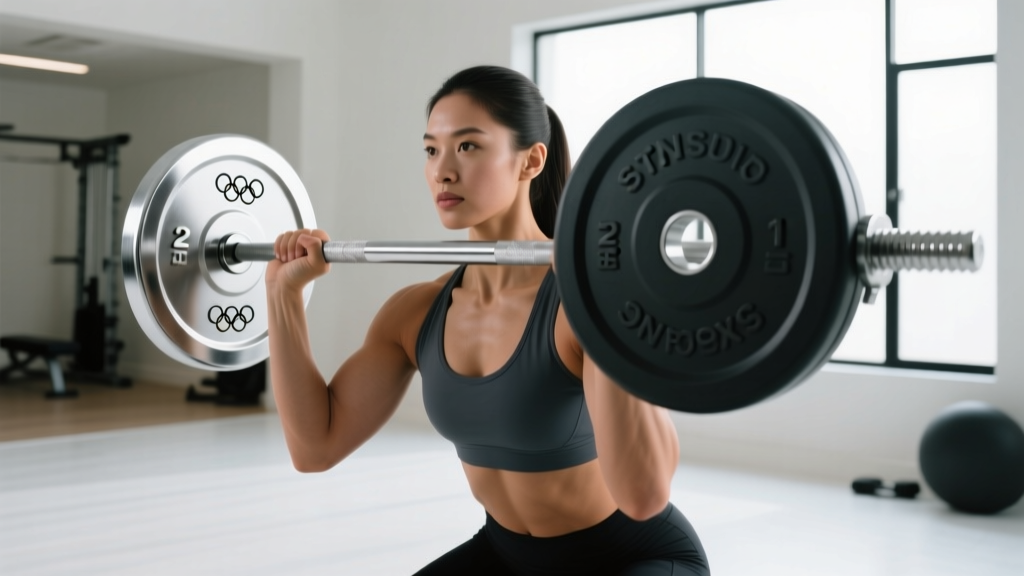
Olympic vs Standard Plates for the Dumbbell Front Raise Exercise
Discover the differences between Olympic and standard weight plates. Learn which type best supports the dumbbell front raise exercise and your home gym.

Introduction: The Foundation of Your Home Gym in 2026
Setting up a home gym requires navigating a sea of equipment options, and one of the most fundamental decisions you will face is choosing between Olympic and standard weight plates. While this choice might seem like a simple matter of barbell compatibility, it deeply impacts your isolation training mechanics. Specifically, the physical dimensions of your plates dictate how you execute lighter, precision-based isolation movements like the dumbbell front raise exercise using plate-loaded handles. In this beginner-friendly, step-by-step guide, we will break down the exact differences between 1-inch standard plates and 2-inch Olympic plates, exploring real-world pricing, material options, and edge cases to help you build a functional, future-proof weight room.
The Core Difference: 1-Inch vs 2-Inch Hubs
The primary distinction between these two categories lies in the diameter of the center hole, which dictates the equipment they can be loaded onto.
- Standard Weight Plates: These feature a 1-inch (25.4mm) center hole. They are typically manufactured from solid cast iron and are designed for entry-level home gym equipment, lightweight spinlock dumbbell handles, and budget-friendly straight bars.
- Olympic Weight Plates: These feature a 2-inch (50.8mm) center hole. They are the universal standard for commercial gyms, powerlifting, and serious home garages. Olympic plates are available in raw cast iron, rubber-coated grip plates, and high-density urethane bumper plates.
While standard plates are cheaper upfront, they suffer from severe load limitations. Conversely, Olympic plates offer unparalleled durability and compatibility with high-end racks, barbells, and specialized loadable dumbbells.
Step-by-Step Guide to Choosing Your Plates
Follow this three-step framework to determine which plate type aligns with your training goals, budget, and specific exercise mechanics.
Step 1: Audit Your Loading Pins and Handles
Before purchasing any iron, measure the sleeves of your existing equipment. Standard 1-inch dumbbell handles (often secured with a star-shaped spinlock collar) are ubiquitous in big-box sporting goods stores. However, if you are investing in high-quality loadable dumbbells—such as the Rogue Loadable Dumbbell or Titan Fitness loadable handles—these feature 2-inch Olympic sleeves. Buying standard plates for an Olympic sleeve is physically impossible without a bulky, dangerous adapter, while buying Olympic plates for a 1-inch bar simply will not fit. Always match the plate hub to the equipment sleeve diameter first.
Step 2: Factor in the Dumbbell Front Raise Exercise
Why does plate type matter for an isolation movement? The dumbbell front raise exercise primarily targets the anterior deltoid and requires strict form, a secure grip, and relatively light weight increments (typically 5 to 15 lbs per hand for beginners). This is where the physical profile of the plate becomes critical.
If you use standard 1-inch cast iron plates, a 5lb or 10lb plate is remarkably thin and compact. When loaded onto a standard 14-inch spinlock dumbbell handle, it leaves ample sleeve space for your hand to grip the handle comfortably without your knuckles scraping against the iron. This allows for a neutral or pronated grip without mechanical interference.
Conversely, Olympic plates are significantly wider. Even a 10lb Olympic iron plate has a wide flange to accommodate the 2-inch hub. If you load two 10lb Olympic plates onto a standard loadable dumbbell handle, the sheer width of the plates often crowds the entire sleeve. This leaves zero room for your hand, forcing an awkward, half-open grip that compromises wrist stability and ruins the biomechanics of the dumbbell front raise exercise. If you train with Olympic plates, you must purchase specialized, extra-long Olympic dumbbell handles to maintain proper clearance for isolation work.
Step 3: Choose the Right Material for Your Space
Once you have selected your hub size, you must choose the material. In 2026, the market offers three primary options:
- Raw Cast Iron: The most cost-effective and space-saving option. Best for quiet, controlled lifting where plates are not dropped.
- Rubber Grip Plates: These feature a rubberized outer shell and built-in handles, making them excellent for functional movements, plate carries, and quick weight changes.
- Urethane Bumper Plates: The premium choice. Urethane resists tearing, smells less than cheap rubber, and can be safely dropped on reinforced flooring.
Comparison Matrix: Olympic vs Standard Weight Plates
| Feature | Standard (1-Inch) | Olympic (2-Inch) |
|---|---|---|
| Hole Diameter | 1 inch (25.4mm) | 2 inches (50.8mm) |
| Max Load Capacity | ~150 - 200 lbs (bar bends) | 500 - 1,000+ lbs |
| Plate Profile/Width | Narrow, compact | Wide, bulky (requires longer sleeves) |
| Price Per Pound (2026 Avg) | $1.00 - $1.50 / lb | $1.50 - $4.00+ / lb |
| Best Use Case | Light isolation, budget setups | Heavy compounds, commercial gyms |
Progressive Overload and Micro-Loading
Isolation movements like the dumbbell front raise exercise stall quickly. Moving from 10 lbs to 15 lbs per hand represents a massive 50% increase in load, which can lead to shoulder impingement or form breakdown. This is where fractional micro-plates become essential.
The Olympic ecosystem heavily supports micro-loading. You can easily purchase 0.25 lb, 0.5 lb, and 1 lb fractional Olympic plates (often called "change plates") from premium manufacturers. Standard 1-inch fractional plates are exceptionally rare and poorly manufactured. If your training philosophy relies on micro-loading to safely progress small muscle groups, the Olympic ecosystem is the only viable long-term choice, provided you have the budget for longer loadable dumbbell handles.
Real-World Edge Cases and Failure Modes
Beginners often encounter specific equipment failures when mixing and matching cheap gear. Be aware of these common edge cases:
- The Standard Bar Bend: Standard 1-inch straight bars are typically made from lower-grade steel. If you attempt heavy deadlifts or squats and load a standard bar past 150 lbs, the bar will likely suffer permanent plastic deformation (bending). Once bent, the plates will slide off the sleeves during the dumbbell front raise exercise or other movements due to the altered angle.
- Olympic Plate Wobble: Budget Olympic plates from unknown online marketplaces often have poorly machined 2-inch inserts. When loaded onto a dumbbell sleeve, they rattle and wobble. This instability transfers to your wrist during strict isolation raises, increasing the risk of tendon strain.
- Rubber Degradation: Cheap rubber-coated standard plates often use recycled plastics that off-gas heavily and become brittle over time. When searching for coated plates, consult established suppliers like Rogue Fitness's weight plate catalog or Titan Fitness's plate inventory to ensure you are buying virgin rubber or high-grade urethane that will not crack in a cold garage gym.
Expert Insight: "When performing anterior deltoid isolation work, the center of gravity must remain directly in line with the wrist joint. Bulky equipment that forces the lifter to alter their grip width or wrist angle shifts the torque to the rotator cuff, increasing injury risk while decreasing muscular stimulation."
The FitGearPulse Verdict
If you are strictly on a budget and only plan to perform light isolation work like the dumbbell front raise exercise, standard 1-inch cast iron plates paired with 14-inch spinlock handles will suffice. However, if you want a home gym that supports heavy barbell lifting, safe micro-loading, and commercial-grade durability, invest in 2-inch Olympic plates and pair them with extra-long loadable dumbbell handles to preserve your grip mechanics.
Final Thoughts on Your Equipment Investment
Choosing between Olympic and standard weight plates is not just about the barbell you own today; it is about the training ecosystem you are building for the next decade. By understanding how plate width, hub diameter, and material impact everything from heavy squats to the precise mechanics of the dumbbell front raise exercise, you can make an informed purchase that saves you money, protects your joints, and maximizes your hypertrophy gains. Measure your sleeves, define your budget, and lift with precision.
More gear to consider
All reviews
Leg Curl with Dumbbells: Best Neoprene Home Weights

Best Neoprene Dumbbells for a Back Fat Workout: 2026 Matchup

Best Cheap Dumbbell Set with Rack: 2026 Neoprene Home Guide

Olympic vs Standard Plates: Avoiding the 65 lb Dumbbell Mistake

EZ Curl Bar vs Straight Bar: Space Layout & Dumbbell Jumps
