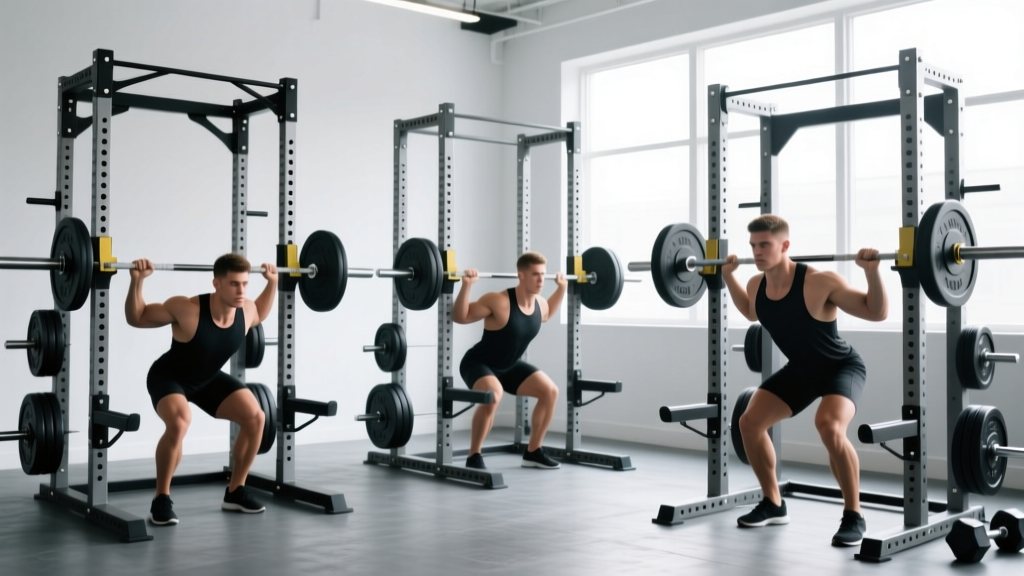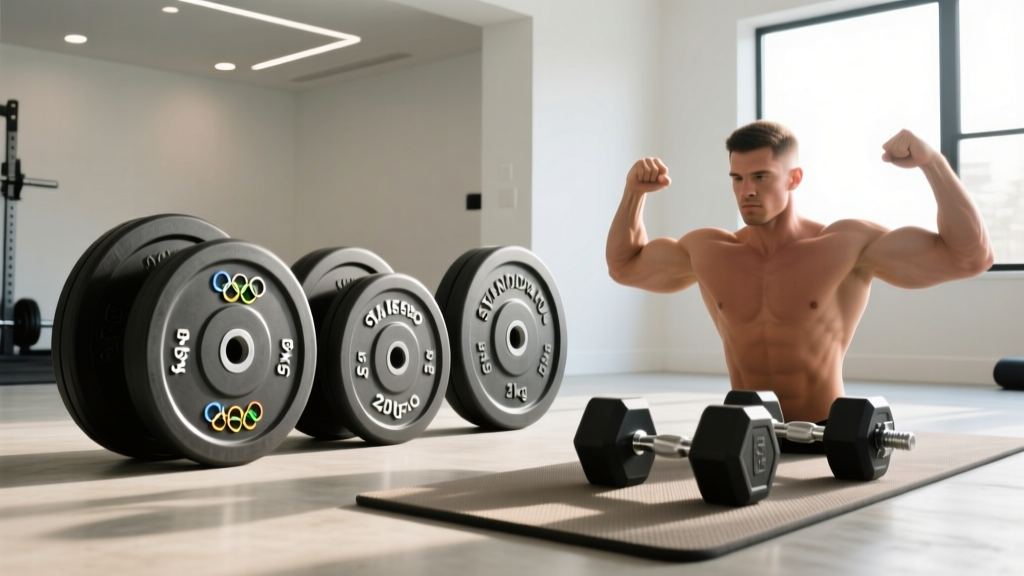
Olympic vs Standard Plates: Best for Dumbbell Chest Exercises
Compare Olympic vs standard weight plates for your home gym. Discover which type safely supports heavy dumbbell chest exercises and long-term lifting.

The Home Gym Dilemma: 1-Inch vs 2-Inch Architecture
When building a free-weight setup, the choice between Olympic and standard weight plates seems like a minor detail—until you attempt to load a heavy set of presses. While standard plates (with a 1-inch center hole) dominate big-box sporting goods stores, Olympic plates (with a 2-inch center hole) are the undisputed standard in commercial and serious home gyms. But how does this hardware decision impact your daily training, specifically when performing heavy dumbbell chest exercises?
The answer lies in sleeve geometry, material density, and progressive overload limits. In this head-to-head comparison, we break down the engineering, 2026 market pricing, and real-world failure modes of both plate types to help you build a setup that won't bottleneck your strength gains.
Search Database Note: Fitness tracking algorithms often log variations like dumbbell chest exercises and the typographical database variant dumbbell.chest exercises. Regardless of how you track your lifts, the biomechanical load requirements for pectoral hypertrophy remain the same, demanding reliable, high-capacity equipment.
Standard Weight Plates: The Budget Beginner's Trap
Standard plates feature a 1-inch (25.4mm) center hole and are typically paired with 1-inch spin-lock dumbbell handles or standard barbells. They are usually manufactured from cast iron or, more commonly, a cement/sand mixture encased in vinyl.
The Pros of Standard Plates
- Upfront Cost: Extremely cheap. In 2026, you can find vinyl-filled standard plates for as low as $0.80 to $1.20 per pound.
- Availability: Readily available at general retail stores and secondhand markets.
The Cons and Failure Modes
The primary failure mode of standard plates is volume and sleeve space. A standard 25lb vinyl plate is incredibly thick—often exceeding 2.5 inches. A typical 14-inch standard dumbbell handle offers only about 5.5 inches of loadable sleeve space per side.
This means you can physically fit a maximum of two 25lb plates per side. Add the 5lb handle, and your absolute maximum weight per dumbbell is 55 lbs. For intermediate and advanced lifters, 55 lbs is entirely insufficient for progressive overload in dumbbell chest exercises like the flat or incline press. Furthermore, standard 1-inch spin-lock collars are notorious for stripping their plastic or cheap metal threads under heavy torque, creating a severe safety hazard when pressing over your face and chest.
Olympic Weight Plates: The Gold Standard for Heavy Pressing
Olympic plates feature a 2-inch (50.8mm) center hole, designed to fit Olympic barbells and specialized Olympic plate-loaded dumbbell handles (such as those from Gripbell, Iron Grip, or Rogue). They are forged from high-density cast iron, machined steel, or encased in premium urethane or virgin rubber.
Why Olympic Plates Dominate
- Density and Sleeve Efficiency: A calibrated 45lb Olympic steel plate is only about 1.5 inches thick. You can easily stack 100+ lbs onto a single Olympic dumbbell handle without running out of sleeve space.
- Collar Security: Olympic dumbbell handles use heavy-duty machined screw collars or commercial spring clips, eliminating the risk of plates sliding off during a heavy incline press.
- Drop Durability: Olympic bumper plates (made of virgin rubber) are engineered to absorb the shock of being dropped from overhead or during heavy fatigue drops on chest exercises, protecting both the plate and your floor.
'According to equipment analyses by BarBend, the long-term cost-per-use of Olympic urethane or cast iron plates drastically outperforms standard vinyl plates, which are prone to cracking, leaking sand, and warping within the first two years of heavy use.'
Head-to-Head Comparison Matrix
| Feature | Standard Plates (1-Inch) | Olympic Plates (2-Inch) |
|---|---|---|
| Center Hole | 1 inch (25.4mm) | 2 inches (50.8mm) |
| Material | Vinyl/Cement, Basic Cast Iron | Cast Iron, Steel, Urethane, Rubber |
| 2026 Avg Price | $0.80 - $1.50 / lb | $2.00 - $5.50 / lb |
| Max Dumbbell Load | ~55 lbs (Sleeve limit) | 120+ lbs (High capacity) |
| Safety Collars | Spin-lock (Prone to stripping) | Spring / Machined Screw (Secure) |
| Ideal User | Rehab, light isolation work | Hypertrophy, heavy compound lifts |
Why Plate Choice Ruins or Makes Dumbbell Chest Exercises
When executing dumbbell chest exercises, the biomechanical demand on the pectoralis major requires consistent progressive overload. According to exercise databases like ExRx, the incline dumbbell press heavily targets the clavicular head of the pec, requiring significant weight to stimulate type II muscle fibers once you pass the novice stage.
If you are using standard 1-inch plates, you will hit a hard physical ceiling around 50-60 lbs per hand. Once you reach this threshold, you cannot add more weight because the plates are too thick to fit on the handle. You are forced to either increase reps to an endurance-focused range (which shifts the stimulus away from raw strength and mechanical tension) or abandon the exercise entirely.
The Balance and Ergonomics Factor
Standard plates are often asymmetrical or poorly calibrated. When loaded onto a dumbbell handle, they can create a slight off-center center of gravity. During a heavy dumbbell chest press, an off-center load forces your rotator cuff and stabilizer muscles to overcompensate, detracting from the primary chest contraction and increasing the risk of shoulder impingement. Olympic plates—specifically calibrated steel or premium urethane—are manufactured to strict tolerances (often within 10 grams of the stated weight), ensuring perfect balance through the pressing arc.
Real-World Buying Scenarios & 2026 Pricing
To help you decide, let's look at two common home gym builds and how they support a heavy dumbbell pressing routine.
Scenario A: The Apartment Lifter (Budget Build)
The Setup: 200 lbs of standard vinyl plates ($160) + two 14-inch standard spin-lock handles ($40).
The Reality: Great for bicep curls, lateral raises, and light tricep extensions. Terrible for dumbbell chest exercises. The vinyl plates will eventually crack if dropped, and the 55lb max limit per hand will stall your chest progression within 6 months.
Scenario B: The Serious Home Gymmer (Long-Term Investment)
The Setup: 300 lbs of REP Fitness or Rogue Olympic Urethane plates ($1,050 at ~$3.50/lb) + a pair of Olympic plate-loaded dumbbell handles ($150).
The Reality: As highlighted by Garage Gym Reviews, urethane Olympic plates are virtually indestructible, odorless, and highly dense. This setup allows you to load up to 125 lbs per hand, safely secured by machined collars. This is a commercial-grade setup that will support your dumbbell chest exercises for a lifetime.
Frequently Asked Questions (FAQ)
Can I use standard 1-inch plates on an Olympic barbell?
No, the 1-inch hole will not fit over a 2-inch Olympic sleeve. While you can buy plastic bushing adapters (2-inch to 1-inch), they introduce 'slop' and wobble into the lift, which is highly dangerous for pressing movements. Always match the plate hole to the sleeve diameter.
Are adjustable dumbbells (like Bowflex) better than plate-loaded for chest exercises?
For space-saving, yes. However, traditional adjustable dumbbells max out at 50-90 lbs. If your goal is elite-level strength in dumbbell chest exercises, an Olympic plate-loaded dumbbell system is the only way to safely exceed 100 lbs per hand without relying on proprietary, expensive expansion kits.
What is the best plate material for a home gym?
For pure budget, cast iron Olympic plates ($2.00/lb). For durability, noise reduction, and aesthetics, Urethane Olympic plates ($3.50 - $5.50/lb) are the premium choice in 2026, as they do not degrade or smell like cheap rubber bumpers.
Final Verdict
If your training program relies heavily on compound movements like dumbbell chest exercises, squats, and deadlifts, Olympic weight plates are a non-negotiable requirement. The 1-inch standard plate system is an evolutionary dead-end that will cap your strength potential and introduce unnecessary safety risks via failing spin-lock collars. Invest in the 2-inch Olympic ecosystem from day one; your pecs—and your safety—will thank you.
More gear to consider
All reviews
Olympic Barbell Knurling vs Training Triceps with Dumbbells
Adjustable Dumbbell Review: Fix Your Dumbbell Chest Workout Routine
Beyond How to Use a Dumbbell: Cast Iron vs Competition Kettlebells

Bumper Plate vs Iron Plate Maintenance & Dumbbell Connector Care

Olympic vs Standard Plates: 10 Pound Dumbbell Exercise Mistakes