Olympic vs Standard Plates: Beyond the Dumbbell Back Workout Routine
Compare Olympic vs standard weight plates to upgrade your home gym. Learn specs, pricing, and how to progress past a basic dumbbell back workout routine.

The Progression: Outgrowing Your Dumbbell Back Workout Routine
Every serious home gym owner eventually hits a physiological and logistical ceiling. You have spent months perfecting your dumbbell back workout routine—mastering single-arm rows, chest-supported dumbbell pullovers, and heavy renegade rows. But once your dumbbells max out at 100 or 120 pounds, progressive overload for large muscle groups like the latissimus dorsi, rhomboids, and erector spinae demands a shift to barbell training. This transition inevitably forces a critical purchasing decision: do you buy standard weight plates or Olympic weight plates?
Choosing the wrong plate ecosystem is one of the most expensive mistakes a home gym owner can make. It dictates not only the type of barbell you can use but also the longevity, safety, and resale value of your equipment. In this 2026 in-depth buying guide, we break down the exact metallurgical differences, pricing structures, and failure modes of standard versus Olympic plates to help you build a rack that will last a lifetime.
Core Differences: The Anatomy of the Hole
The primary distinction between the two plate types lies in the center hole diameter, which corresponds to the sleeve diameter of the barbell. While the fitness industry uses the terms '1-inch' and '2-inch,' the actual machined measurements are slightly different to allow for clearance.
Expert Measurement Insight
Standard plates actually feature a hole diameter of roughly 1.03 to 1.06 inches to slide over a 1-inch bar. Olympic plates feature a hole diameter of exactly 50mm (1.97 inches), adhering to strict International Weightlifting Federation (IWF) technical regulations. This 50mm standard is universally adopted by every reputable commercial and high-end home gym brand globally.
Head-to-Head Comparison Matrix
| Feature | Standard Plates | Olympic Plates |
|---|---|---|
| Hole Diameter | ~1.05 inches | 50mm (1.97 inches) |
| Barbell Yield Strength | 35,000 - 50,000 PSI | 190,000 - 215,000 PSI |
| Max Safe Load (Bar) | 200 - 250 lbs | 700 - 1,500+ lbs |
| Avg. Cost per Pound (2026) | $1.10 - $1.40 | $1.60 - $5.00+ |
| Weight Tolerance | +/- 5% to 10% | +/- 1% (Cast) to 0.25% (Calibrated) |
Standard Weight Plates: The Budget Trap
Standard weight plates are typically cast iron with a 1-inch center hole, designed to fit on lightweight, solid steel barbells often sold in big-box sporting goods stores. They are usually coated in a semi-gloss black enamel or gray paint.
Where Standard Plates Make Sense
- Lightweight Rehab & Isolation: If you are strictly doing light floor presses, tricep extensions, or loading a lightweight curl bar for arm work, standard plates are perfectly adequate.
- Extreme Budget Constraints: You can often find used standard cast iron plates on local marketplaces for as low as $0.75 to $0.90 per pound.
The Hidden Costs and Limitations
The primary issue with standard plates is not the plates themselves, but the barbells they require. Standard bars are typically made from low-grade mild steel. According to comprehensive equipment reviews by BarBend, a standard 1-inch bar will begin to permanently deform (bend) when loaded past 200 to 250 pounds. Once a barbell bends, the sleeves will no longer spin correctly, and the bar will never sit flat on a bench or floor, creating a severe safety hazard during heavy back training.
Olympic Weight Plates: The Lifetime Investment
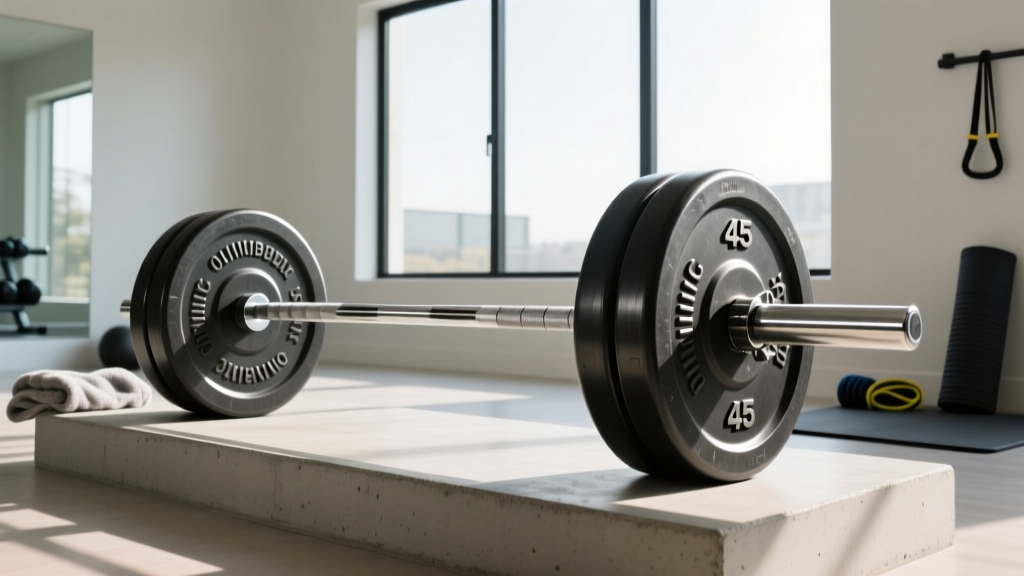
Olympic plates feature the 50mm center hole and are designed to be paired with Olympic barbells, which feature rotating sleeves equipped with bushings or needle bearings. This category includes traditional cast iron, rubber-coated, urethane, and bumper plates.
Material Breakdown and Pricing (2026 Market Rates)
- Cast Iron Olympic Plates: The gold standard for home gyms. They are thin, allowing you to fit more weight on the sleeve (up to six 45lb plates per side on a standard 16.3-inch loadable sleeve). Expect to pay $1.60 to $2.20 per pound. Models like the Rogue Deep Dish plates offer iconic aesthetics and tight weight tolerances.
- Rubber / Urethane Coated: Designed to protect flooring and reduce noise. Urethane is vastly superior to cheap rubber, as it does not off-gas foul odors or degrade under UV light. Premium urethane plates (like the Titan Fitness Elite Urethane) run between $3.50 and $5.00 per pound.
- Bumper Plates: Made of solid virgin or recycled rubber with a steel or brass center hub. Essential for Olympic lifting and CrossFit-style dropping. Rogue Echo Bumper Plates remain a top-tier choice, featuring a durometer rating of 88 (dead bounce) and costing roughly $3.00 to $4.00 per pound.
Failure Modes and Edge Cases
When investing in iron, you must understand how equipment fails over time. Here are the real-world edge cases to watch out for:
⚠️ The Cast Iron Cracking Phenomenon
Cheap, imported standard plates and low-tier Olympic cast iron plates are often cast with air pockets inside the metal. If you drop a loaded barbell from the top of a deadlift onto hard concrete without mats, the shockwave can cause the plate to crack cleanly in half. Always pair cast iron plates with 3/4-inch or thicker horse-stall mats or high-density EVA foam flooring.
Sleeve Tolerances and Hub Wear
If you buy used Olympic plates, inspect the steel or brass center hub. Over years of friction against a barbell sleeve, cheap hubs can widen, causing the plate to 'clack' loudly and wobble during lifts. High-end plates feature precision-machined brass inserts that maintain a tight 50.2mm tolerance for decades.
Transitioning Your Dumbbell Back Workout Routine to Barbells
Why make the jump from dumbbells to plates and barbells? While a dumbbell back workout routine is phenomenal for fixing muscular imbalances and achieving a deep stretch in the lats, it lacks the absolute load capacity required for maximum central nervous system (CNS) adaptation and overall posterior chain thickness.
Once you acquire Olympic plates and a proper barbell, you can transition your programming to include:
- Pendlay Rows: Unlike dumbbell rows, the barbell Pendlay row requires strict torso stabilization while pulling 185+ lbs from a dead stop, heavily targeting the rhomboids and traps.
- Heavy Rack Pulls: By loading your Olympic bar with 315+ lbs and pulling from just below the knee, you overload the erector spinae in a way 100-pound dumbbells simply cannot replicate.
- Meadows Rows: Using a landmine attachment with your Olympic plates allows for unilateral heavy rowing with a unique resistance curve that bridges the gap between dumbbells and traditional barbell rows.
Final Verdict & Buying Framework
If your home gym is strictly for light toning, physical therapy, or you are on an unbreakable $150 budget, standard plates will suffice. However, for 95% of lifters who are serious about strength progression, Olympic plates are the only logical choice.
The 2026 FitGearPulse Recommendation: Start your plate collection with a pair of 45lb and a pair of 25lb cast iron Olympic plates. This gives you the flexibility to micro-load your barbell rows and deadlifts. Avoid buying standard plates entirely; they are a dead-end investment with zero resale value in the modern fitness market. Invest in a high-quality Olympic barbell and cast iron plates, and you will never have to upgrade your iron again.
More gear to consider
All reviews
Loadable Sets for Chest Workouts With Dumbbells at Home: 2026 Budget

Power Rack vs Squat Rack vs Stand for Any Dumbbell Lift

Olympic vs Standard Plates: Pairing With Different Types of Dumbbells

Loadable Dumbbell Market 2026: Chasing ToughFit Decagon PEV Dumbbells
Best Adjustable Dumbbells for Incline Dumbbell Shrugs (2026)