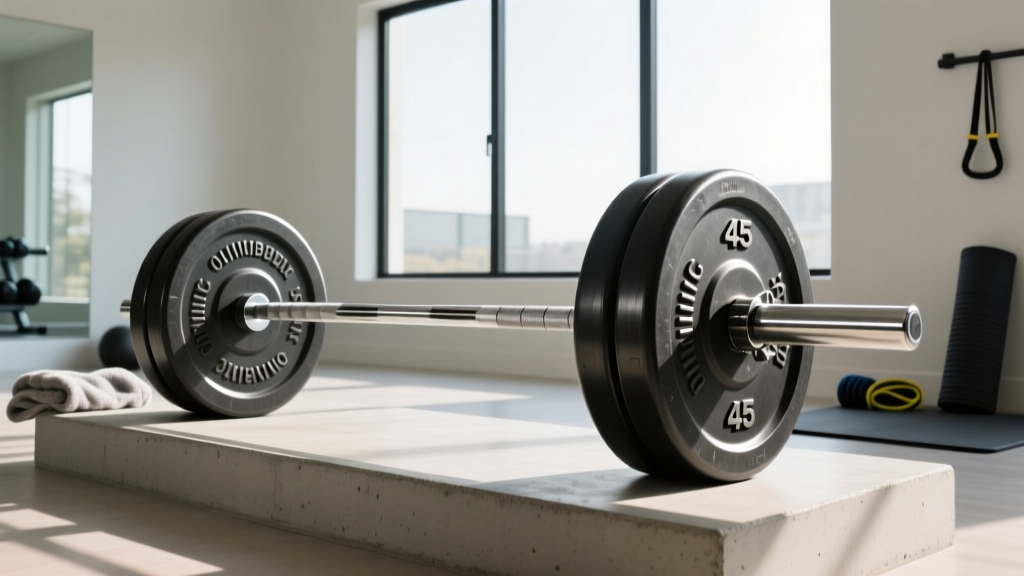
Beyond Kabata Dumbbells: Olympic Barbell Weight & Knurling Guide
Master your home gym upgrade. Compare Olympic barbell weight, knurling patterns, and tensile strength to find the perfect bar for heavy lifts.

The Home Gym Evolution: From Adjustables to Olympic Steel
Many home gym enthusiasts begin their strength journey with premium adjustable sets like Kabata dumbbells. While Kabata dumbbells offer unparalleled space efficiency, ergonomic grips, and precise micro-loading for isolation work, they inherently cap your loading potential. To unlock heavy compound movements, central nervous system adaptation, and true bilateral strength, you must eventually integrate a dedicated Olympic barbell into your arsenal.
However, buying an Olympic barbell is not as simple as picking up a 45-pound stick of steel. The market is flooded with options ranging from $150 budget bars to $1,200+ competition-certified implements. According to Garage Gym Reviews, understanding the nuances of shaft diameter, knurling aggressiveness, and tensile strength is the difference between a bar that lasts a lifetime and one that permanently bends after a heavy clean and jerk.
This guide dissects the critical engineering metrics of Olympic barbells, helping you make an informed purchase in 2026.
Quick Spec Primer: A standard men's Olympic bar weighs exactly 20kg (44.09 lbs) and measures 2200mm in total length. A women's Olympic bar weighs 15kg (33.06 lbs) and measures 2010mm. If a bar deviates from these exact metrics, it is a 'multi-purpose' or specialty bar, not a true competition Olympic bar.Decoding Knurling: Grip, Feel, and Markings
Knurling—the crosshatched pattern machined into the steel shaft—is the primary point of contact between you and the weight. It dictates your grip security, comfort, and lift confidence.
The Three Knurl Profiles
- Volcano: Pioneered by Rogue Fitness, this profile features a sharp rim but a flattened peak. It provides aggressive bite without tearing the calluses on your hands, making it the gold standard for multi-purpose bars.
- Mountain: Sharp, pointed peaks that dig deeply into the skin. Ideal for heavy deadlifts and powerlifting, but notoriously painful for high-rep Olympic weightlifting cleans.
- Hill: Smooth, rounded peaks with shallow valleys. Common on budget bars and dedicated squat bars. It offers comfort but can become slippery during heavy, sweaty pulls.
Ring Markings: IWF vs. IPF
The smooth rings etched into the knurling dictate hand placement. BarBend notes that weightlifting bars feature a single set of rings spaced 910mm apart (IWF standard), optimized for the snatch and clean. Powerlifting bars feature dual rings spaced 810mm apart (IPF standard) for bench press grip limits. Multi-purpose bars feature both sets, making them ideal for general home gym use.
The Center Knurl Debate
Powerlifters demand an aggressive center knurl to prevent the bar from sliding down their back during low-bar squats. Conversely, Olympic weightlifters despise center knurls because they scrape the collarbone and chest during the rack position of a clean. If your training involves both, look for a 'passive' or mild center knurl.
| Knurl Type | Best For | Skin Tear Risk | Grip Security |
|---|---|---|---|
| Volcano | CrossFit, Multi-Purpose | Low-Medium | High |
| Mountain | Powerlifting, Deadlifts | High | Maximum |
| Hill | Squats, Budget Bars | Very Low | Low-Medium |
Tensile Strength vs. Yield: Why PSI Matters
Many buyers confuse tensile strength with yield strength. Tensile strength (measured in PSI - pounds per square inch) is the absolute breaking point of the steel. Yield strength is the point at which the bar will permanently bend and fail to return to its straight form.
Warning: Never drop a loaded barbell without bumper plates. Dropping bare steel plates on a bare shaft transfers kinetic shock directly to the steel, drastically increasing the risk of permanent bending, even on high-PSI bars.For a barbell to survive heavy drops and maximal loads, you need a minimum tensile strength of 190,000 PSI. Budget bars in the 130,000 to 150,000 PSI range will permanently bend if you drop a 315lb deadlift or fail a heavy front squat.
- Under 160k PSI: Beginner/Budget. Will bend under heavy dynamic loads.
- 160k - 180k PSI: Intermediate. Good for controlled lifting, poor for dropping.
- 190k - 215k+ PSI: Advanced/Elite. The standard for serious home and commercial gyms.
Bushings vs. Bearings: Sleeve Spin Mechanics
The sleeves (the thick ends where plates are loaded) must spin independently of the shaft. If they don't, the rotational torque of a heavy clean or snatch will tear your wrists and elbows.
Bronze Bushings
Bushings are solid rings of bronze or composite material. They provide a slow, controlled spin. This is highly desirable for powerlifting (squats, bench, deadlifts) where excessive sleeve whip or spin can throw off your balance under a heavy, slow-moving load.
Needle Bearings
Barrings use tiny steel needles to allow the sleeve to spin rapidly and smoothly. This is mandatory for Olympic weightlifting, as the bar must rotate instantly during the violent transition of the third pull in a snatch. However, bearings require occasional maintenance and lubrication, whereas bushings are virtually maintenance-free.
2026 Market Pricing & Top Model Recommendations
While premium adjustable setups like Kabata dumbbells can easily cost between $600 and $1,000+ for a full set, a high-quality Olympic barbell is a one-time investment that often outlives the lifter. Here is how the top contenders stack up in the current market.
| Barbell Model | Tensile (PSI) | Knurl / Sleeve | Est. Price | Best Application |
|---|---|---|---|---|
| Rogue Ohio Bar | 190,000 | Volcano / Bushing | $225 | All-Around Home Gym |
| Eleiko Olympic WL Bar | 215,000+ | Mild / Bearings | $1,150 | Elite Weightlifting |
| Rep Fitness AB-2 | 185,000 | Volcano / Bushing | $160 | Budget Multi-Purpose |
| Texas Power Bar | 200,000+ | Aggressive / Bushing | $385 | Heavy Powerlifting |
Frequently Asked Questions
Can I use an Olympic barbell with standard 1-inch plates?
No. Olympic barbells feature 2-inch (50mm) diameter sleeves designed specifically for Olympic plates with 2-inch center holes. Standard plates will not fit. If you are upgrading from a cheap standard barbell set, you must also budget for a new set of bumper or cast-iron Olympic plates.
Do I need to oil my barbell?
If your bar features a bare steel or black oxide shaft, yes. You should brush it with a nylon brush to remove chalk and apply a light coat of 3-in-1 oil or mineral oil once a month to prevent rust. Bars with Cerakote or hard chrome finishes require significantly less maintenance, needing only occasional chalk removal.
Why are weightlifting bars more flexible than powerlifting bars?
Olympic weightlifting bars are designed with a specific 'whip' (elastic deformation). During the jerk or the second pull of a clean, this whip stores kinetic energy and helps propel the weight upward. Powerlifting bars are engineered to be as stiff as possible to provide a stable, predictable base for squats and bench presses.
More gear to consider
All reviews
Olympic vs Standard Plates & Proper Dumbbell Bench Press Form

Power Rack vs Squat Stand: Bench Dumbbell Workout Routine Setups

Barbell Collar Types & Setup for a Dumbbell Lateral Raise Drop Set
Best Adjustable Dumbbells for Dumbbell W Raise Setup

Best Dumbbell Racks to Store Weights for Dumbbell Sit-Ups (2026)
