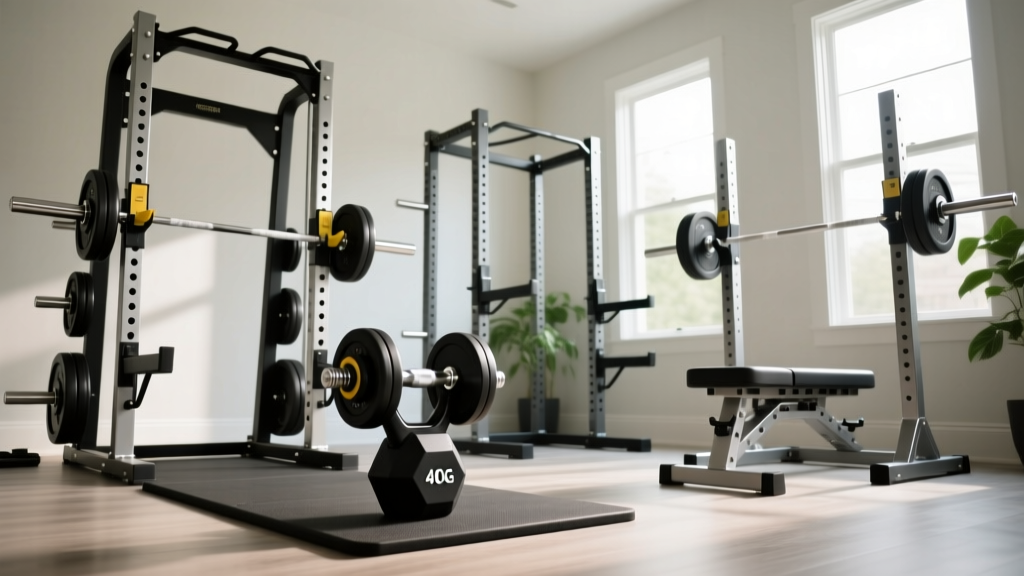
Choosing Olympic vs Standard Plates for Your Burpee Over Dumbbell WODs
Compare Olympic vs standard weight plates for your home gym. Learn which setup best supports heavy lifting and high-intensity burpee over dumbbell workouts.

The Home Gym Dilemma: Heavy Lifts vs. High-Intensity Conditioning
Building a versatile home gym in 2026 requires balancing two distinct training modalities: heavy barbell strength work and high-intensity functional training (HIFT). If you are programming barbell deadlifts alongside metabolic conditioning staples like the burpee over dumbbell, your equipment choices must bridge the gap between durability, safety, and floor mechanics. Beginners often make the costly mistake of buying cheap standard weight plates, only to realize their equipment cannot handle heavy loads or safely accommodate dynamic floor movements.
This step-by-step guide breaks down the critical differences between Olympic and standard weight plates, helping you design a free weight setup that supports both your one-rep max and your most grueling conditioning WODs.
Core Differences: Olympic vs. Standard Weight Plates
The distinction between Olympic and standard plates goes far beyond aesthetics. It fundamentally changes the biomechanics, safety, and longevity of your lifting ecosystem.
1. Sleeve Diameter and Hole Size
- Olympic Plates: Feature a 2-inch (50.8mm) center hole designed to fit Olympic barbell sleeves. This is the global standard for competitive weightlifting and serious commercial gyms.
- Standard Plates: Feature a 1-inch (25.4mm) center hole. These are typically found in budget-friendly big-box store kits and are meant for lightweight, entry-level home use.
2. Barbell Metallurgy and Weight Capacity
Standard 1-inch barbells are usually made from basic solid steel. Because of their narrow diameter, they lack the tensile strength to support heavy loads. A standard barbell will typically begin to bend and warp permanently when loaded past 200 to 250 lbs. Olympic barbells, conversely, are forged from high-tensile steel (often rated between 190,000 and 215,000 PSI) and can safely support 1,000 to 1,500+ lbs without permanent deformation.
Quick Comparison Matrix
| Feature | Olympic Setup | Standard Setup |
|---|---|---|
| Center Hole | 2 inches (50.8mm) | 1 inch (25.4mm) |
| Max Safe Capacity | 1,000 - 1,500+ lbs | 200 - 250 lbs |
| 2026 Avg. Price (Iron) | $1.50 - $2.00 / lb | $1.00 - $1.30 / lb |
| Plate Tolerance | Precision steel inserts | Cast iron (often sloppy) |
Why Your Plate Choice Impacts Your Burpee Over Dumbbell Setup
You might wonder how weight plate types affect a floor-based movement like the burpee over dumbbell. The answer lies in equipment synergy and floor clearance. According to research on High-Intensity Functional Training (HIFT), movement efficiency and safety during complex WODs rely heavily on equipment standardization and spatial awareness.
The Loadable Dumbbell Trap
If you commit entirely to an Olympic ecosystem, you might be tempted to buy loadable Olympic dumbbell handles to save money. These handles have 2-inch sleeves and require Olympic plates. However, an unloaded Olympic dumbbell handle is often 20 to 22 inches long. When you perform a burpee over dumbbell, you are laterally jumping over the implement. A 22-inch long handle creates a massive tripping hazard, alters your jump mechanics, and increases the risk of ankle rolls when fatigue sets in during the final rounds of a WOD.
⚠️ Safety Warning: Never use long-sleeve loadable Olympic dumbbell handles for lateral jump movements like the burpee over dumbbell. The rotational inertia of the plates and the excessive length of the handle make them highly unstable upon landing impact.The Hybrid Solution
The optimal 2026 home gym setup utilizes Olympic plates and bars for heavy compound lifts, but relies on fixed standard-grip hex or urethane dumbbells for floor conditioning. Fixed hex dumbbells (which inherently use standard-sized handles encased in iron or urethane heads) provide a compact, 5-to-6-inch jump clearance that is safe, stable, and perfectly suited for the burpee over dumbbell.
Step-by-Step: Building Your Hybrid Free Weight Rack
Follow this beginner-friendly blueprint to outfit your space for both heavy pulling and high-intensity floor work.
Step 1: Secure the Olympic Barbell Base
Start by investing in an Olympic barbell and a set of bumper plates. Bumper plates are essential if your WODs include barbell drops (like power cleans or high-rep deadlifts). The Rogue Echo Bumper Plates remain a gold standard for durability and dead-bounce reduction, protecting both your floor and your equipment.
- Action: Purchase a 260 lb Olympic bumper plate set (10s, 25s, and 45s).
- Cost Expectation: ~$2.50 to $3.00 per pound for high-quality virgin rubber bumpers.
Step 2: Select the Right Dumbbells for Floor Clearance
For the burpee over dumbbell, you need fixed-weight dumbbells with a low profile. Urethane-coated hex dumbbells are the superior choice. Urethane does not degrade, smell, or mark your floors like cheap rubber, and the hex shape prevents the dumbbell from rolling away mid-burpee.
- Target Weight: 35 lbs to 50 lbs per dumbbell for intermediate conditioning.
- Clearance Check: Ensure the dumbbell height is between 5.5 and 6.5 inches to allow for a safe, low-effort lateral hop.
Step 3: Optimize Floor Space and Matting
Performing burpees over dumbbells requires a dedicated drop zone. Do not drop iron or standard plates directly on concrete.
- Measure a 6x8 foot area for your lifting and conditioning platform.
- Lay down two 4x6 foot, 3/4-inch thick horse stall mats (typically $50-$70 each at local farm supply stores).
- Leave a 1-inch gap between the mats to allow for concrete expansion and moisture evaporation.
Real-World Pricing and Brand Recommendations (2026 Market)
Budgeting for free weights requires looking at the "price per pound" metric rather than the total kit price. Here is what you should expect to pay in the current market:
| Equipment Type | Recommended Brand / Model | Estimated Cost |
|---|---|---|
| Olympic Bumper Plates | Rogue Echo or Rep Fitness V2 | $2.50 - $3.25 / lb |
| Olympic Cast Iron Plates | Rogue Machined or York Legacy | $1.75 - $2.25 / lb |
| Standard Cast Iron Plates | CAP Barbell Standard Grip | $1.10 - $1.40 / lb |
| Fixed Urethane Hex DBs | Rep Fitness Urethane Hex | $2.00 - $2.80 / lb |
Common Failure Modes and Edge Cases
When mixing heavy Olympic lifting with high-rep conditioning, beginners frequently encounter specific equipment failure modes. Anticipating these will save you time and money.
1. The "Rattle" of Standard Plates
Standard 1-inch plates are rarely machined with precision. The cast-iron holes are often closer to 1.1 inches, leading to a loud, distracting rattle during movements like dumbbell snatches or thrusters. Olympic plates utilize pressed-in steel bushings or precision liners that ensure a snug, quiet fit on the barbell sleeve.
2. Diameter Mismatches and Tripping Hazards
Not all weight plates share the same outer diameter. A cheap 10 lb standard plate might be only 9 inches in diameter, while a 10 lb Olympic bumper plate is a full 17.7 inches (450mm). If you are performing a complex that involves touching the plates to the floor (like renegade rows or plate-drags), mismatched diameters will alter your starting posture and increase lower-back strain. Always ensure your conditioning plates match the 450mm IWF diameter standard if they will be used in floor-level movements.
3. Spin-Lock Collar Failures
If you use standard spin-lock dumbbell handles for your burpee over dumbbell WODs, the collars can vibrate loose during high-rep floor transitions. A loose 25 lb plate sliding off a dumbbell mid-jump is a severe ankle-injury risk. Always use fixed hex dumbbells or heavy-duty spring collars for dynamic conditioning.
Expert Insight: "In HIFT environments, equipment standardization isn't just about aesthetics; it's a critical safety parameter. When athletes transition from a heavy Olympic barbell pull to a floor-based lateral jump over a dumbbell, the spatial consistency of the equipment dictates their neurological pacing and physical safety."
Frequently Asked Questions
Can I use Olympic plates on a standard barbell?
No. Olympic plates have a 2-inch hole, while standard barbells have 1-inch sleeves. The plates will simply slide off the ends of the bar. You can buy adapter sleeves that slip over a 1-inch bar to accept 2-inch plates, but this is highly discouraged for any weight over 100 lbs due to the structural weakness of the underlying standard bar.
What is the ideal dumbbell weight for a burpee over dumbbell?
For beginners and intermediate athletes focusing on metabolic conditioning rather than raw strength, a 35 lb or 50 lb fixed hex dumbbell is ideal. This weight provides enough resistance for supplementary movements (like dumbbell snatches or lunges) but is light enough to allow for rapid, safe lateral transitions during the burpee phase.
Are rubber-coated standard plates safe to drop?
No. Standard rubber-coated plates are typically cast iron with a thin layer of recycled rubber. They are not designed for dropping and will crack, shatter, or damage your flooring if dropped from shoulder height. If your WODs require dropping weights, you must invest in solid rubber Olympic bumper plates.
Final Verdict: The Hybrid Approach Wins
When outfitting your gym for both heavy strength cycles and grueling metabolic conditioning, the binary choice between Olympic and standard disappears. The most intelligent, cost-effective, and safest strategy is a hybrid model. Invest your budget heavily into Olympic plates and a high-tensile barbell to ensure longevity and safety under heavy loads. Then, allocate a separate budget for fixed, standard-grip urethane hex dumbbells to ensure your burpee over dumbbell WODs are performed with optimal floor clearance, stability, and zero tripping hazards. By respecting the mechanical limits of standard gear and the spatial requirements of HIFT movements, you will build a home gym that performs flawlessly for years to come.
More gear to consider
All reviews
Beyond the Average Dumbbell Curl: EZ Bar vs Straight Bar for Small Home Gyms
Dumbbell vs Barbell vs Kettlebell Thrusters: Cast Iron Space Guide
Collar Guide for Any Barbell and Dumbbell Leg Workout
Olympic vs Standard Plates: Plus, What Weight Dumbbells Should I Use?

Top Loadable Dumbbells for a Dumbbell Workout (No Bench Needed)