Olympic vs Standard Plates for Biceps Exercises Without Dumbbells
Compare Olympic vs standard weight plates for home gyms. Discover which plate system is best for biceps exercises without dumbbells and heavy lifting.

The Home Gym Dilemma: Training Arms When Equipment is Limited
When outfitting a home gym on a budget, or when traveling to facilities with limited gear, lifters are frequently forced to improvise. Dumbbells are often the first casualties of budget cuts or space constraints, leaving athletes scrambling to find effective biceps exercises without dumbbells. The most ubiquitous alternative? Weight plates. However, this immediately triggers a critical purchasing decision: should you invest in a 1-inch standard plate system or a 2-inch Olympic plate system?
While most comparisons focus on heavy compound lifts like deadlifts and squats, the ergonomics of weight plates drastically alter isolation movements. The lip thickness, center hole diameter, and surface texture of a plate dictate how effectively you can perform plate curls, pinches, and halos. In this head-to-head comparison, we break down Olympic versus standard weight plates through the lens of arm training, long-term durability, and 2026 market pricing.
Quick Summary: Standard cast iron plates offer a superior narrow lip for grip-intensive pinch curls but lack scalability. Olympic grip plates feature integrated handles that perfectly mimic dumbbell mechanics, making them the undisputed champion for biceps exercises without dumbbells, alongside heavy barbell training.The 1-Inch vs 2-Inch Divide: Ergonomics and Dimensions
To understand how these plates perform in the hands during a biceps curl, we must examine their physical anatomy. The difference in the center hole diameter cascades into entirely different manufacturing profiles.
Standard Plates (1-Inch Center Hole)
Standard plates are typically cast iron or cement-filled vinyl. For arm training, cast iron is the only viable option; cement plates are too bulky and fragile for dynamic movements. A standard 10-pound cast iron plate (such as the classic CAP Barbell models) features a relatively narrow outer lip, usually measuring between 0.75 and 0.85 inches thick. This narrow profile is highly advantageous for grip strength and pinch-holds, allowing the fingers to wrap securely around the edge during flexion.
Olympic Plates (2-Inch Center Hole)
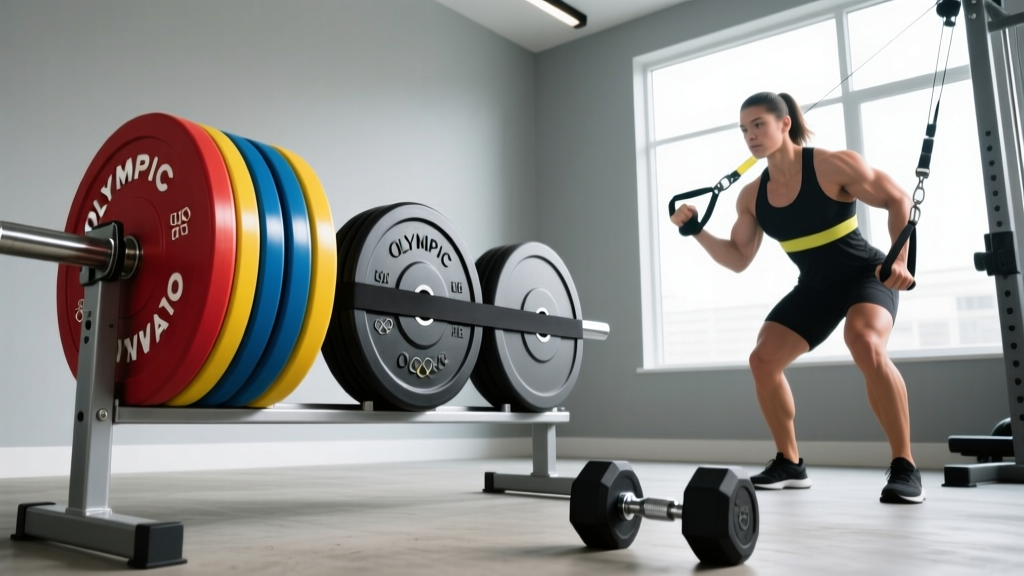
Olympic plates are the global standard for commercial and serious home gyms. Because the center hole is twice as wide, the overall surface area of a 10-pound Olympic plate is larger, and the outer lip is often thicker (frequently exceeding 1.1 inches). Pinching a smooth, thick rubber or cast iron Olympic plate by the edge is a biomechanical nightmare for high-rep curls. However, the 2-inch market introduced the Olympic Grip Plate (urethane or rubber-coated with carved handles), which completely revolutionizes isolation work.
Dimensional Comparison Matrix
| Feature | Standard 10lb Cast Iron | Olympic 10lb Grip Plate | Olympic 10lb Bumper |
|---|---|---|---|
| Center Hole | 1 Inch | 2 Inches (50mm) | 2 Inches (50mm) |
| Outer Lip Thickness | ~0.80 Inches | N/A (Uses Handles) | ~1.50 Inches |
| Grip Ergonomics | Excellent for Pinching | Excellent (Dumbbell-like) | Poor (Too Thick) |
| Avg. 2026 Price/lb | $1.20 - $1.60 | $3.50 - $4.50 | $2.80 - $3.50 |
Executing Biceps Exercises Without Dumbbells
According to biomechanical analyses of elbow flexion documented by the National Strength and Conditioning Association and ExRx, the biceps brachii and brachialis require consistent tension through a full range of motion. When substituting plates for dumbbells, the equipment's geometry changes the moment arm and grip demands. Here is how the two plate systems handle the top three alternative biceps movements.
- The Plate Pinch Curl (Best with Standard Plates): Grab a 10lb or 25lb standard cast iron plate by the outer lip using a pinch grip (fingers on one side, thumb on the other). Because standard plates have a thinner lip, your fingers can achieve a deeper wrap. This variation heavily recruits the brachioradialis and forearm flexors to maintain the pinch, creating immense indirect tension on the biceps brachii. Attempting this with a thick Olympic bumper plate will result in premature grip failure before biceps fatigue.
- The Grip Plate Hammer Curl (Best with Olympic Grip Plates): If you own Olympic urethane grip plates (like those from Rogue Fitness or Rep Fitness), you simply grab the integrated triangular handles. This perfectly replicates a neutral-grip dumbbell hammer curl. The 2-inch hole system wins decisively here, as the handles allow you to overload the brachialis and push heavy weight safely without relying on crushing grip strength.
- The Plate Halo (Around the World): Holding a single plate by the edges or handles, circle it around your head. This continuous-tension movement targets the biceps isometrically while dynamically engaging the shoulders. Olympic grip plates are vastly superior here, as holding a smooth cast iron standard plate overhead with sweaty hands is a severe safety hazard.
Edge Cases and Real-World Failure Modes
As fitness equipment reviewers, we look beyond the spec sheet to how gear fails in the real world. Understanding these edge cases is vital for your 2026 purchasing strategy.
Standard Plate Rust & Sleeve Damage: Standard 1-inch cast iron plates are highly prone to oxidation in humid garages. More critically, the rough, unfinished inner ring of cheap standard plates will aggressively scrape and gouge the chrome sleeves of your 1-inch barbells over time, ruining the knurling and spin mechanics.Conversely, Olympic grip plates have their own failure mode: Urethane Seam Tearing. When performing heavy plate pinches or dropping them during high-intensity interval training, the stress concentrates where the metal inner ring meets the urethane handle. Budget brands often suffer from delamination after 18 to 24 months of heavy use. Always opt for virgin urethane with a machined steel hub, such as the Rogue Urethane Grip Plates, which utilize a press-fit steel insert that prevents handle tearing.
"Grip strength is the limiting factor in most improvised arm workouts. If your equipment forces your forearms to fail before your biceps reach mechanical tension, you are leaving hypertrophy on the table. Integrated handles or precise lip thicknesses are non-negotiable for advanced trainees."
— Insights adapted from ACE Fitness biomechanical guidelines on grip and isolation training.
The 2026 Buying Verdict: Which System Wins?
When evaluating weight plate types strictly through the lens of versatility, longevity, and performing biceps exercises without dumbbells, the winner is clear, but it depends on your budget and long-term goals.
Choose Standard Cast Iron If:
- You are on a strict budget (under $1.50 per pound).
- You specifically want to train forearm and grip strength via plate pinch curls.
- Your gym is strictly for light isolation work and you do not plan to lift heavy barbells.
- Recommended Model: CAP Barbell 1-Inch Cast Iron Plates (Enamel coated to prevent rust).
Choose Olympic Grip Plates If:
- You want a true 1:1 replacement for dumbbell curls, hammer curls, and triceps extensions.
- You plan to progress to heavy barbell squats, deadlifts, and Olympic lifts (the 2-inch system is mandatory for these).
- You value drop-safety and floor protection (urethane and rubber coatings).
- Recommended Model: Rep Fitness Urethane Grip Plates or Rogue Fleck Plates.
Ultimately, while standard plates offer a nostalgic, grip-heavy challenge for arm days, the Olympic grip plate system provides a scalable, ergonomic, and joint-friendly solution. By investing in 2-inch grip plates, you ensure that a lack of dumbbells never becomes a bottleneck for your biceps hypertrophy.
More gear to consider
All reviews
Beyond Dumbbell Exercises for Fat Loss: Barbell Collars Compared

Cast Iron vs Competition Kettlebells: Little Dumbbell Nebula Care

Barbell Clamp Types Compared: Incline Dumbbell Hammer Curl Setup

Space-Saving Kettlebell Guide & Seated Dumbbell Reverse Flys Layout

Bumper vs Iron Plates: Space & Chest and Back Workout with Dumbbells