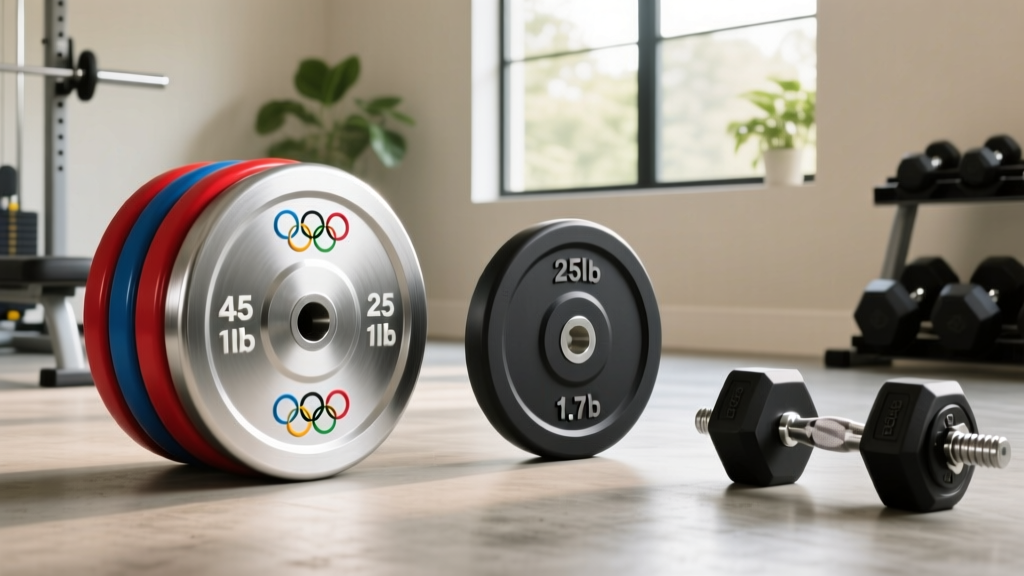
Standard vs Olympic Plates: Alternate Dumbbell Front Raise Guide
Discover how standard vs Olympic plates impact the alternate dumbbell front raise. A beginner step-by-step guide to loading, gripping, and lifting safely.

The Core Dilemma: 1-Inch Standard vs. 2-Inch Olympic
When building a home gym or stepping into a commercial weight room, beginners often overlook the most fundamental piece of equipment: the weight plate. Specifically, the choice between 1-inch standard plates and 2-inch Olympic plates dictates not only your budget but the biomechanical safety of isolation exercises. While compound lifts like deadlifts demand Olympic setups, isolation movements tell a different story. This guide breaks down exactly how these two plate systems impact one of the most common shoulder builders: the alternate dumbbell front raise.
The alternate dumbbell front raise targets the anterior deltoid, requiring strict stabilization. Because you are holding one dumbbell statically while the other moves, any equipment failure or awkward weight distribution can lead to severe shoulder impingement. According to biomechanical data from ExRx.net, the anterior deltoid acts as the primary synergist in shoulder flexion, meaning your grip, the dumbbell handle thickness, and the plate profile directly influence the lift's safety and efficacy.
Anatomy of the Plates: What Are You Actually Lifting?
Before we load the dumbbells, we must understand the physical dimensions and 2026 market realities of both plate types.
Standard Plates (1-Inch Center Hole)
- Dimensions: 1-inch center hole. Usually paired with 14-inch to 16-inch solid steel dumbbell handles.
- Materials: Cast iron, cement-filled vinyl, or rubberized grips.
- 2026 Pricing: Cast iron averages $1.20 to $1.50 per pound; vinyl averages $0.80 per pound.
- Collar Type: Threaded spin-lock collars or spring clips.
Olympic Plates (2-Inch Center Hole)
- Dimensions: 2-inch center hole. Requires specialized Olympic dumbbell handles (e.g., Troy Barbell V-Grip or Ivanko OB-2), which feature thicker 28mm-30mm grips and rotating or fixed sleeves.
- Materials: Precision cast iron, urethane, or rubber bumper plates.
- 2026 Pricing: Urethane and premium bumpers range from $3.50 to $5.50+ per pound.
- Collar Type: Heavy-duty spring collars (e.g., Rogue AH-1) or lock-jaw clamps.
Step-by-Step Guide: Loading and Executing the Raise Safely
Whether you are using standard or Olympic gear, executing the alternate dumbbell front raise requires a meticulous setup. Follow this beginner-friendly workflow to protect your rotator cuff and maximize muscle tension.
Pro-Tip for Beginners: Never lift dumbbells from the floor to start a front raise. Clean them to your shoulders first, or pick them up from a raised bench to avoid lower back rounding.- Step 1: Calculate and Load Symmetrically. If you are targeting 25 lbs per hand, load a 10 lb and a 5 lb plate on each side of the handle. Symmetrical loading prevents the dumbbell from tilting in your palm, which can strain the distal radioulnar joint in your wrist.
- Step 2: Secure the Collars (The Critical Step).
- For Standard Spin-Locks: Tighten the threaded nut until it is flush against the plate. Use a rubber mallet to tap it snug if necessary. Loose spin-locks will rattle and shift during the eccentric (lowering) phase.
- For Olympic Spring Collars: Squeeze the handles, slide the collar completely onto the 2-inch sleeve until it clicks past the lip, and release. Ensure the rubber grip pads are fully touching the iron plate.
- Step 3: The Stance and Grip. Stand with feet shoulder-width apart. Hold both dumbbells in front of your thighs with a pronated (overhand) grip. If using Olympic handles, expect the thicker 30mm grip to tax your forearms more than the standard 25mm grip.
- Step 4: The Concentric Phase (The Lift). Keeping a slight 10-degree bend in your elbow to protect the joint, exhale and raise the right dumbbell straight up until it reaches eye level. The static left arm must remain rigidly locked in place.
- Step 5: The Eccentric Phase (The Lower). Inhale and slowly lower the right dumbbell over a strict 3-second count. Resist gravity. Once the right dumbbell returns to the thigh, immediately begin the concentric phase with the left arm.
Comparison Matrix: Standard vs. Olympic for Isolation Lifts
How do these two systems actually perform when subjected to the specific demands of alternating shoulder isolation? Review the data matrix below.
| Feature | Standard (1-Inch) | Olympic (2-Inch) |
|---|---|---|
| Handle Grip Diameter | ~25mm (Easier for small hands) | ~28mm-30mm (Requires stronger grip) |
| Plate Profile (10 lb) | ~9.0 inches (Compact, no clipping) | ~17.7 inches for bumpers (Can clip thighs) |
| Collar Security | Low (Spin-locks vibrate loose) | High (Spring collars lock tight) |
| Sleeve Rotation | None (Fixed solid bar) | Often features bushings/bearings |
| Cost per Pound (2026) | $0.80 - $1.50 | $2.50 - $5.50 |
Real-World Failure Modes & Edge Cases
As a beginner, you might assume a weight plate is just a weight plate. However, experienced lifters know that equipment failure during an alternate dumbbell front raise usually happens in one of three specific ways:
1. The Bumper Plate Clipping Issue
If you choose Olympic plates and opt for rubber bumper plates (like the highly rated Rogue Echo Bumpers), you must consider diameter. A 10 lb Rogue Echo bumper has a full 17.7-inch diameter. If you load two 10 lb bumpers onto an Olympic dumbbell handle, the sheer width of the plates can clip your thighs during the eccentric lowering phase, forcing you to widen your stance unnaturally. Solution: Use standard cast iron plates or specialized Olympic "fractional/technique" plates with smaller diameters for dumbbell isolation work.
2. Spin-Lock Rattle and Moment Arm Shift
During the alternating motion, the static arm experiences micro-vibrations. Standard threaded spin-lock collars are notorious for vibrating loose over a 3-set, 12-rep scheme. If the collar loosens, the plates slide half an inch outward. This shifts the center of mass, artificially lengthening the moment arm and placing sudden, uncalibrated shear stress on the anterior deltoid tendon. Solution: If using standard plates, upgrade to 1-inch Lock-Jaw clamps instead of relying on factory spin-locks.
3. Grip Fatigue Masking Shoulder Failure
Because Olympic dumbbell handles are thicker to accommodate the 2-inch sleeve, your forearms will fatigue faster. Beginners often mistake grip failure for shoulder failure, ending the set before the anterior deltoid is fully stimulated. Solution: If using Olympic handles for front raises, consider using lifting straps for your working sets to isolate the shoulder completely.
"Shoulder impingement often occurs when the humeral head translates superiorly during a front raise due to poor scapular control or awkward equipment geometry. Ensuring your dumbbell profile allows for a natural, unobstructed range of motion is critical for long-term joint health."
Final Verdict & Purchasing Framework
So, which system should you invest in for your home gym in 2026? The answer depends entirely on your broader training goals and budget.
Choose Standard Plates If: You are on a strict budget (under $200 for a starter set), have smaller hands that struggle with thick grips, and primarily perform isolation movements like the alternate dumbbell front raise, lateral raises, and tricep extensions. The compact profile of standard cast iron plates makes them superior for dumbbell isolation work where spatial awareness is key.
Choose Olympic Plates If: You plan to progress to heavy barbell compound lifts (squats, deadlifts, Olympic lifts) and want a unified ecosystem. While Olympic dumbbell handles are an extra investment ($40-$80 per handle), the superior collar security and rotating sleeves reduce torque on the wrists during dynamic movements. Just be sure to purchase narrow-profile urethane Olympic plates rather than wide bumpers for your dumbbell isolation days.
By understanding the mechanical nuances between 1-inch and 2-inch systems, you can build a safer, more efficient home gym and execute the alternate dumbbell front raise with perfect form and zero equipment anxiety.
More gear to consider
All reviews
Troubleshooting the Dumbbell Heart: Neoprene Coated Weight Mistakes
Cast Iron vs Competition Kettlebells & Dumbbell T Raise Value Guide

Top Dumbbell Racks to Organize Your Beginner Dumbbell Routine (2026)
How to Hit Triceps With Dumbbells & Barbell Knurling Buying Mistakes
How to Use Dumbbells for Arms: Adjustable Setup & 2026 Review