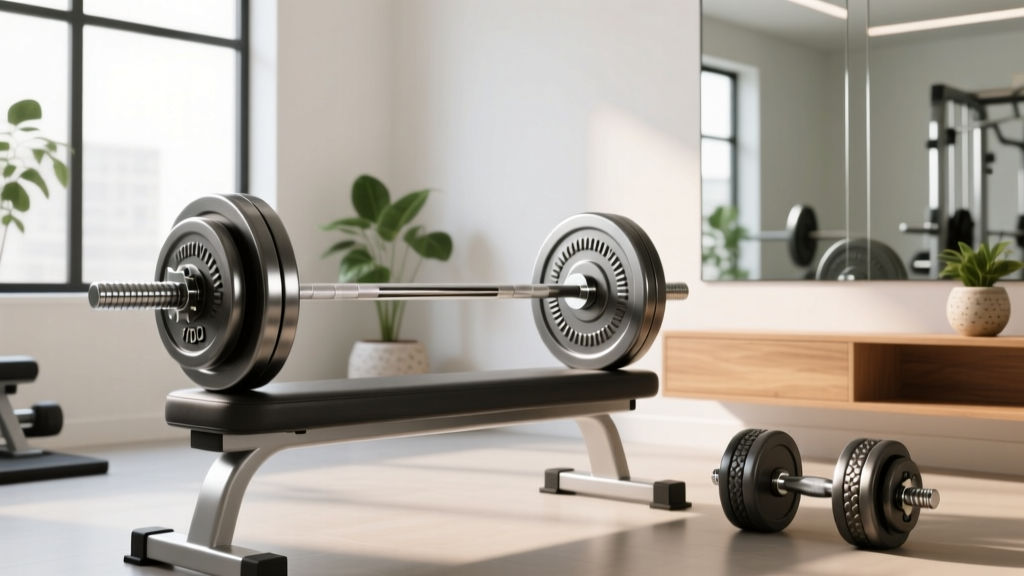
Olympic vs Standard Plate Setup & Dumbbell Exercises for Seniors with Pictures
Master your multi-gen home gym setup. We compare Olympic vs standard weight plates for heavy racks and guide safe dumbbell exercises for seniors.

Building a comprehensive home gym in 2026 requires more than just purchasing equipment; it demands spatial engineering, safety planning, and an understanding of biomechanical compatibility. Whether you are outfitting a garage for heavy powerlifting or designing a multi-generational fitness space that accommodates aging parents, the foundation of your setup relies on choosing the right free weights and installing them correctly. This complete setup and installation walkthrough will dissect the critical differences between weight plate types—specifically Olympic vs standard configurations—and guide you through creating a safe, accessible mobility zone for older adults.
The Core Decision: Olympic vs. Standard Weight Plates
The most common bottleneck in home gym installations is the barbell and plate ecosystem. Choosing between Olympic and standard weight plates dictates not only your budget but also the type of power rack, barbell, and safety equipment you can safely install. Standard plates feature a 1-inch (25.4mm) center aperture, while Olympic plates utilize a 2-inch (50.6mm) aperture. However, the differences extend far beyond the center hole.
Dimensional Specs and Rack Clearance
According to the International Weightlifting Federation (IWF), a standard 20kg/45lb Olympic plate must have a diameter of exactly 450mm (17.72 inches). This standardized diameter is a critical safety metric for your rack installation. When you set up J-cups and safety spotter straps on a power rack, you typically position them about 16 to 17 inches off the floor to allow the barbell to clear the ground during a failed squat or bench press. Because Olympic plates maintain a 17.72-inch diameter regardless of whether they are 10lb or 45lb plates (in the case of calibrated steel or bumper plates), the barbell will always rest safely on the spotter arms.
Standard plates, conversely, scale their diameter down with the weight. A 45lb standard cast-iron plate might only be 14 inches in diameter, and a 25lb plate could be as small as 11 inches. If you fail a rep and the barbell drops onto the safety straps, the smaller plates will slip right through the gap, causing the bar to crash to the floor. This makes standard plates inherently dangerous for heavy, unsupervised rack installations.
⚠️ Critical Installation Warning: Never install standard 1-inch safety spotter straps on a rack designed for Olympic lifting if you plan on squatting or benching heavy. The dimensional variance of standard plates creates a severe crushing hazard.Load Capacity and Barbell Whip
Standard barbells and plates are generally rated for a maximum load of 200 to 300 pounds. Beyond this threshold, the 1-inch solid steel or tubular bars begin to exhibit permanent deformation (bending) due to a lower yield strength (often around 35,000 PSI). Olympic barbells are constructed from high-tensile spring steel, boasting yield strengths between 165,000 and 215,000 PSI, allowing them to safely support 500 to 1,500 pounds while providing the necessary 'whip' for dynamic movements like the clean and jerk.
| Feature | Olympic Plates & Bars | Standard Plates & Bars |
|---|---|---|
| Center Aperture | 2 inches (50.6mm) | 1 inch (25.4mm) |
| 45lb Plate Diameter | 17.72 inches (450mm) | Varies (Typically 11-14 inches) |
| Max Load Capacity | 500 - 1,500+ lbs | 200 - 300 lbs |
| Avg. Cost Per Pound | $1.50 - $3.50 | $0.80 - $1.50 |
| Rack Compatibility | Universal for Power Racks | Limited to specific lightweight stands |
The Accessibility Zone: Senior Mobility & Light Dumbbells
While the heavy zone demands high-tensile steel and precise rack clearances, a truly functional multi-generational home gym must also include an accessibility zone. When designing the lighter section of the gym, many multi-generational households search for dumbbell exercises for seniors with pictures to ensure safe, visually guided movements for older family members. Translating those visual guides into a physical space requires specific equipment choices and spatial planning.
Selecting the Right Dumbbells for Aging Joints
The National Strength and Conditioning Association (NSCA) emphasizes that older adults benefit immensely from resistance training, particularly for combating sarcopenia (age-related muscle loss) and improving bone density. However, arthritic hands and reduced grip strength dictate the type of dumbbells you should install in this zone.
- Neoprene or Urethane Hex Dumbbells: Avoid traditional bare cast-iron dumbbells with aggressive knurling. Opt for 5lb to 15lb neoprene-coated hex dumbbells (such as the CAP Barbell ST-015 series). The hex shape prevents the weights from rolling away if dropped, which is a critical trip-hazard mitigation for seniors.
- Adjustable Dumbbells with Soft Grips: If space is limited, adjustable models like the Bowflex SelectTech 552 are excellent, but ensure the user can comfortably grip the wider handle. Alternatively, power-blocks offer a more compact, cage-like grip that is easier on compromised wrists.
- Storage Installation: Install a tiered, low-profile dumbbell rack no higher than 32 inches from the ground. This eliminates the need for seniors to reach overhead or bend excessively to retrieve weights, reducing lumbar strain.
The Centers for Disease Control and Prevention (CDC) recommends that older adults engage in muscle-strengthening activities of moderate or greater intensity that involve all major muscle groups on 2 or more days a week. A dedicated, well-lit corner with visual exercise charts and accessible light dumbbells makes adherence to these guidelines significantly easier.
Step-by-Step Floor Protection & Rack Anchoring
Once you have selected your Olympic plates for the heavy zone and your hex dumbbells for the senior mobility zone, the physical installation of the gym infrastructure begins. Proper flooring and anchoring are non-negotiable for safety and noise mitigation.
Step 1: Subfloor Assessment and Impact Absorption
Do not place heavy weight plates directly on concrete or plywood. Dropped Olympic plates can crack a concrete slab and will undoubtedly shatter standard ceramic tiles. Install 3/4-inch thick vulcanized rubber horse stall mats (typically 4x6 feet). These mats cost around $50 to $70 each and provide the exact density needed to absorb the kinetic energy of a dropped 45lb bumper plate without bottoming out.
Step 2: Rack Anchoring Protocol
If you are installing a full power rack or squat stand, it must be anchored to prevent tipping during uneven loading or kipping pull-ups.
- For Concrete Slabs: Use a hammer drill with a 1/2-inch masonry bit to drill holes through the rubber mat and into the concrete (minimum 3 inches deep). Insert 1/2-inch x 3-3/4-inch wedge anchors. Tighten with a torque wrench to exactly 60 ft-lbs to ensure the anchor expands properly without stripping the concrete.
- For Wood Joist Subfloors: Never anchor a rack solely to plywood or OSB subflooring. Use a stud finder to locate the underlying 2x10 or 2x12 floor joists. Drill pilot holes and secure the rack base using 3/8-inch structural lag screws (minimum 3 inches long) directly into the center of the joists.
Budgeting Your Multi-Zone Gym
Allocating your budget effectively ensures you do not compromise on safety in the heavy zone or accessibility in the senior zone. Here is a realistic 2026 cost breakdown for a hybrid setup:
- Olympic Plate & Barbell Set: $450 - $700 (Includes a 190k PSI barbell and 300lbs of urethane-coated Olympic plates).
- Power Rack with Safety Straps: $350 - $600 (Look for 11-gauge steel and 5/8-inch hardware).
- Senior Mobility Dumbbell Set: $120 - $180 (Pairs of 5, 8, 10, and 12lb neoprene hex dumbbells).
- Low-Profile Dumbbell Rack: $60 - $90.
- 3/4-inch Rubber Flooring (200 sq ft): $300 - $400.
By understanding the mechanical limitations of standard plates versus the safety and standardization of Olympic plates, you protect your home and your body. Simultaneously, by carving out a dedicated, visually guided space with accessible dumbbells, you ensure that the gym serves every generation in the household safely and effectively.
More gear to consider
All reviews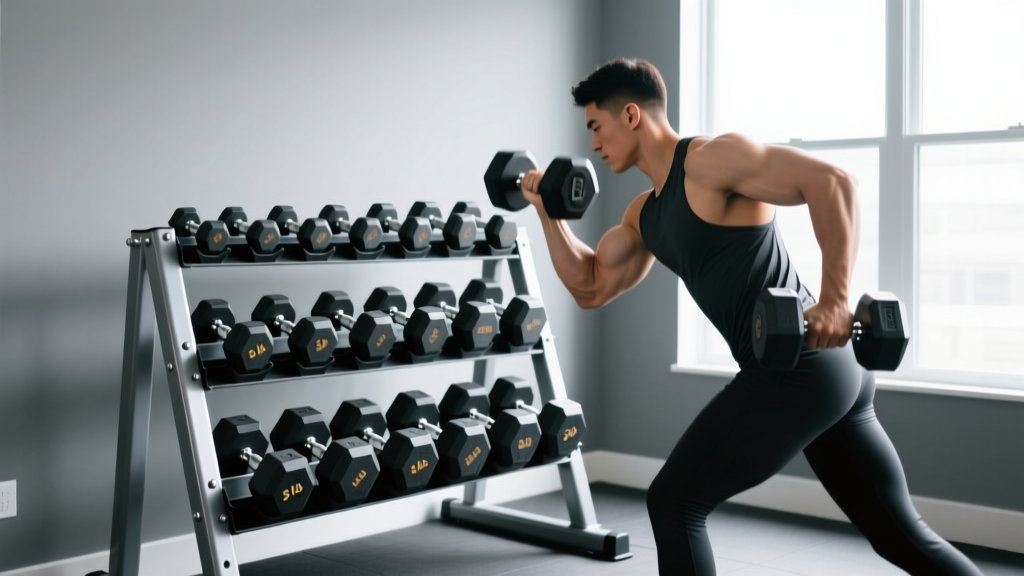
Maintaining Dumbbell Racks for Heavy Alternating Dumbbell Row Workouts

Bumper vs Iron Plates Value & Deltoid Workouts with Dumbbells
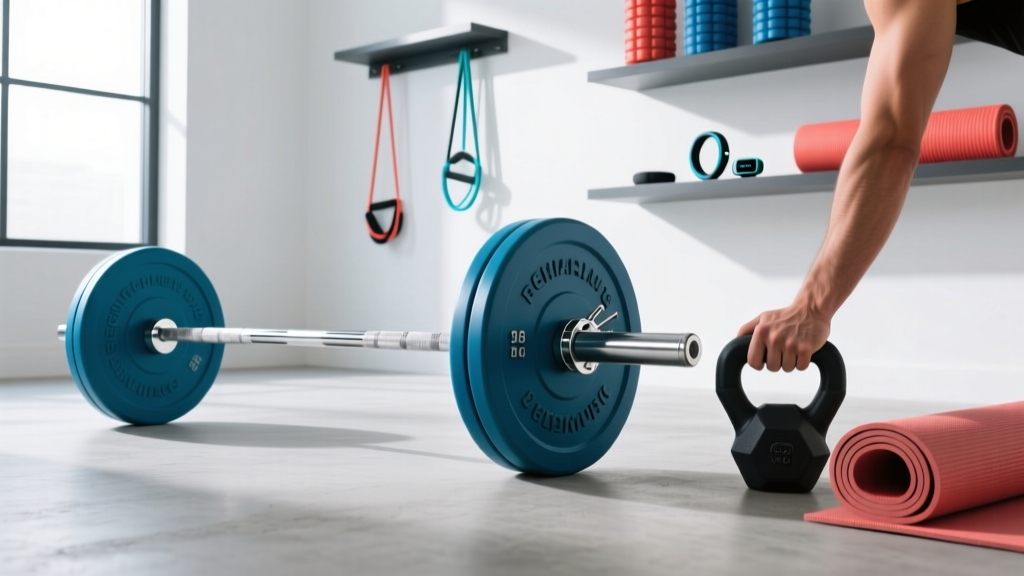
Barbell Guide: Weight, Knurling & Bicep Exercises With One Dumbbell

Best Adjustable 70 lb Dumbbells: 2026 Buyer's Guide
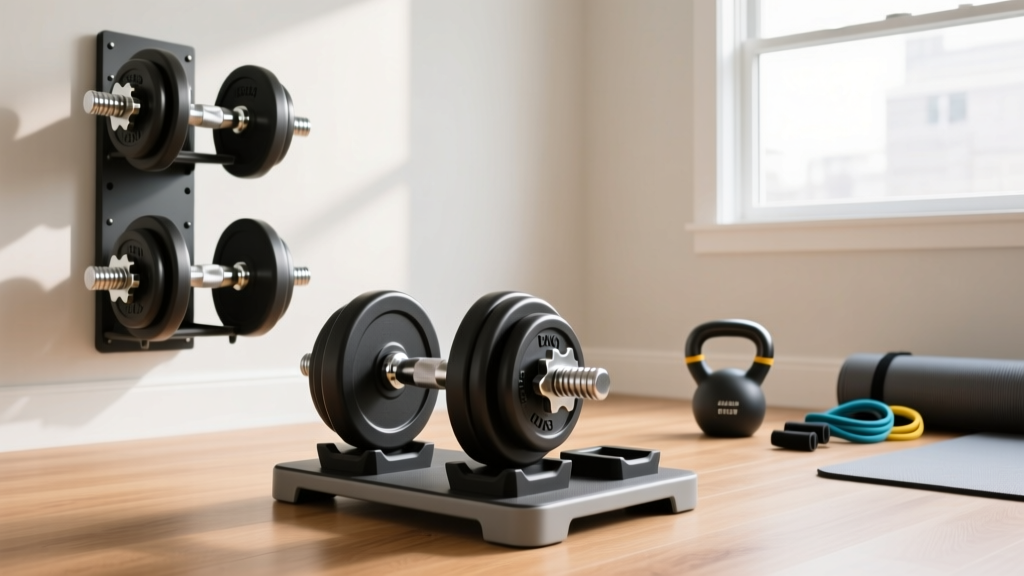
Maximize Space for Your Free Dumbbell Workout with Loadable Plates