Olympic Dumbbell & Barbell Collars: A Beginner Guide
Learn how to secure your Olympic dumbbell and barbell setups. Compare spring, clamp, and lever collars in this beginner-friendly guide.

The Hidden Danger in Your Home Gym
When beginners start building a home gym, they often allocate their entire budget to the barbell, weight plates, or a pair of loadable Olympic dumbbell handles. The barbell collars—the small clamps that keep the plates from sliding off the sleeve—are usually an afterthought. This is a critical mistake. A shifting 45-pound plate during a heavy bench press or a dropped Olympic dumbbell can cause catastrophic equipment damage, severe toe injuries, or even life-threatening barbell tipping.
In this beginner-friendly, step-by-step guide, we will break down the exact mechanics of barbell collars, compare the most popular types on the market in 2026, and teach you how to properly secure your weights for maximum safety.
⚠️ Safety Warning: Never load an Olympic sleeve without a collar. Even if you are just doing light bicep curls, a loose plate can shift, altering the center of gravity and causing a severe wrist sprain or a dropped weight.Step 1: Understanding the Olympic Sleeve Standard
Before buying collars, you must understand the equipment you are clamping. The term 'Olympic' refers to the standardized 2-inch (50mm) diameter of the barbell sleeve. This is drastically different from 'standard' equipment, which uses a 1-inch (25mm) sleeve. If you accidentally buy 1-inch spring clips, they will slide right off your Olympic barbell.
Why Olympic Dumbbell Setups Need Special Attention
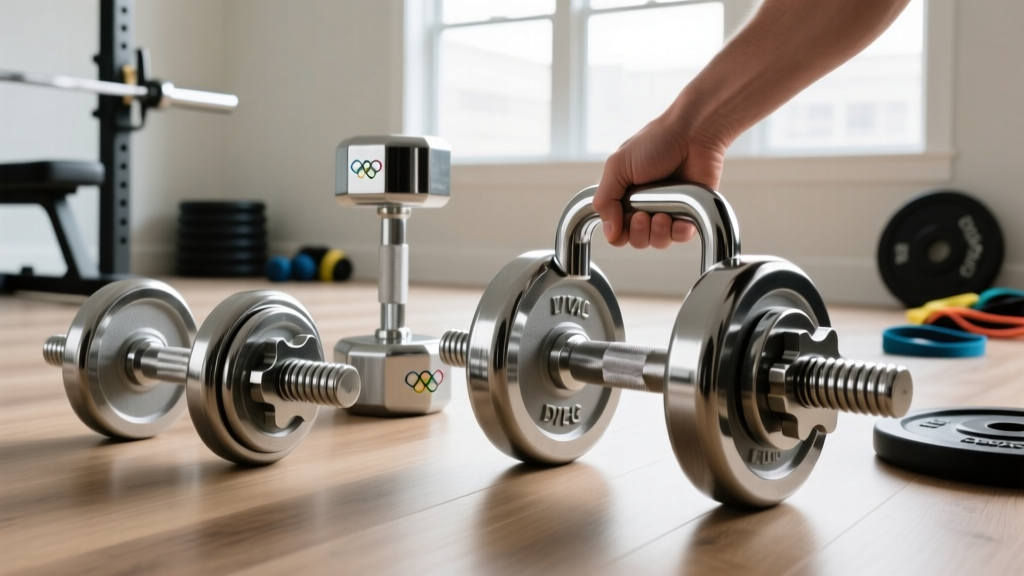
Many lifters buy loadable Olympic dumbbell handles (such as the CAP Barbell 2-Inch Dumbbell Handle or the Rogue Loadable Dumbbell Handle) to save space and money. However, these handles present a unique geometric challenge. While a standard barbell sleeve is about 16.3 inches long, an Olympic dumbbell sleeve is typically only 6 to 8 inches long.
This short sleeve length means the physical footprint of your collar matters immensely. A bulky collar might eat up 2 inches of your sleeve space, leaving you unable to load enough plates to reach your target weight. According to BarBend's comprehensive collar reviews, selecting a low-profile clamp is mandatory for heavy dumbbell pressers who need to maximize plate capacity on short sleeves.
Step 2: Comparing the 4 Main Collar Types
Not all collars are created equal. The clamping force, ease of use, and durability vary wildly between designs. Below is a step-by-step breakdown of the four primary collar types you will encounter, followed by a comparison matrix.
1. Spring Clip Collars
Spring clips are the most common collars found in commercial gyms. They consist of a steel wire coil with two plastic-coated handles. You squeeze the handles to expand the coil, slide it onto the 50mm sleeve, and release.
- Pros: Extremely fast to put on and take off; very lightweight; inexpensive.
- Cons: Clamping force degrades over time as the metal fatigues; they can slide off if the barbell is dropped vertically.
- Top Model: Rogue HG 2.0 Collars (approx. $18 - $25 per pair).
2. Jaw Clamp / Lock-Jaw Collars
Jaw clamps use a heavy-duty plastic or aluminum housing with a cam-lever mechanism that bites down onto the sleeve. They lock into place with a satisfying, secure click.
- Pros: Excellent clamping force; highly durable; low-profile design leaves more room on Olympic dumbbell sleeves.
- Cons: The plastic housing can crack if dropped directly onto concrete from overhead height; slightly slower to remove than spring clips.
- Top Model: Lock-Jaw Pro (approx. $30 - $40 per pair).
3. Spinlock / Threaded Collars
These are the traditional hex-nuts that thread onto the grooved ends of older or budget-friendly Olympic dumbbell handles.
- Pros: Virtually impossible to shake loose; extremely cheap.
- Cons: Takes 15–20 seconds to thread on and off per side; ruins the flow of a fast-paced workout; requires a threaded sleeve (will not work on smooth barbell sleeves).
- Top Model: CAP Barbell Threaded Spinlock (approx. $10 - $15).
4. Lever / Quick-Release Collars
These are the premium, competition-grade collars used in Olympic weightlifting and powerlifting. They feature an aluminum body with a heavy-duty lever that applies massive, even pressure around the entire circumference of the sleeve.
- Pros: Maximum clamping force; protects the barbell knurling from scratching; will not budge even during massive barbell drops.
- Cons: Expensive; heavy (competition collars weigh exactly 2.5kg each); bulky, making them poor choices for short Olympic dumbbell handles.
- Top Model: Eleiko Olympian Training Collars (approx. $75 - $95 per pair, viewable on Eleiko's official site).
Collar Comparison Matrix
| Collar Type | Example Model | Avg. Price | Sleeve Space Used | Best Use Case |
|---|---|---|---|---|
| Spring Clip | Rogue HG 2.0 | $18 - $25 | ~0.75 inches | CrossFit, general fitness |
| Jaw Clamp | Lock-Jaw Pro | $30 - $40 | ~1.0 inches | Olympic dumbbells, heavy drops |
| Spinlock | CAP Threaded | $10 - $15 | ~1.5 inches | Budget home gyms, slow pacing |
| Lever / Quick | Eleiko Training | $75 - $95 | ~1.75 inches | Olympic lifting, Powerlifting |
Step 3: Step-by-Step Loading and Securing Procedure
Knowing which collar to buy is only half the battle. You must apply it correctly to ensure safety. Follow this step-by-step flow every time you load your barbell or Olympic dumbbell handles.
- Wipe the Sleeve: Use a microfiber cloth to wipe chalk, sweat, and oil off the 50mm sleeve. Moisture acts as a lubricant and can reduce the friction between the collar and the steel sleeve by up to 40%.
- Load Plates Tightly: Slide your weight plates onto the sleeve. Push them firmly inward so they are flush against the inner shoulder of the barbell or dumbbell handle. Eliminate any 'dead space' between the plates.
- Apply the Collar Flush: Slide the collar onto the sleeve until it is physically touching the outermost weight plate. Do not leave a gap between the plate and the collar.
- Engage the Lock:
- For Spring Clips: Ensure the wire loop is fully seated and the handles are released completely.
- For Jaw Clamps: Squeeze the jaws together and push the cam-lever down until you hear a distinct 'click'. Tug the collar outward to verify it is locked.
- For Lever Collars: Close the aluminum lever. It should require a firm amount of thumb pressure to snap into the locked position.
- The 'Shake Test': Before lifting, pick up the barbell or dumbbell and give it a mild horizontal shake. If you hear the plates clanking together, the collar is too loose or improperly seated. Re-adjust immediately.
Real-World Failure Modes and Troubleshooting
Even with the best equipment, things can go wrong. Here are the most common failure modes identified by strength coaches and how to troubleshoot them, based on safety guidelines often referenced in Rogue Fitness equipment manuals.
- Plastic Housing Fatigue (Jaw Clamps): If you frequently drop your Olympic dumbbells from shoulder height onto rubber matting, the plastic housing of jaw clamps can develop micro-fractures. Fix: Inspect your clamps monthly. If the plastic looks chalky or has visible hairline cracks near the hinge, replace them immediately.
- Spring Tension Loss: Over time, the steel coil in spring clips stretches out, resulting in a weak grip on the 50mm sleeve. Fix: Spring clips are a consumable item. Expect to replace them every 12 to 18 months if used in a busy home gym.
- Sleeve Tolerance Issues: Not all 50mm sleeves are exactly 50mm. Some budget Olympic dumbbell handles measure 49.5mm, while premium barbells might measure 50.2mm. A lever collar calibrated for exactly 50mm might fail to lock on a thicker sleeve, or spin freely on a thinner one. Fix: Always test your collars on your specific dumbbell handles before attempting a heavy working set.
Frequently Asked Questions
Q: Can I use standard 1-inch collars on an Olympic barbell with an adapter?
A: No. While adapters exist that slide onto a 50mm sleeve to allow the use of 1-inch plates, you should never use them for heavy lifting. The adapter introduces a secondary point of failure, and the collars will not secure the adapter itself to the barbell sleeve.
Q: Do I need to buy competition collars that weigh exactly 2.5kg?
A: Unless you are competing in a sanctioned powerlifting or Olympic weightlifting meet where the collar weight is calculated into the total barbell weight, you do not need 2.5kg collars. For home gym use, lightweight aluminum or heavy-duty plastic clamps (weighing between 0.2kg and 0.5kg) are much more practical and user-friendly.
Q: What is the best collar for a loadable Olympic dumbbell handle?
A: Jaw clamps (like the Lock-Jaw Pro) are widely considered the best choice for Olympic dumbbell handles. They provide immense clamping force to survive the high-impact drops typical of dumbbell chest presses, and their relatively thin profile ensures you don't waste precious sleeve space, allowing you to load more weight plates.
More gear to consider
All reviews
Dumbbell Triceps Kickbacks: Rubber Hex vs Urethane 2026 Market Trends
EZ Curl Bar vs Straight Bar: Upgrading Your Dumbbell Workout Regimen
Cast Iron vs Competition Kettlebells: No Dumbbell Bicep Workout

Neoprene Dumbbells for Home Use: Dumbbell Floor Press for Triceps

EZ Curl Bar vs Straight Bar & Dumbbell Core Exercises