
Gym Setup: Olympic Barbell Knurling & Leg Exercises with Dumbbells
Master your home gym setup with our Olympic barbell knurling and weight guide, plus a complete walkthrough of effective leg exercises with dumbbells.

The Ultimate 2026 Lower-Body Free Weight Zone Walkthrough
Designing a high-performance home gym requires more than just dropping a power rack into a spare garage. When your programming demands heavy bilateral barbell work paired with high-volume unilateral movements, your equipment selection and spatial installation must be flawless. In this complete setup walkthrough, we bridge the gap between heavy iron and functional hypertrophy. We will dissect the critical nuances of an Olympic barbell buying guide—specifically focusing on weight tolerances and knurling profiles—and then transition into the spatial arrangement and execution of targeted leg exercises with dumbbells to complete your lower-body development.
Phase 1: Olympic Barbell Weight and Knurling Installation
The centerpiece of any free weight zone is the Olympic barbell. However, not all 20kg bars are created equal. When installing your primary lifting station, understanding the metallurgy and surface machining of the barbell shaft is paramount for both performance and longevity.
Weight Standards and Shaft Tolerances
A standard men's Olympic barbell weighs exactly 20kg (44.09 lbs) and features a 28mm shaft diameter. Women's Olympic bars weigh 15kg (33.07 lbs) with a 25mm shaft. For a versatile home gym setup in 2026, investing in a high-quality 28mm or 28.5mm multi-purpose bar is the gold standard. Look for a tensile strength rating of at least 190,000 PSI to prevent permanent deformation during heavy squats. Premium models like the Rogue Ohio Bar (priced around $345) utilize 190k PSI steel, while elite weightlifting bars from Eleiko can exceed $1,150 and boast 215k+ PSI tensile strength with specialized needle bearings for sleeve rotation.
Decoding Knurling Profiles: The Grip Matrix
Knurling is the cross-hatched pattern machined into the steel shaft. It dictates your grip security and how much the bar will tear your calluses. When selecting your barbell, you must choose a knurl profile that matches your primary training modality.
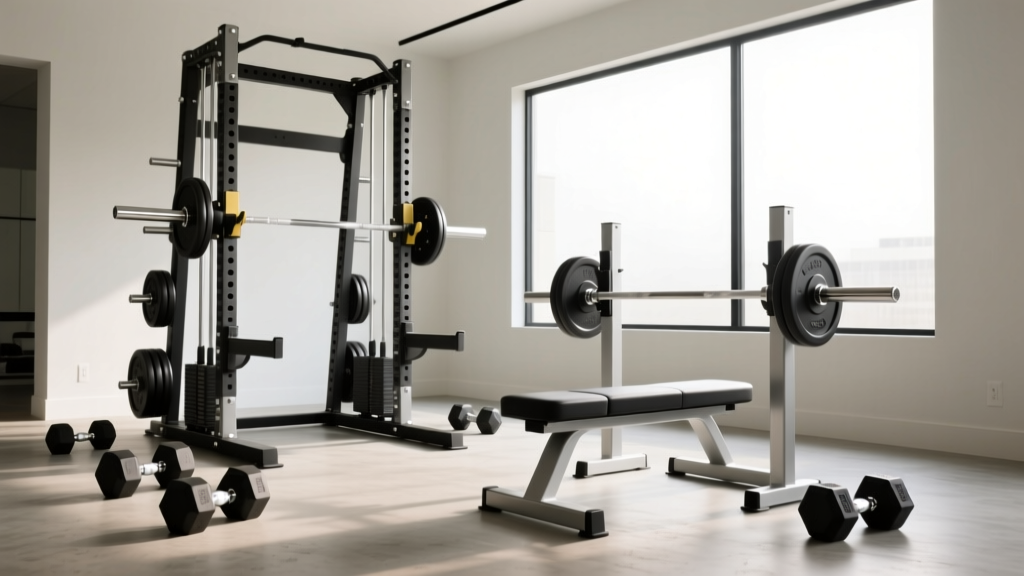
Expert Installation Tip: Always position your barbell storage horizontally on J-cups or vertically in a dedicated weight tree at least 3 feet away from your dumbbell staging area to prevent accidental sleeve-to-dumbbell impacts, which can chip urethane coatings and damage barbell bearings.| Knurl Profile | Geometry & Depth | Aggressiveness | Best Application | Benchmark Model (2026) |
|---|---|---|---|---|
| Volcano | Rimmed peak with hollow center | Medium-High | Powerbuilding, Heavy Squats | Rogue Ohio Bar |
| Mountain | Sharp, prominent peaks | High (Aggressive) | Powerlifting, Low-Rep Deadlifts | Kabuki Strength New Gen |
| Hill | Rounded, shallow valleys | Low (Passive) | Olympic Weightlifting, Cleans | Eleiko Olympic WL Bar |
According to biomechanical analyses of grip fatigue, a volcano knurl provides maximum surface area contact without the sharp puncture points of a mountain profile, making it the superior choice for lifters who also perform high-rep dumbbell accessory work immediately after barbell compounds.
Phase 2: Spatial Setup for Dumbbell Integration
While the barbell builds absolute strength, integrating leg exercises with dumbbells is non-negotiable for correcting left-to-right strength asymmetries and maximizing hypertrophy. A study published in the NCBI highlights that unilateral training significantly reduces bilateral deficits and improves athletic stabilization.
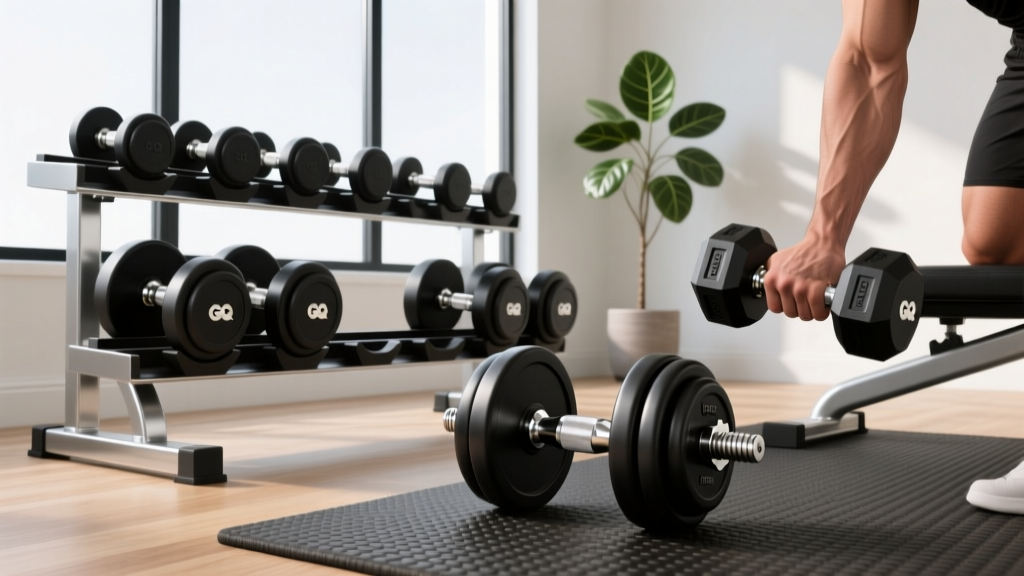
To facilitate seamless supersets, your installation must account for transition space. Clear a minimum 4-foot by 6-foot lateral zone adjacent to your power rack. If you are using adjustable dumbbells (like the Nuobell 80s, retailing at $475 in 2026), place the cradle on a reinforced 12-inch high stand. This elevation prevents excessive lumbar flexion when picking up heavy loads for movements like Romanian Deadlifts.
Phase 3: Walkthrough of Leg Exercises with Dumbbells
Once your barbell primary lifts (Squats, RDLs) are complete, transition to the dumbbell zone. Below is a step-by-step installation and execution guide for the three most effective unilateral leg movements to program into your 2026 mesocycle.
1. Deficit Reverse Lunges
Setup: Stand on a 45lb bumper plate or a 3-inch low profile platform. Hold a pair of 50lb-80lb hex dumbbells at your sides.
Execution: Step backward, allowing your rear knee to travel below the plane of your front foot. The deficit increases the stretch on the gluteus maximus and rectus femoris. According to ExRx.net's biomechanical directory, the increased range of motion heavily recruits the quadriceps at the bottom position.
Programming: 3 sets of 8-10 reps per leg, resting 90 seconds.
2. Single-Leg Dumbbell Romanian Deadlift (RDL)
Setup: Hold a single heavy dumbbell (60lb+) in the hand opposite to the working leg. Stand 2 feet away from the power rack uprights for balance support if needed.
Execution: Hinge at the hips, pushing your glutes toward the wall behind you while maintaining a neutral spine. The contralateral load forces the obliques and quadratus lumborum to resist rotational torque, building a bulletproof core alongside the hamstrings.
Programming: 3 sets of 10-12 reps per leg.
3. Heel-Elevated Goblet Squats
Setup: Place two 10lb flat weight plates on the floor, spaced 12 inches apart. Rest your heels on the plates. Hold a single 80lb-100lb dumbbell vertically against your chest.
Execution: Descend deeply, allowing your knees to track far over your toes. The heel elevation removes ankle dorsiflexion limitations, forcing the vastus medialis oblique (VMO) and anterior quads to handle the entire load.
Programming: 4 sets of 12-15 reps, utilizing a 3-second eccentric descent.
"The transition from bilateral barbell loading to unilateral dumbbell work is where true lower-body aesthetics and functional stability are forged. Do not neglect the setup of your accessory zone; a poorly placed dumbbell rack will ruin the flow of a high-intensity leg day." — FitGearPulse Biomechanics Team
Phase 4: Equipment Maintenance and Safety Protocols
To protect your investment, your installation walkthrough must conclude with maintenance protocols. Olympic barbell sleeves require periodic lubrication. In 2026, most premium bars utilize self-lubricating bronze bushings or sealed needle bearings, but you should still wipe down the knurling with a stiff nylon brush and a light mist of 3-in-One oil every 30 days to prevent dead skin and chalk from compacting into the machined grooves. This preserves the volcano or mountain peaks, ensuring your grip remains secure during those heavy leg exercises with dumbbells and barbells alike.
Furthermore, protect your subfloor. Install 3/4-inch thick vulcanized rubber horse stall mats under the barbell zone, but consider using interlocking 5/8-inch EVA foam tiles in the dumbbell lunge zone. The slight compression of the EVA foam provides better shock absorption for dropping heavy dumbbells after a grueling set of deficit lunges, extending the lifespan of both your flooring and your adjustable dumbbell internal mechanisms.
More gear to consider
All reviews
Olympic Barbell Guide: Knurling & Bicep Exercises Without Dumbbells

Olympic vs Standard Plates: Setup Guide for Your Dumbbell Rack
Top Loadable Dumbbells for Lower Chest Dumbbell Exercises (2026)
Power Rack vs Squat Stand: How Dumbbell Shape Dictates Your Choice

Barbell Knurling Guide & Bowflex Dumbbell Workout Plan PDF Setup
