Olympic Barbell Weight & Knurling Guide: Plus Dumbbell Organizer Setups
Master Olympic barbell weight tolerances and knurling patterns, plus learn how to pair your setup with the right dumbbell organizer for a safe home gym.

The Anatomy of an Olympic Barbell: Weight Tolerances and Steel Types
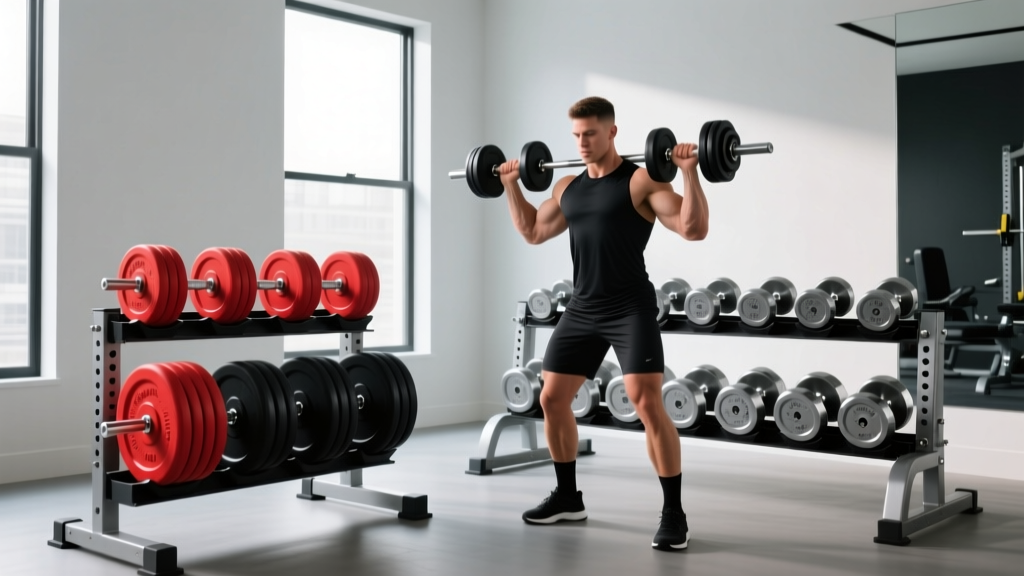
Building an elite free weights zone in 2026 requires looking past the aesthetic of your gym and diving into the metallurgy and engineering of your equipment. When evaluating an Olympic barbell, the stated weight—typically 20kg (44.09 lbs) for men's competition bars or 45 lbs for standard commercial bars—is just the baseline. The true differentiator lies in the manufacturing tolerances and the steel's tensile strength.
Expert Callout: Yield Strength vs. Tensile StrengthMany buyers confuse these two metrics. Tensile strength (measured in PSI) is the point at which the steel will physically snap. Yield strength is the point at which the barbell will bend and fail to return to its original straight form. For heavy powerlifting, you want a yield strength tested via load ratings (e.g., Rogue's 190,000 PSI minimum), while Olympic weightlifters prioritize high tensile strength combined with whip (flexibility).
According to the historical and technical specifications outlined by international governing bodies, a certified men's Olympic weightlifting bar must weigh exactly 20kg, with the collar sleeves accounting for a specific portion of that mass. Premium brands like Eleiko and Uesaka provide calibration certificates guaranteeing their bars are within 10 grams of the 20kg mark. Conversely, budget-friendly $150 barbells found on big-box marketplaces often weigh anywhere from 42 to 47 lbs, which can severely skew your progressive overload tracking over a multi-year training cycle.
Decoding Knurling: Aggressive, Moderate, and Passive
The knurling pattern is the tactile interface between your central nervous system and the load. In modern barbell manufacturing, knurling is categorized by its geometric cut and depth:
- Volcano Knurling: The gold standard for powerlifting and heavy deadlifts. The machine cuts a sharp ring but leaves the peak intact, creating a 'rim' that digs into the skin without tearing it. Depth typically ranges from 1.2mm to 1.5mm.
- Hill Knurling:Common in Olympic weightlifting bars (like the Eleiko Sport Training Bar). The peaks are flattened or rounded off to prevent tearing the skin during the rapid barbell turnover in the clean and jerk. Depth is usually passive, around 0.5mm to 0.8mm.
- Mountain Knurling:Found mostly on cheap, entry-level bars. The cut leaves sharp, pointy peaks that feel aggressive initially but wear down quickly and cause callous tearing.
Furthermore, you must consider the knurl markings. As detailed in extensive testing databases like Garage Gym Reviews' barbell archives, an IWF-certified bar features a single smooth ring marking 910mm apart, while an IPF powerlifting bar features dual rings 810mm apart. Multipurpose bars often include both, making them the most versatile choice for hybrid home gyms.
Comparison Matrix: Top 2026 Olympic Barbells by Knurl and Use-Case
Selecting the right shaft requires matching the knurl aggressiveness and steel diameter to your primary training modality. Below is a comparison of three benchmark barbells dominating the 2026 market.
| Barbell Model | Shaft Diameter | Knurl Type & Feel | Center Knurl | Est. Price (2026) |
|---|---|---|---|---|
| Rogue Ohio Power Bar (Stainless) | 29mm | Aggressive Volcano | Yes (Wide) | $395.00 |
| Eleiko Sport Training Bar | 28mm | Moderate Hill | Yes (Narrow) | $880.00 |
| American Barbell Elite Bearing | 28.5mm | Passive / Smooth | No | $315.00 |
Completing the Free Weight Zone: Pairing Your Barbell with a Dumbbell Organizer
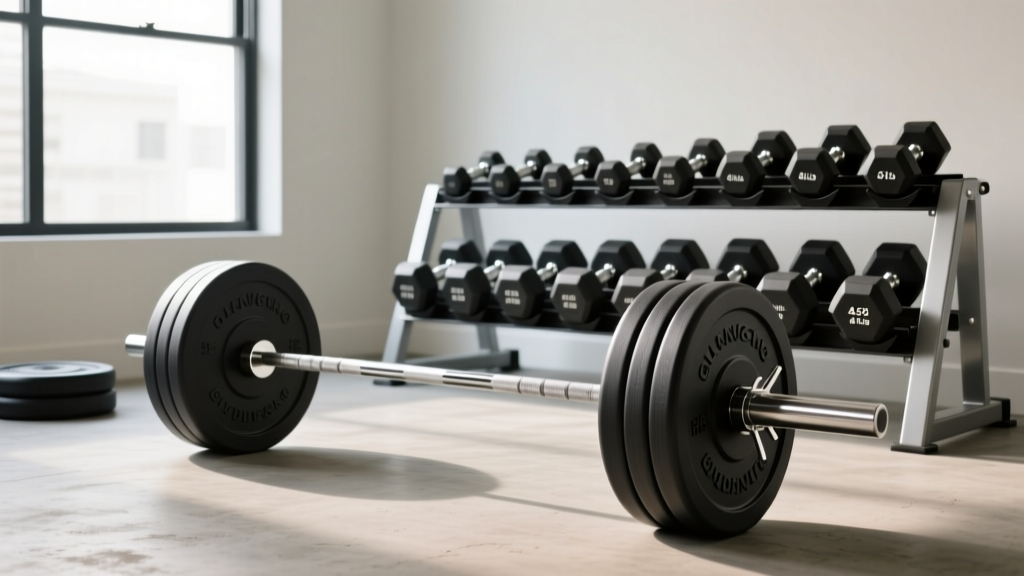
A premium Olympic barbell is only as good as the ecosystem it lives in. Once you have selected your primary barbell, shaft diameter, and accompanying calibrated bumper plates, managing your secondary implements becomes critical. This is where selecting the right dumbbell organizer transitions from a mere convenience to a vital safety, spatial, and equipment-longevity investment.
Leaving 50lb or 100lb hex dumbbells scattered across rubber flooring creates severe tripping hazards and degrades the urethane coating over time. A dedicated dumbbell organizer elevates the implements, optimizes your gym's footprint, and streamlines your supersets and drop-sets.
Dumbbell Organizer Load Limits and Safety Margins
When shopping for a dumbbell organizer in 2026, you must look past the marketing photos and inspect the steel gauge and weld quality. The market is generally split into two primary designs:
- 3-Tier Horizontal Racks: Ideal for commercial spaces and spacious garage gyms. These racks store pairs horizontally. Look for 11-gauge or 12-gauge steel tubing. A high-quality 3-tier rack (such as the Rogue 3-Tier Dumbbell Rack) boasts a static load capacity exceeding 1,200 lbs and features UHMW plastic saddles to prevent scratching your expensive urethane dumbbells.
- A-Frame Vertical Organizers: The ultimate space-saving solution for home gyms under 200 square feet. An A-frame dumbbell organizer stores weights vertically on angled pegs. While they occupy less than 4 square feet of floor space, you must be meticulous about loading them symmetrically to prevent tipping. Always bolt an A-frame organizer to a wall stud or use weighted base plates if your flooring does not permit drilling.
"Never place a heavy-duty dumbbell organizer directly over a seam in your horse-stall mats. The concentrated point-load of a fully loaded 3-tier rack can exceed 150 PSI on the caster feet, which will permanently indent or split standard 3/4-inch rubber matting over time. Always use a reinforced plywood sub-base or position the rack on a concrete slab."
Matching Your Organizer to Your Dumbbell Profile
Not all dumbbell organizers accommodate every dumbbell style. If you utilize adjustable dumbbells (like Nuobell or PowerBlock), standard horizontal tier racks will not work due to the blocky, non-cylindrical geometry of the handles. You must source an organizer with flat shelving or specialized adjustable-dumbbell trays. Conversely, if you use traditional rubber hex dumbbells, ensure the horizontal trays have a minimum depth of 14 inches to prevent the dumbbell heads from overhanging and creating a leverage tipping hazard.
Frequently Asked Questions
Does a center knurl matter for general fitness?
If your training consists primarily of back squats, front squats, and Olympic lifts, a center knurl is highly recommended as it provides tactile feedback and prevents the bar from sliding across your back or shoulders. If you primarily deadlift, bench press, or perform CrossFit-style high-rep cycling, a bar without a center knurl will save your collarbones and chest from unnecessary abrasion.
How much should I budget for a complete barbell and dumbbell organizer setup?
For a high-quality, lifelong setup in 2026, expect to spend between $350 and $500 on a premium stainless steel or hard-chrome Olympic barbell. A heavy-duty, 11-gauge steel dumbbell organizer will typically cost between $180 and $350, depending on whether you choose an A-frame or a 3-tier horizontal model. Do not compromise on the storage rack; cheap, 16-gauge organizers will warp under the load of heavy hex dumbbells.
What is the best way to maintain barbell knurling?
Chalk and dead skin will rapidly pack into the valleys of your knurling, reducing its aggressiveness and promoting oxidation (rust), even on stainless steel. Once a month, use a stiff nylon brush and a light application of 3-in-One oil or mineral oil to scrub the shaft. Wipe it down with a microfiber cloth to restore the original bite of the volcano or hill pattern.
More gear to consider
All reviews
Preserving Loadable Dumbbell Grips: Maintenance and Longevity Tips
Olympic vs Standard Plates: Mistakes for Dumbbell Kickbacks & Lifts
Cast Iron vs Competition Kettlebells: Layouts & Dumbbell Lateral Row

Rubber Hex vs Urethane: Best for Alternating Incline Dumbbell Curls?

EZ vs Straight Bar Care & The Best Tricep Exercises with Dumbbells