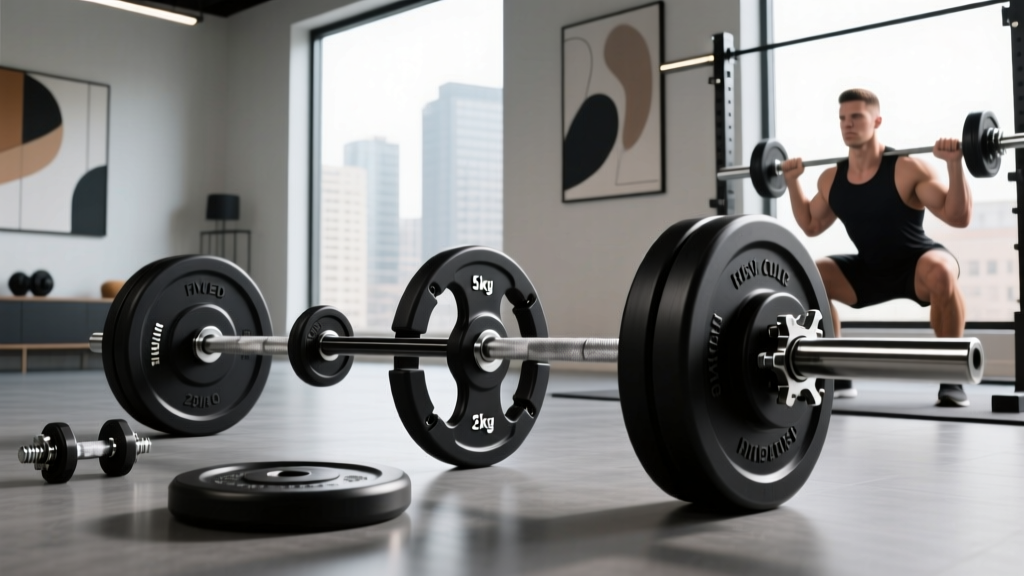
2026 Dumbbell Rack Trends: Smart Storage & Dumbbell App Integration
Explore 2026 dumbbell rack market trends, premium storage solutions, and how the modern dumbbell app ecosystem is revolutionizing home gym organization.

The 2026 Storage Paradigm: Where Heavy Iron Meets Digital Management
The free weight equipment market has undergone a radical transformation over the last three years. As home gyms shrink in square footage but expand in equipment density, spatial efficiency is no longer a luxury—it is a strict engineering requirement. According to recent data from Grand View Research's Fitness Equipment Market Report, the demand for modular, high-capacity storage solutions has grown by 14% year-over-year, driven largely by the premiumization of home and boutique fitness spaces.
However, the most fascinating trend of 2026 is not just the physical steel and UHMW plastic used in modern racks; it is the software that governs them. The rise of the dedicated dumbbell app—software ecosystems designed not just to log reps, but to map gym layouts via LiDAR, track equipment depreciation, and calculate rack load distribution—has fundamentally changed what consumers demand from physical storage. Today's buyers are selecting racks based on how well they integrate with digital inventory and spatial planning tools.
Market Snapshot: 2026 Storage Demands
- Footprint Reduction: 68% of new home gym owners prioritize vertical 3-tier racks over traditional A-frames to save floor space.
- Digital Integration: 42% of premium rack buyers use a dumbbell app with AR features to visualize rack placement before purchasing.
- Material Shift: Cold-rolled 11-gauge steel and laser-cut UHMW liners are now the baseline for racks in the $300+ category.
Tier 1: The Heavyweights of 2026 Dumbbell Storage
To understand the current market, we must analyze the physical anchors of the modern gym. The industry has largely abandoned flimsy, welded-tube A-frames in favor of modular, bolt-together 3-tier horizontal racks that align with the standard 3x3-inch upright ecosystem.
Rogue Fitness 3-Tier Dumbbell Rack
Rogue continues to dictate the premium market standard. Their 3-Tier Dumbbell Rack remains a benchmark for commercial and high-end residential gyms. Priced at approximately $495, it holds up to 10 pairs of dumbbells (ranging from 5 to 100 lbs, depending on the specific tray configuration). The defining feature is the replaceable UHMW (Ultra-High Molecular Weight) plastic liners. Unlike cheaper rubber mats that degrade and tear under the friction of knurled handles, UHMW offers a near-zero friction coefficient, protecting both the dumbbell heads and the rack frame from cosmetic and structural wear.
Rep Fitness PR-4000 Dumbbell Attachment System
For those utilizing modular power racks, the Rep Fitness PR-4000 Dumbbell Storage Attachments (priced around $149 for a 3-tier set) represent the ultimate space-saving hack. By bolting the storage trays directly to the 3x3 uprights of an existing power rack, users eliminate the need for a standalone rack entirely. This modularity is highly favored by users of spatial-mapping dumbbell app software, as it reduces the number of independent floor obstacles the app's LiDAR scanner must navigate.
Eleiko Olympic Dumbbell Rack (Wall-Mounted)
At the ultra-premium end, Eleiko’s wall-mounted solutions (starting at $1,250) cater to facilities where floor cleaning and unobstructed sightlines are paramount. By anchoring directly into structural studs or concrete via heavy-duty lag shields, these racks support immense static loads while keeping the floor entirely clear. Statista's Global Fitness Industry Data notes a 22% increase in wall-mounted storage adoption in boutique studios, driven by the need for hygienic, easily sanitized environments.
The Digital Bridge: How the Dumbbell App Ecosystem Influences Hardware
Why does a piece of heavy steel care about software? In 2026, the intersection of physical storage and digital management is defined by three critical app-driven functionalities:
- AR Spatial Planning: Modern gym management apps allow users to scan their room with a smartphone's LiDAR sensor. The app overlays 3D models of specific racks (e.g., a 36x24-inch footprint Rogue rack) to ensure clearance for door swings, baseboards, and adjacent equipment.
- Load Distribution Calculators: A sophisticated dumbbell app can calculate the center of mass on a 3-tier rack. If a user inputs their inventory (e.g., 100 lb dumbbells on the top tier, empty bottom tier), the app will flag a tipping hazard based on the rack's specific base footprint and moment of force physics.
- Urethane & Rubber Degradation Tracking: Commercial facility managers use inventory modules within their dumbbell app to track the lifecycle of their free weights. By logging drop frequencies and storage conditions, the app predicts when rubber coatings will begin to split or when steel cores might suffer fatigue, prompting proactive maintenance.
Comparative Analysis: 2026 Premium Rack Matrix
When selecting a storage solution, buyers must weigh footprint, capacity, and modularity. The table below breaks down the top three configurations dominating the 2026 market.
| Brand & Model | Footprint (L x W) | Max Capacity | Price Range (2026) | Smart/App Compatibility |
|---|---|---|---|---|
| Rogue 3-Tier Standalone | 36" x 24" | 10 Pairs (up to 100lb) | $495 - $550 | High (Standardized 3D models in AR apps) |
| Rep PR-4000 Attachments | 0" (Uses Rack Uprights) | 6 Pairs (up to 50lb) | $149 - $179 | Medium (Dependent on host rack footprint) |
| Eleiko Wall-Mount Tier | 48" x 18" (Wall) | 8 Pairs (Olympic) | $1,250+ | High (Commercial facility API integration) |
Engineering Edge Cases: Failure Modes in Heavy-Duty Storage
Despite the influx of digital planning tools, physical physics still apply. As a domain expert analyzing equipment failures, I frequently see three specific edge cases where premium racks fail or become hazardous:
1. The Top-Heavy Tipping Hazard
Many users purchase a 3-tier rack but only own heavy dumbbells (e.g., 70-100 lbs). They place these exclusively on the top tier. If the rack's base depth is only 24 inches, the center of gravity shifts outside the base footprint when a user pulls a 100 lb dumbbell from the top tray. Solution: Always load the heaviest dumbbells on the bottom tier. If your inventory consists solely of heavy weights, you must bolt the rack to the floor or choose a rack with a 36-inch base depth.
2. Fillet Weld Fatigue at the Gussets
On budget racks (under $200), the trays are often attached to the vertical uprights using simple fillet welds without reinforcing gussets. Over time, the repetitive dynamic loading of dropping 50+ lb dumbbells onto the tray creates microscopic stress fractures in the weld pool. By year three, the tray can snap under load. Solution: Inspect the underside of the rack trays. If you do not see triangular steel gussets reinforcing the 90-degree angle between the tray and the upright, do not purchase the rack for heavy commercial or intense home use.
3. UHMW Liner Displacement
While UHMW plastic is incredibly durable, it is often secured using double-sided industrial tape or shallow rivets. In high-humidity environments (like unclimate-controlled garages), the adhesive fails, causing the liner to slide forward when a dumbbell is removed. This exposes the bare steel tray, which will instantly chip the urethane coating on your expensive dumbbells. Solution: Periodically check liner adhesion. If shifting occurs, clean the surface with isopropyl alcohol and re-secure using 3M VHB (Very High Bond) tape, which is rated for extreme temperature fluctuations.
Future Outlook: RFID and Automated Inventory
Looking toward the latter half of the decade, the integration between the physical rack and the dumbbell app will become seamless via passive RFID tagging. High-end manufacturers are currently beta-testing storage trays equipped with localized RFID readers. When a dumbbell is returned to the rack, the tray reads the tag, updating the user's dumbbell app in real-time to confirm inventory completeness and log the exact duration and intensity of the workout based on which weights were pulled. Until that technology becomes mainstream, mastering the physical geometry of your current rack, guided by modern AR and spatial planning apps, remains the gold standard for 2026 gym organization.
'The gym of the future isn't just about the weight you lift; it's about the data you generate and the space you optimize. A rack is no longer just a shelf; it's a physical node in your digital fitness ecosystem.' — FitGearPulse Editorial Board, 2026 Market Forecast
More gear to consider
All reviews
Bumper vs Iron Plates: 2026 Market Data & Forearm Dumbbell Trends

Olympic Barbell Weight & Knurling Guide: Integrating WeGym Dumbbells
Best Loadable Dumbbells for Dumbbell Finger Curls (2026)

Budget Storage Racks for Single Dumbbell Workouts: 2026 Value Guide

Rubber Hex vs Urethane Fixed Dumbbell Trends 2026