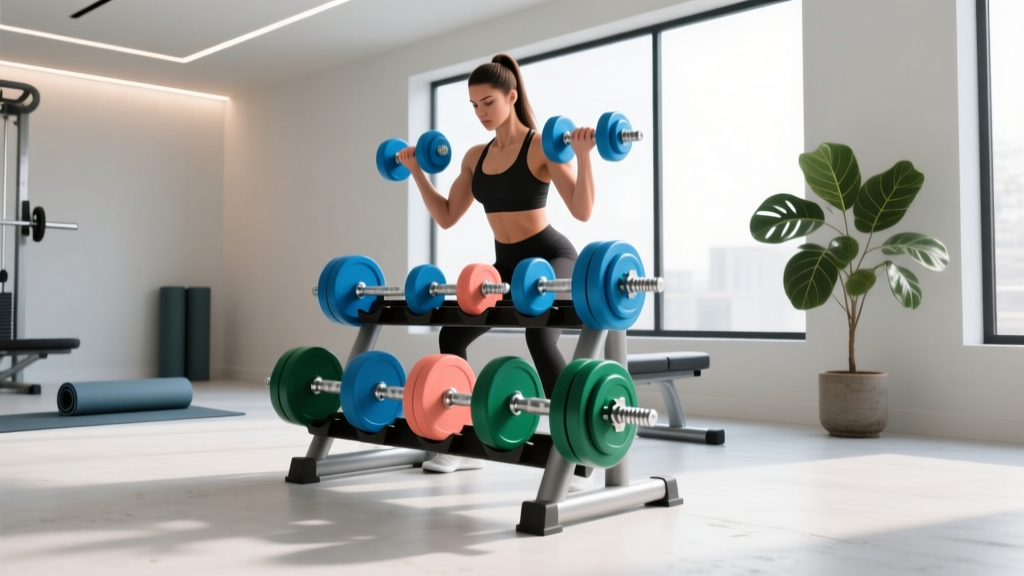
Olympic Barbell Guide: Weight, Knurling & Lat Pulls with Dumbbells
Explore our Olympic barbell buying guide on weight and knurling, plus learn how to execute lat pulls with dumbbells for complete back development.

The Biomechanics of the Bar: Weight Standards and Tolerances
Building a resilient home gym in 2026 requires looking past marketing jargon and understanding the metallurgy and engineering of your core equipment. The Olympic barbell is the undisputed centerpiece of any serious free-weight setup, but not all bars are created equal. When evaluating an Olympic barbell buying guide, weight and knurling are the two most critical factors that dictate performance, longevity, and safety.
The international standard for an Olympic barbell is 20 kilograms (44.09 pounds), governed by the International Weightlifting Federation (IWF). However, many powerlifting-specific bars are calibrated to exactly 45 pounds (20.41 kilograms) to align with imperial competition standards. While a one-pound difference seems negligible, the real divergence lies in the shaft diameter and tensile strength. Weightlifting bars feature a 28mm shaft to accommodate a hook grip and allow for 'whip' (elastic deformation) during the snatch and clean. Powerlifting bars utilize a thicker 29mm shaft to minimize whip during heavy squats and bench presses. According to Rogue Fitness, a multi-purpose bar typically splits the difference at 28.5mm, offering a versatile compromise for general strength training.
Tensile strength, measured in pounds per square inch (PSI), indicates the point at which the steel will permanently bend or snap. For any serious lifter in 2026, a minimum tensile strength of 190,000 PSI is non-negotiable. Premium competition bars push this to 215,000 PSI or higher, ensuring the bar returns to true even after years of heavy deadlift drops.
⚠️ Expert Warning: Never drop a barbell with cheap chrome-plated sleeves on bare concrete. The impact shock transfers through the bearings, often causing the sleeve to crack or the snap ring to dislodge, turning a $300 investment into shrapnel.Decoding the Grip: Knurling Geometries and Finishes
Knurling is the diamond-patterned machining on the bar shaft designed to increase friction. However, the geometry of this pattern drastically alters the feel and performance of the bar. Understanding these micro-structures is what separates novice buyers from seasoned lifters.
- Hill Knurl (Passive): The peaks of the diamonds are rounded off. This is common on ultra-cheap commercial gym bars. It feels smooth and is inadequate for heavy pulling movements where grip fatigue is a limiting factor.
- Mountain Knurl (Aggressive): Sharp, pointed peaks that dig deeply into the calluses. While excellent for max-effort deadlifts, mountain knurling can tear the hands during high-volume hypertrophy work or Olympic lifts.
- Volcano Knurl (The Sweet Spot): The peaks are machined flat with a crater in the center, creating multiple sharp edges that grip the skin without piercing it. This is the gold standard for modern multi-purpose bars, providing immense security without excessive tissue damage.
The finish applied over the knurl also dictates maintenance and feel. Bare steel offers the best grip but requires weekly wire-brushing and oiling to prevent rust. Zinc and black oxide offer moderate corrosion resistance while preserving the sharpness of the knurl. Hard chrome is highly rust-resistant but tends to fill in the knurl valleys, slightly dulling the aggressiveness of the grip.
2026 Olympic Barbell Comparison Matrix
To help you navigate the current market, we have tested and compiled data on three distinct barbell archetypes available this year. This table highlights the intersection of weight tolerances, knurl profiles, and pricing.
| Model | Tensile Strength | Knurl Profile | Bushing/Bearing | 2026 Est. Price |
|---|---|---|---|---|
| REP Fitness Deep Knurl Bar | 190,000 PSI | Aggressive Volcano | Bronze Bushing | $329 |
| Rogue Ohio Bar (Zinc) | 190,000 PSI | Moderate Volcano | Composite Bushing | $295 |
| Eleiko Olympic WL Bar | 215,000 PSI | Refined Mountain | Needle Bearings | $965 |
The Missing Vertical Vector: Lat Pulls with Dumbbells
While an Olympic barbell is the undisputed king of horizontal pulling—think Pendlay rows and bent-over barbell rows—a complete physique requires vertical pulling to fully develop the latissimus dorsi. If your home gym lacks a dedicated cable tower or lat pulldown machine, you must improvise to ensure balanced back development. This is where mastering lat pulls with dumbbells becomes a critical component of your programming.
Biomechanically, the lats function to extend, adduct, and internally rotate the humerus. Barbell rows primarily target shoulder extension. To hit shoulder adduction (the movement pattern of a cable lat pulldown) using only free weights, you must alter your torso angle. According to kinesiology principles outlined by ExRx, manipulating the line of pull relative to gravity allows dumbbells to mimic cable vectors.
Execution: The Incline Bench Dumbbell Pulldown
- Set an adjustable bench to a 45-degree incline.
- Lie chest-down on the bench, holding a heavy dumbbell in each hand with a neutral grip (palms facing each other).
- Reach your arms straight up toward the ceiling, allowing your scapulae to protract and elevate fully.
- Initiate the pull by driving your elbows down and back toward your hips, actively depressing the shoulder blades.
- Squeeze the lats at the bottom of the movement (when the dumbbells are near your ribcage) before slowly returning to the stretched position.
'The incline dumbbell pulldown removes lower-back momentum from the equation. By stabilizing the torso against the bench, you isolate the lats through a vertical adduction path that perfectly mimics a kneeling cable lat pull.' — Certified Strength and Conditioning Specialist (CSCS) Biomechanics Review
For optimal hypertrophy, program these dumbbell lat pulls for 3 to 4 sets of 10-15 repetitions, focusing on a slow, 3-second eccentric (lowering) phase to maximize muscle fiber recruitment.
Real-World Failure Modes and Maintenance
Even premium barbells will fail if subjected to improper maintenance or environmental neglect. Based on warranty claims and long-term gym testing, here are the most common failure modes to watch for:
- Sleeve Seizure: If you use chalk heavily, fine dust will inevitably work its way past the sleeve washers into the bushings or bearings. Over time, this mixes with humidity to form a cement-like paste, stopping the sleeve from spinning. Fix: Disassemble the sleeve annually and apply a few drops of 3-in-One oil or synthetic bearing oil. Never use WD-40, as it strips existing lubrication and attracts more dust.
- Knurl Degradation: Sweat is highly acidic. If a barbell is put away wet, the zinc or chrome finish will eventually oxidize and flake, particularly in the valleys of the knurl. Once the knurl rusts smooth, the bar's primary utility for heavy pulling is compromised.
- Snap Ring Blowout: Dropping a bar loaded with bumper plates onto safety pins in a power rack creates a violent shockwave. If the bar lands directly on the collars rather than the shaft, the internal snap ring holding the sleeve can shear, causing the sleeve and plates to slide off mid-lift.
Final Verdict: Building a Complete Free-Weight Ecosystem
Investing in a high-quality Olympic barbell with a minimum of 190,000 PSI tensile strength and a volcano knurl profile is the foundation of any serious strength journey. However, true functional hypertrophy requires addressing all movement planes. By pairing your barbell horizontal rows with biomechanically sound lat pulls with dumbbells, you create a comprehensive, joint-friendly back training protocol that requires nothing more than a bench, a bar, and a set of adjustable dumbbells. For further reading on exercise programming and joint safety, consult the NSCA Coach archives.
More gear to consider
All reviews
Best Tricep Pushdown Dumbbell Alternative: EZ vs Straight Bar

Clamp Types Compared: Setup for Bent Over Dumbbell Lateral Raises

TRX Dumbbells & Neoprene Weights: The Ultimate 2026 Home Gym Guide
Barbell Weight & Knurling Mistakes vs. Dumbbell Flys on Flat Bench
Best Adjustable Dumbbells for Dumbbell Chest Exercises (2026)