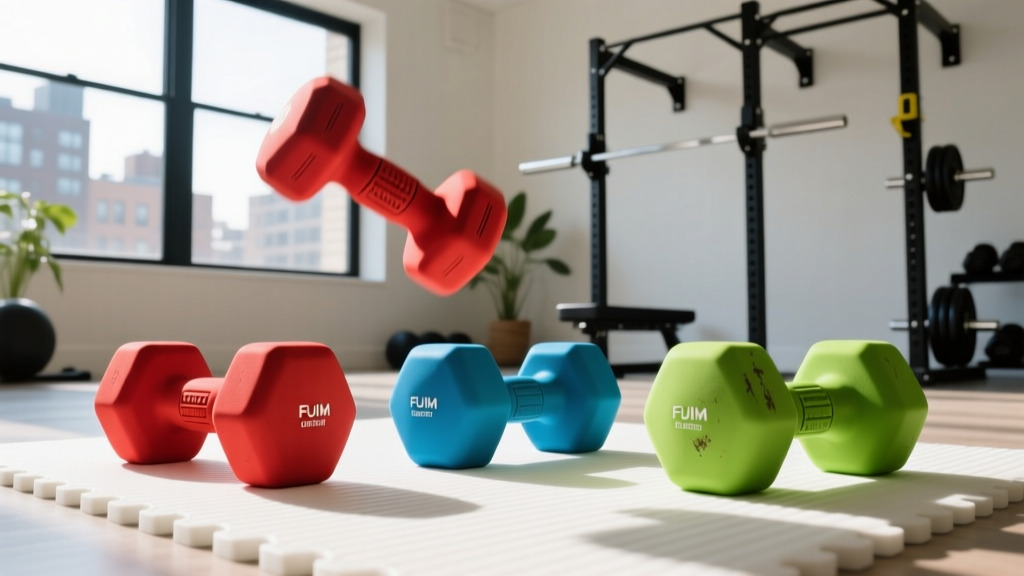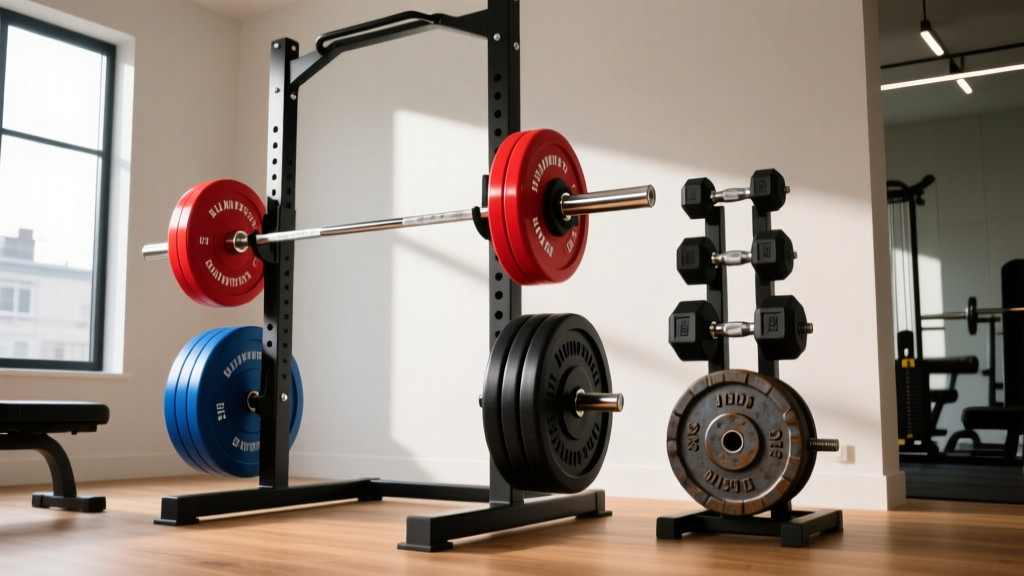
Bumper vs Iron Plates: Upgrading Beyond PowerBlock 50 Dumbbells
Transitioning from PowerBlock 50 dumbbells to a barbell? Read our expert bumper plate vs iron plate comparison to optimize your 2026 home gym setup.

The Home Gym Evolution: Outgrowing Adjustable Dumbbells
Most dedicated home gym owners begin their fitness journey with space-saving adjustable dumbbells. The PowerBlock Elite series—specifically the highly popular PowerBlock 50 dumbbells, which adjust from 5 to 50 lbs per hand—is an absolute staple for hypertrophy, unilateral work, and general conditioning. Their welded steel cages and compact footprint make them an unbeatable value for early-stage lifters.
However, as your strength progresses, a physiological and mechanical bottleneck emerges. Once your bilateral movements like deadlifts, heavy squats, and Olympic cleans surpass 100 lbs, holding a pair of 50 lb dumbbells becomes impractical and biomechanically limiting. The natural 2026 progression is investing in a 7-foot Olympic barbell, a power rack, and a dedicated set of weight plates. This brings us to the most critical equipment debate in the free weights category: bumper plates vs. cast iron plates.
In this hands-on review, we break down the exact material sciences, failure modes, and loading strategies you need to know before dropping hundreds of dollars on your first plate set.
Cast Iron Plates: The High-Density Workhorse
Cast iron plates have been the standard for over a century. Machined or cast from solid iron, these plates offer a traditional aesthetic and unparalleled density. For lifters who prioritize heavy squats, bench presses, and powerlifting-style deadlifts, iron remains the undisputed king of the home gym.
The Density Advantage and Barbell Capacity
The primary advantage of cast iron is its thin profile. A standard 7-foot Olympic barbell features loadable sleeves that are typically 16.3 inches long. Because a 45 lb cast iron plate is only about 1.3 inches thick, you can comfortably load 500+ lbs onto a single barbell. In contrast, thick recycled rubber bumpers can max out your sleeve capacity at just 350 lbs.
Expert Pricing Insight (2026): High-quality machined iron plates, such as the Rogue Machined Iron Plates, currently hover around $1.75 to $2.25 per pound. While shipping costs can inflate the final price, iron remains significantly cheaper per pound than virgin rubber bumpers.The Drawbacks: Noise, Rust, and Floor Damage
Iron plates are unforgiving. Dropping them on a standard garage concrete slab will chip the floor, damage the plate edges, and create a concussive noise that will likely anger your neighbors. Furthermore, bare cast iron is highly susceptible to oxidation. If your garage gym experiences high humidity, you will need to regularly maintain your plates using a wire brush and a light coat of 3-in-One oil to prevent surface rust.
Bumper Plates: The Drop-Safe Olympic Standard
Bumper plates are constructed from solid rubber or urethane with a steel or brass hub insert. They were originally designed for Olympic weightlifting, allowing athletes to safely drop the barbell from overhead without destroying the platform or the equipment.
The IWF Diameter Standard
According to the International Weightlifting Federation (IWF) technical rules, all competition bumper plates—regardless of whether they weigh 10 kg or 25 kg—must have a uniform diameter of 450mm (± 1mm). This ensures that the barbell is always elevated to the exact same starting height for cleans and snatches. When buying bumpers for your home gym, ensure the manufacturer adheres to this 450mm standard; cheap, non-standard bumpers often feature smaller diameters on lighter plates, which alters your pulling mechanics and risks damaging the barbell sleeves if the lighter plate hits the ground first.
Durometer and 'Dead Bounce'
Not all rubber is created equal. The hardness of the rubber is measured on the Shore A durometer scale. High-quality training bumpers usually sit around 85A to 90A. This provides a 'dead bounce'—meaning the plate absorbs the kinetic energy of the drop rather than rebounding violently back into the air, which is a major safety hazard during heavy deadlifts.
Head-to-Head Comparison Matrix
To help you visualize the differences, we have compiled a direct comparison of standard cast iron, virgin rubber bumpers, and recycled rubber bumpers based on our 2026 hands-on testing.
| Feature | Cast Iron Plates | Virgin Rubber Bumpers | Recycled Rubber Bumpers |
|---|---|---|---|
| Avg. Cost per Lb | $1.75 - $2.25 | $3.50 - $5.00 | $2.50 - $3.50 |
| Thickness (45lb) | ~1.3 inches | ~2.1 inches | ~3.2 inches |
| Drop Safety | Poor (Floor Damage) | Excellent | Excellent |
| Noise Level | Very Loud | Quiet | Quiet |
| Primary Use Case | Powerlifting, Heavy Squats | Olympic Lifting, CrossFit | Budget Deadlifts, General Fitness |
Real-World Failure Modes: What Retailers Will Not Tell You
When investing in free weights, understanding how equipment fails over a 5-to-10-year lifecycle is crucial for making a smart purchase.
Iron Plate Calibration Drift
Cheap, unmachined cast iron plates imported from overseas often suffer from severe calibration drift. A plate stamped '45 lbs' might actually weigh 42 lbs or 48 lbs. While this does not matter for general fitness, it ruins progressive overload tracking for competitive powerlifters. Always opt for machined or calibrated steel plates if you require exact weight tolerances (usually guaranteed within +/- 1%).
The Bumper Plate 'Taco' Effect
The most common failure mode for bumper plates is hub separation, colloquially known in the industry as 'tacoing.' This occurs when the steel center insert pulls away from the vulcanized rubber during repeated drops. Once the structural bond fails, the plate warps and will no longer sit flush on the barbell sleeve. To prevent this, avoid dropping 'light' bumper plates (10 lb or 15 lb) on their own, as the lack of surface area and mass concentrates the shear force directly onto the steel hub.
'If you are doing high-rep touch-and-go deadlifts, never use a 10 lb or 15 lb bumper plate as your only point of contact with the floor. The sheer force will shatter the rubber around the steel insert within six months. Always pair light bumpers with a 45 lb bumper on the outside of the sleeve.' - FitGearPulse Testing Lab Notes
The 2026 Hybrid Loading Strategy for Home Gyms
You do not necessarily have to choose just one type of plate. In fact, the most optimized home gyms utilize a hybrid approach, maximizing the strengths of both materials while minimizing their flaws.
- The Powerlifting Base (Iron): Purchase a full set of cast iron plates (2x45, 2x25, 2x10, 2x5, and fractional plates) for your heavy squats, bench presses, and rack pulls. This saves you money and allows you to load the barbell to 400+ lbs without running out of sleeve space.
- The Olympic Pair (Bumpers): Purchase exactly one pair of high-quality 45 lb virgin rubber bumper plates. Use these exclusively for deadlifts, power cleans, and snatches where the barbell will be dropped from waist or shoulder height.
- The Transition Phase: If you are currently maxing out your PowerBlock 50 dumbbells on goblet squats and Romanian deadlifts, start by buying the barbell and the hybrid plate setup. This immediately unlocks bilateral loading up to 135 lbs (bar + bumpers), bridging the gap between your dumbbells and a full powerlifting setup.
Expert Verdict
Moving beyond the limitations of adjustable dumbbells is a major milestone in your lifting career. If your training revolves around strict powerlifting, slow eccentrics, and heavy squats inside a rack, cast iron plates are the undisputed, cost-effective champion. However, if your programming includes Olympic lifts, high-rep CrossFit-style deadlifts, or you share a living space with noise-sensitive family members, virgin rubber bumper plates are a mandatory investment. By understanding the material density, drop mechanics, and failure modes outlined above, you can build a free weight arsenal that will easily survive decades of heavy use.
More gear to consider
All reviews
Adjustable Dumbbell Review: Standing Dumbbell Triceps Extension (2026)

Hex vs Urethane Dumbbells & Vertical Leg Press Smith Machine Layouts

Cast Iron vs Competition Kettlebells for Dumbbell Hip Hinge Layouts

Best Neoprene Dumbbells for Standing Dumbbell Rotations

Home Gym Setup Walkthrough: Integrating a 45 lb Dumbbell Pair